Speakers

  • KEEP LOOKING UP: Your Guide to the Powerful Healing of Birdwatching

    Tammah Watts will share about her journey of living with chronic pain by connecting with birds.

    Tammah Watts (she/her) is a Best-selling Author, Licensed Marriage and Family Therapist (LMFT), Certified Kripalu Mindful Outdoor Guide, birder, and an advocate for the equitable accessibility of nature, health, and mental health for all. She has served communities for over 35 years in managerial, clinical, and consulting roles for private, non-profit, colleges, and public sectors.

    Date: Thursday, September 17
    Time: 7-8:30pm
    Location: Online via Zoom

    Zoom Link: Link to Come

    Passcode: Password to Come

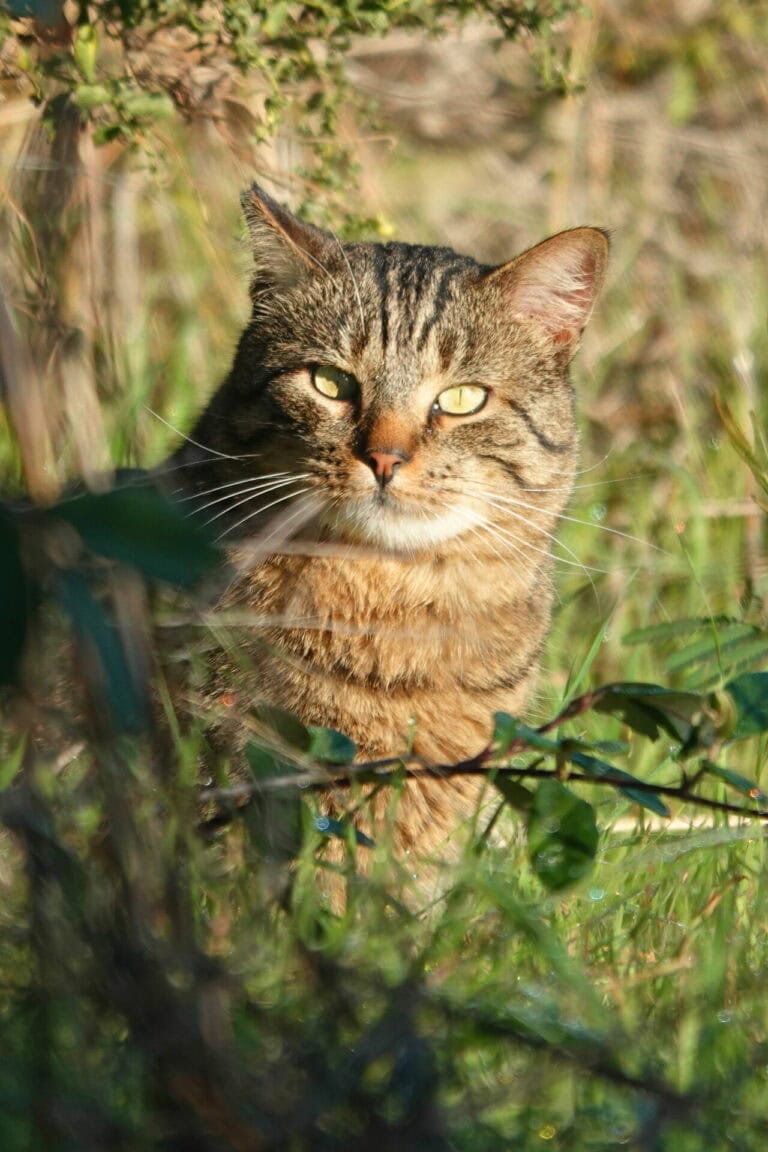
  • Cats, Wildlife, and Solutions

    Join our panel of experts to learn about how outdoor cats are impacting our urban ecology, with a focus on solutions that work for public lands, your neighborhood, and your home!

    This panel discussion will be moderated by Golden Gate Bird Alliance’s Conservation Director Whitney Grover and will include the following panelists; UC Berkeley PhD and wildlife ecologist Tyus D. Williams, East Bay Regional Park District Wildlife Biologist Natalie Reeder, Full Circle Cats (Nonprofit Cat Organization) Community Cat Program Manager Kate Wilson, and Cat Topia Director of Marketing and Communications Matthew Hildebrandt.

    Date: Thursday, July 16
    Time: 7-8:30pm
    Location: Online via Zoom

    Zoom Link: https://us06web.zoom.us/j/82570768078?pwd=FF8P6N7Hl6aL6gQbmd0bny9gj8Oc3O.1

    Passcode: 888612…

  • Raptors in the Concrete Jungle

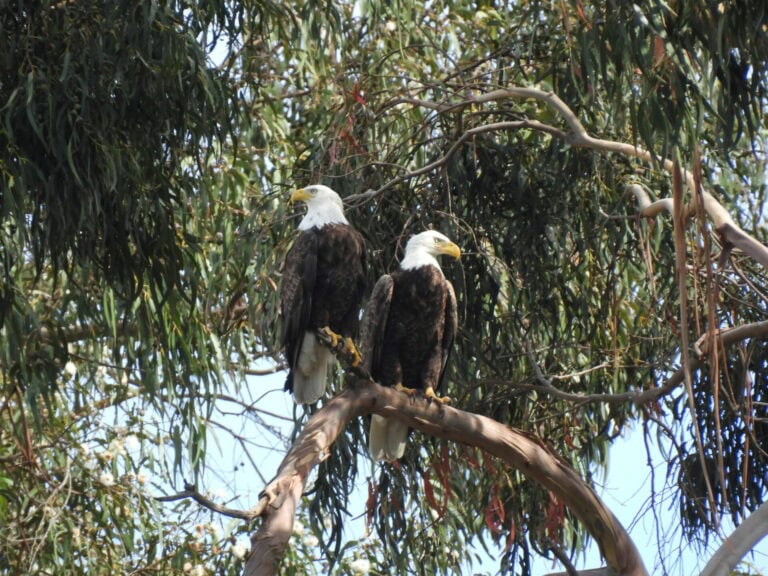
    You’ve heard the gossip; you’ve seen the headlines. In recent years, Bay Area Bald Eagles built nests in a school yard in Milpitas, in Mountain View Cemetery in Oakland, and on an Alameda golf course. Peregrine Falcons have called UC Berkeley’s Campanile Tower home along with other buildings and bridges from San Jose to Mill Valley. Osprey nests line the East Bay shoreline from Hayward to Vallejo, and as many as eight other raptor species breed annually in our municipal midst! Isn’t this wonderful?

    Well — yes and no. City living isn’t always a bed of roses for a bird of prey. The list of hawk headaches is long. Think about wires, windows, poisons, cars, electrocution, entanglement, and disease. In his August 20th talk, ecologist Allen Fish will give accounts of the real lives of Bay Area raptors, both their feats and their fiascos. But he also raises a key question: now that raptors are in our cities, how might we all do a better job — from city-planning to gardening — to benefit birds of prey?

    About Our Speaker

    Berkeley resident, bird ecologist and writer Allen Fish was director of the Golden Gate Raptor Observatory for four decades, and a lecturer in Raptor Biology at UC Davis. Scientific advisor to Cal Falcons and Raptors Are The Solution, Allen has studied birds of prey in California, but also in Mexico, Taiwan, France, Spain, and Scotland. He has authored or co-authored dozens of scientific and layperson articles on raptor ecology and migration. Allen’s most recent article “Putting on Moth Goggles” appeared in the Bay Nature, Spring 2026 issue.

    Date: Thursday, August 20
    Time: 7pm
    Location: The Tamalpais Room at the David Brower Center (2150 Allston Way, Berkeley) + online via Zoom

    If you plan to attend in-person, please rsvp in advance here!

    Zoom Link: https://us06web.zoom.us/j/88343878634?pwd=PQaRkgBLUm4GqOrljbRv0CRDukrGgB.1

    Featured Photo: Bald Eagles / Skye Ocoranza…

  • The Invasive Spartina Project and Rails

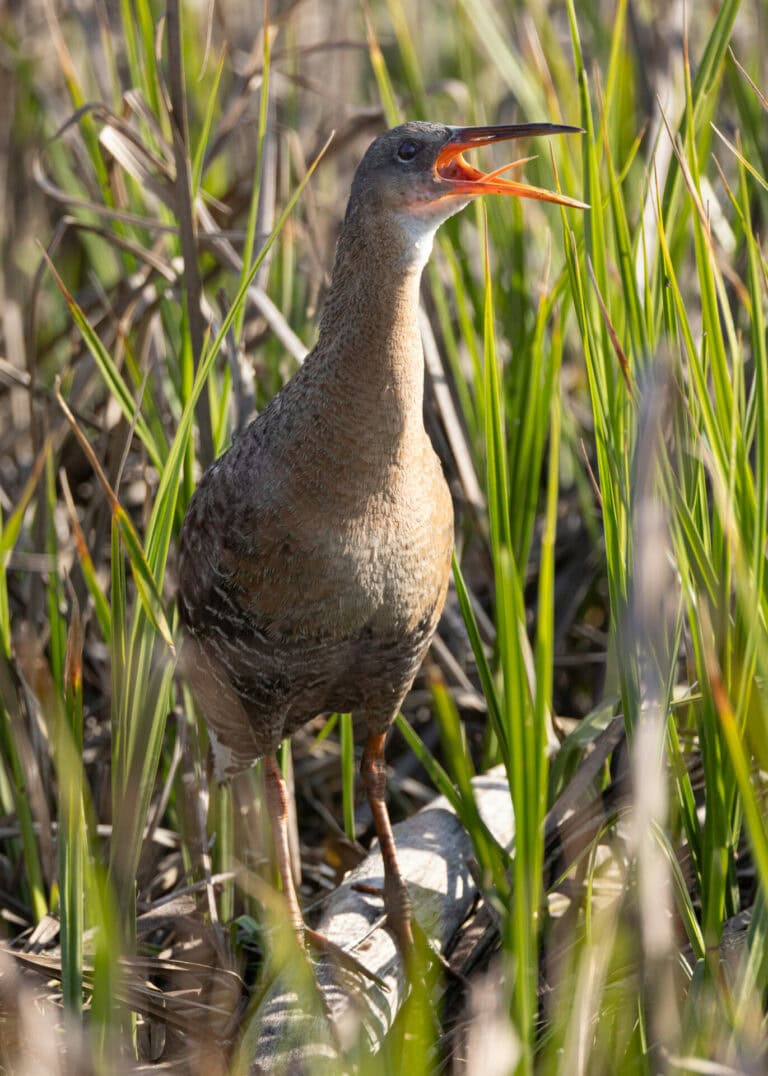
    The Invasive Spartina Project (ISP) is tasked with removing invasive Spartina species to restoring native habitat in SF Bay and protect our newly restored tidal wetlands. Tall, dense, and fast-growing, hybrid Spartina outcompetes other marsh species, overrunning wetlands and mudflats. Infestation reduces shorebird habitat but also provides cover for secretive marsh birds, including endangered California Ridgway’s Rails (RIRA). From 2005-2025, hybrid Spartina was reduced from 805 to 18 net acres, a reduction of over 97%. We also actively enhance habitat, including planting over 650,000 natives to provide cover for rails at over 40 sites. In 2027, we plan to begin our restoration work in San Leandro Bay, including at Arrowhead Marsh. This talk will cover what we have achieved so far and our plans for the future.

    About Our Speaker

    Jeanne Hammond
    Jeanne Hammond has worked on the Invasive Spartina Project for Olofson Environmental since 2008. She wears many hats for the ISP but the main one is as Restoration Program Manager. Before working on tidal marsh restoration projects for OEI, Jeanne worked at Point Blue Conservation Science conducting songbird research and monitoring projects, primarily in restored riparian habitats. She has a B.A. in Urban Studies and Environmental Planning from UCSD and an M.S. in Natural Resources: Wildlife Management from Humboldt State.

    Tobias Rohmer
    Tobias Rohmer is the Monitoring Program Manager for the San Francisco Estuary Invasive Spartina Project and works for Olofson Environmental. Tobias has a B.A. in German Studies and a B.S. in Ecology and Evolutionary Biology from University of Arizona, and received his M.S. in Ecology from UC Davis where he did his master’s thesis on California Ridgway’s rails. When not working in tidal marshes, Tobias is most often traveling in pursuit of fun birds to watch.

    Jen McBroom
    Jen McBroom is a biologist at Olofson Environmental Inc. and has been conducting surveys for Ridgway’s rails since 2005 for the Invasive Spartina Project. Jen got her start in the tidal wetlands of the San Francisco Bay studying song sparrows and marsh wrens after finishing her degree at UC Davis. Since then, she has logged many hours in muddy boots mapping invasive plants and observing the wildlife at the edge of the Bay.

    Date: Thursday, April 16 (7pm)

    Location: Online via Zoom

    Link: https://us06web.zoom.us/j/83469900711?pwd=ctwB0S75KKRaETeYpaAjE9WZTavNlY.1

    Passcode: 146181…

  • Listening with Merlin: How Sound ID Works and What It Can (and Can’t) Do

    Merlin Sound ID has made it possible for anyone to identify birds by sound, but how does it actually work, and how should birders use it? In this talk, I’ll give an accessible overview of how Merlin Sound ID listens to audio and turns it into species suggestions. I’ll describe the kinds of recordings that teach Merlin, how the system continues to improve, and where its strengths and limitations lie.

    About Our Speaker

    Grant Van Horn is a machine learning researcher at the Cornell Lab of Ornithology, where he works on the Sound ID and image-recognition models used in the Merlin Bird ID app. His work focuses on building practical tools that help people engage with nature. Grant received his PhD from Caltech, where he studied how to train and deploy large-scale machine learning models on mobile devices, work that contributed to technologies now used in iNaturalist, Seek, and Merlin. He is currently on leave from the University of Massachusetts Amherst, where he is an assistant professor of computer science. Learn more about Grant’s work here.

    Date: Thursday, February 19 @ 6pm

    Location: Online via Zoom

    Link: https://us06web.zoom.us/j/87377145453?pwd=Jt8aYrFqyD9zTBGl09jH58J5s9gbev.1

    Passcode: 052289