• GGBA Birders in Wisconsin

    By Carol Lombardi

    We flew over perfect grids of Midwestern fields into Milwaukee’s early evening, excited to be part of Golden Gate Bird Alliance’s May birding trip to Wisconsin. Our guide Rich Cimino of Yellowbilled Tours was waiting at the curb before our luggage arrived. All logistics meshed, all gear was present and accounted for. Rich’s rented minivan was roomy with only four birders (ourselves, Rich, and Chris Bard), so everyone had a window seat and space to stow gear. We stayed at the Hampton Inn, Wauwatosa: Excellent staff, great breakfast, comfy rooms. Our first Wisconsin dinner that evening hinted at the robust cuisine we’d encounter all week. Boy, can you eat in Wisconsin!

    Monday we were on the road at 7 a.m. in bright sunshine (after a generous breakfast, of course) for the drive to Horicon Marsh, which stretches some 10 by 4 miles and is accessed via several roads. Purple Martin houses near the Visitor Center hosted a dozen pairs. Several stops produced Yellow-bellied Flycatcher, Eastern Phoebe, Yellow-throated Vireo, Blue Jay, Sedge Wren, Eastern Bluebird, Gray Catbird, Black-and-white Warbler, Chestnut-sided Warbler, Palm Warbler, Bobolink, and Northern Cardinal in addition to plenty of birds familiar to Californians. Our casual posting of a pair of Black-necked Stilts inspired a query from e-Bird — they’re rare here.

    Gray Catbird / Photo by Carol Lombardi

    Nashville Warbler / Photo by Rich CiminoTuesday took us to Lake Park, a Victorian creation by Frederick Law Olmsted in central Milwaukee on the shore of Lake Michigan. Mature trees (plus a few bird feeders) lured a wondrous variety of warblers — Black-throated Green, Palm, Black-throated Blue, Chestnut-sided, Yellow, Blackburnian, Magnolia, Cape May, Tennessee. Many were easily and clearly seen from an overpass that put us halfway up their favorite pine tree and helped us avoid serious Warbler Neck-itis. We logged American Redstart, Red-eyed Vireo, Gray Catbird, Indigo Bunting, Pine Siskin, Chimney Swift, and Red-headed and Red-bellied Woodpeckers.

    Lake Park / Photo by Carol Lombardi

    Local birders (befriended by Rich the week before) helped us sort through the second-by-second flybys. We found a Northern Waterthrush bobbing along a brushy ravine; an Olive-sided Flycatcher called for a “mar-tee-ni.” After lunch at the Italian grocery wonderland that is Glorioso’s, we visited the Riverside Park Urban Ecology Center, which is laboring to restore the stream nearby, and were rewarded with a leisurely look at a Solitary Sandpiper and a pair of Eastern Kingbirds.…

  • We need your help — on lead ammunition, and falcon rescue

    By Ilana DeBare

    Some weeks are quiet. It’s fine to go birding, take some photos, come home and have a glass of wine.

    Then there are weeks like this, when we are asking our members to speak out on two different conservation issues!

    Lead Ammunition Ban – Support AB 711

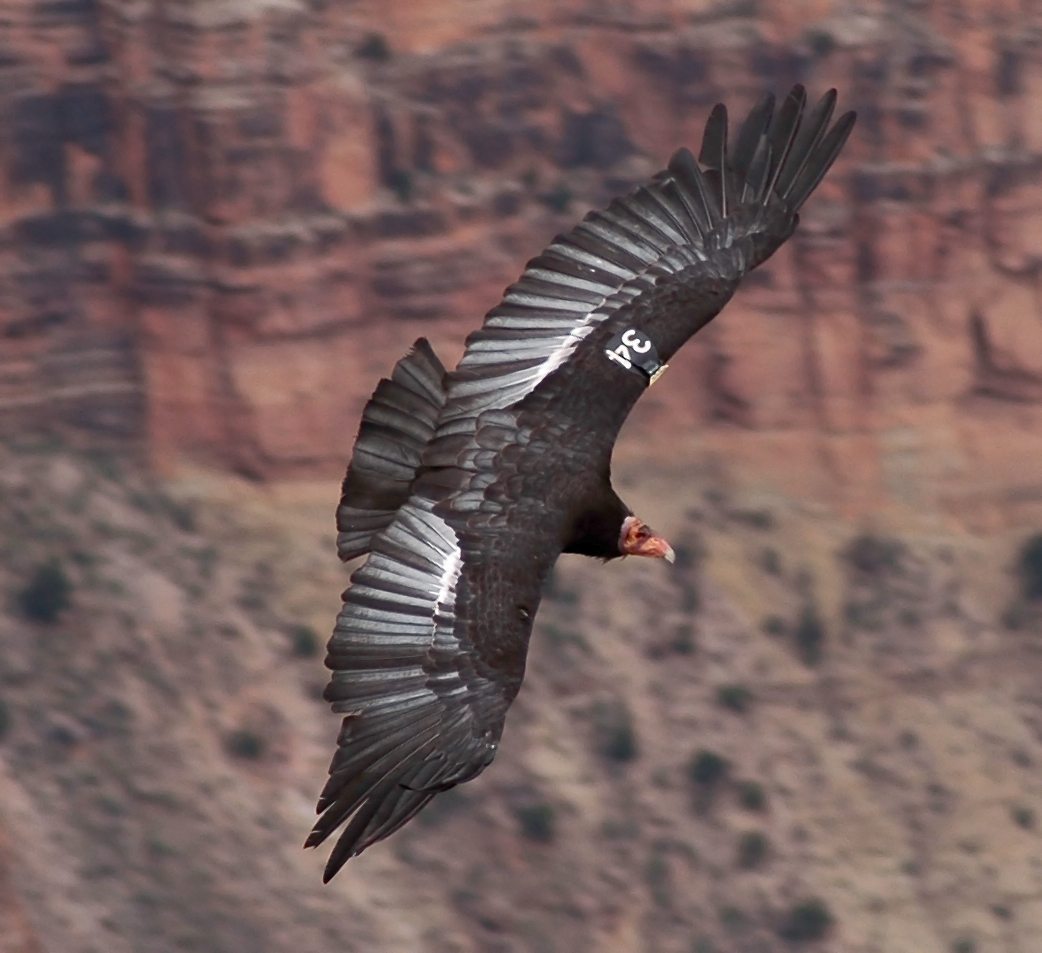
    Lead is a dangerous toxin and has been banned in toys, paint and gasoline. But it’s still commonly used by hunters in ammunition. Lead fragments accumulate in prey and in the carcasses left behind by hunters, which then are eaten by raptors such as California Condors and Golden Eagles.

    In fact, the leading cause of death today for adult California Condors is not old age — it’s lead poisoning. One in five free-flying condors has ingested such significant levels of lead from ammunition that it is at risk of dying from lead poisoning.

    This summer, California Audubon is sponsoring a bill to ban lead ammunition in California.  AB 711 has passed the State Assembly. Now we need to get AB 711 through the state Senate — and we need your help!

    California Condor / Photo by Scott Page
    Please fax or call your state Senator (Leland Yee in San Francisco, Loni Hancock in the East Bay) and tell them to support AB 711. 

    Equally important, do you have friends or relatives outside the Bay Area in swing districts? Tell them about this issue and ask them to call their state senators in support of AB 711.

    You can find more information —  including sample text of a letter — in the Action Alert we sent out this week.

    Loni Hancock:
    916 651 4009 (phone) 
    916 651 4909 (fax)
     
    Leland Yee:
    916 651 4008 (phone) 
    916 651 4908 (fax)
     
    ——————————————–
     

    Tell US FWS to allow the continued rescue of Peregrine Falcon chicks from bridges

    This issue is far narrower in scope than the lead ammunition issue, affecting only three or four Peregrine Falcon chicks each year. But for those birds, it means life or death — and a totally unnecessary death if it comes to that.

    Peregrine Falcons — which only recently recovered from near-extinction die to DDT — often choose bridges as a nesting site since so much of their natural habitat has been lost to development. But chicks learning to fly off a bridge risk falling into the water and drowning.

    For decades, the U.C. Santa Cruz Predatory Bird Research Group has been rescuing and successfully relocating falcon chicks from Northern California bridges.

  • Report from the National Audubon convention

    By Ilana DeBare

    Earlier this month Audubon held its first national convention in 13 years, and Golden Gate Bird Alliance was represented by two staff members, three board members, and one of our Eco-Education high school interns.

    We’re grateful to National Audubon for donating two scholarships that allowed intern Asma Ayyad and Eco-Ed Director Anthony DeCicco to register for free. Meanwhile, I also got a free registration for suggesting the tagline for the convention, Taking Flight Together!  🙂

    The convention was held in the Columbia River Gorge, on the Washington state side of the river but only about 45 minutes from Portland, Oregon. The area was beautiful, and there were some remarkable field trips available before and after the convention. (GGBA board member Linda Vallee visited one of the world’s largest Caspian Tern nesting sites; I toured the Tualatin National Wildlife Refuge and some Willamette Valley wineries, including one that uses falcons to scare off birds that would eat the grapes).

    View of Columbia River from convention site / Photo by Ilana DeBare Great Blue Heron at Tualatin National Wildlife Refuge / Photo by Ilana DeBare

    But the convention itself was the heart of the weekend… over 400 local Audubon leaders from chapters ranging from Florida to Idaho. There were workshops on conservation strategy, and on nuts-and-bolts skills for running our chapters. (I myself went to more of the nuts-and-bolts ones.) There were also several general sessions led by National Audubon President David Yarnold, including one on fostering diversity within our organizations.

    Far too much to fit into one blog post without putting you all to sleep. So here are my own personal takeaways, in a nutshell:

    There is a National Audubon! I had worked for GGBA for 18 months and felt no connection to National, other than the emails I keep getting as an individual member asking for money.  🙂 As far as my daily work life, they were no different from any other national conservation group like NRDC or World Wildlife Fund. But I came away from the convention with a sense of unified direction… and knowing resource people I can call at the national office… and some possible offers of help from National (more on that below)… in short, feeling part of a national organization for the first time.

    Impressed with David Yarnold. Formerly the editor of the San Jose Mercury News, David has been CEO and President of National Audubon since 2010.…

  • The Handbook of Bird Photography: Review

    By Bob Lewis

    The Handbook of Bird Photography, by Markus Varesvuo, Jari Peltomäki and Bence Máté was published this year by Rocky Nook, Inc. of Santa Barbara, CA.  It’s a softcover landscape format book of 358 pages, full of striking bird images.  The book outlines equipment and techniques, but the authors emphasize fieldwork in an effort to share their different approaches and experiences.  They encourage the reader to seek his or her own unique approach to bird photography.  Roughly 100 pages of site descriptions are included, with the emphasis on Scandinavian locations.  Although perhaps not a great attraction to the North American bird photographer, they are interesting as examples of what attracts the photographer to a site.

    The three authors have different approaches and preferred subjects:  Varesvuo specializes in winter and bird action photography, and prefers natural light;  Peltomäki is known for owl photography; and Máté works from within blinds and uses flash.  The first two are Finns, the last a Hungarian.  Each won the prestigious International Wildbird Photographer competition, organized in Britain, during the years 2003 – 2005.  They obviously know their subject and their images set a high standard to guide the reader’s aspirations.

    Green-crowned Brilliant and snake / Photo by Bence Mate from The Handbook of Bird Photography

    Great Grey Owl hunting, by Jari Peltomaki in The Handbook of Bird PhotographyThose of us who photograph birds know that almost every species in the world has been well documented, yet we enjoy the hunt, the chance to capture a slightly different, more interesting image.  The authors encourage us to know our subject, to take advantage of the changing seasons, weather and lighting to obtain more interesting images, to spice up a slide show or capture a contest award.  And in large measure they tell us how to do it.  Out of habit and training, I almost always have the sun behind me when I shoot and I don’t often photograph in the rain or snow.  After reading this book, maybe I’ll change some of my habits.  Similarly, birds in their environment, shot with a relatively wide angle lens, or tight crops of a subject will both add interest to a presentation.

    Female Snowy Owl / Photo by Markus Varesvuo from The Handbook of Bird Photography

    I rarely use a blind.  These authors frequently use blinds, constructing a variety of hides for differing purposes.  There is an interesting section on building and using blinds. …

  • A nest tragedy creates a passionate birder

    By Annette Litle

    It all began with a terrible accident. My husband and I were pruning a camellia that should have been tended to in the fall. As we were picking up the debris to compost, we found a nest on the ground with four screaming nestlings, eyes still unopened.

    Horrified, panicked, and crying, with gloved hands I carefully lifted the nest back into the bush. I held vigil to see if the parents would come back, but there was no sign of them. I stayed away from the nest for the next few days in hopes that nature could recover from my carelessness. Finally I checked and the nest was empty.

    My sadness at the loss of these babies caused me to start viewing things differently. I began looking in my backyard.

    Through the ensuing years, I watched and waited to see who would come visit and perhaps take up residence. One day I spotted an American Robin perched on the fence with a big juicy worm in its beak. Seeing all was safe, she flew into one of our trees to feed her babies. Only then did I hear them. How could a nest have been there all along, right in front of me with wailing babies, and I had still not noticed?

    American Robin nest / Photo by Annette Litle

    Learning to be quiet opened up a new world of wonder, teaching me how to look and listen for the birds. For a week my kids and I sat quietly watching the robin fly back and forth caring for the nestlings. It was so exciting to experience this new life materializing in our own backyard. I came outside one morning to check on the robins, only to find the nest had been torn to shreds, one of the babies dead on the ground.  A raccoon, maybe?

    Again, I was stricken with sadness. This tragedy became an opportunity to teach myself and my children about the importance of respecting our urban wildlife, and about how difficult it is for birds to survive in the city with its predators, including humans. We also worked on letting go of the busy bustle of chores, school and work — all the things that prevent us from experiencing the wonder that is hidden, just slightly, from our eyes and ears.

    Next season, I saw some of the activity I had been waiting for.…