Wouldn’t you like to wake up every morning knowing that you’re doing your part to preserve important bird habitat?
We think it’s such an important choice that we’ve organized a Golden Gate Bird Alliance Coffee Club to make buying and enjoying the right bird-friendly coffee a breeze. And if you’re not already drinking shade-grown organic coffee, you’ll be thrilled by the rich, clean flavor of Birds & Beanscoffees. Birds & Beans coffees are certified as bird-friendly by the Smithsonian Migratory Bird Center.
Golden Gate Bird Alliance volunteer Erica Rutherford coordinates this effort. We offer multiple pick up options:
Berkeley location within 2 blocks of GGBA office (porch bin self-serve)
Oakland residence off Park Blvd. between Hwys 13 and 580 (porch bin self-serve)
Note: All orders are shipped whole bean unless specified. Ground coffee options include: Coarse, Extra Fine (Kingbird Espresso Only), Fine, or Medium grind. Espresso coffee option: Extra Fine. There is no additional charge for grinding.
Calculate the payment amount by adding $1.50 shipping charge per order (not bag) to the coffee order total. Mail your check (made out to Birds and Beans Coffee) to Erica by the last day of the month for delivery during the third week of the following month. Note: a number of members pay via checking account bill pay (to avoid writing a check and USPS postage). We cannot accept credit cards or Venmo.
Erica Rutherford, 17 Windward Hill, Oakland, CA 94618
Pick up your coffee at one of the locations above.
Contact Erica for recurring monthly orders.
Erica will email all coffee club members upon delivery.
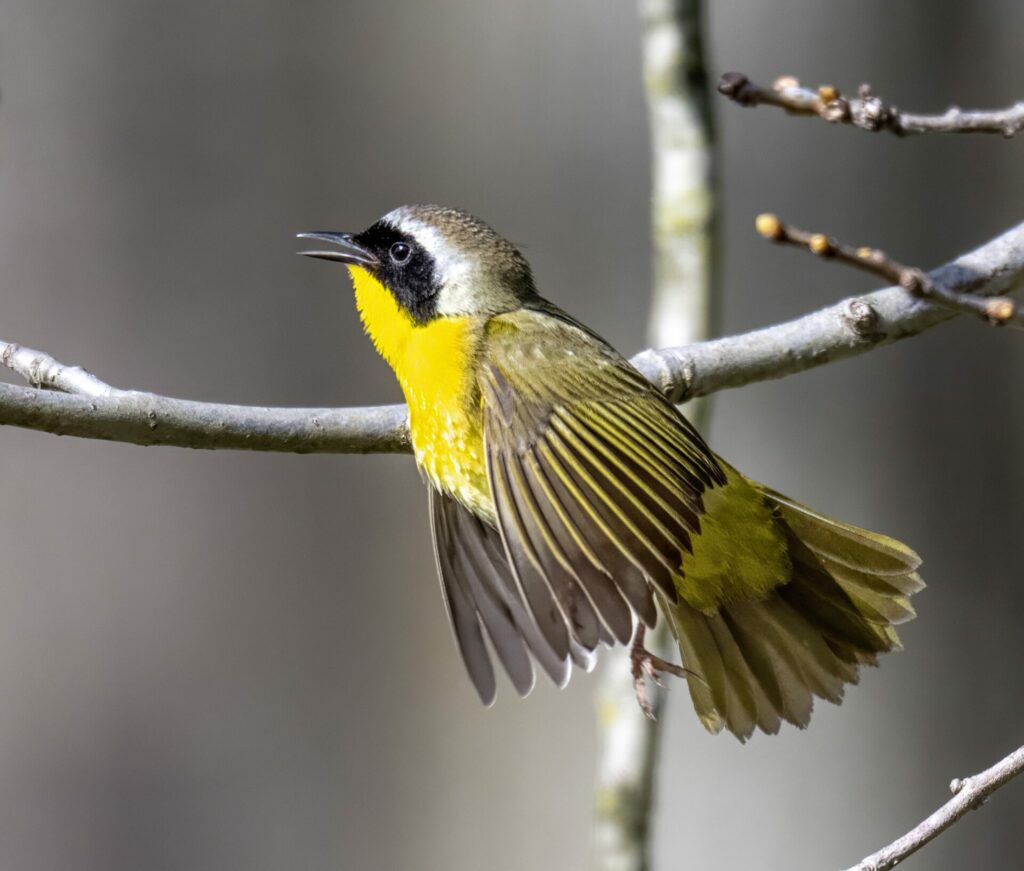
Many of the warbler, oriole, and flycatcher species that we love winter in the tropics and depend on forest habitat.
There aren’t laws that regulate which coffee can be labeled as shade-grown. Without careful shopping, your good intentions might be for naught.
Next to tobacco, conventionally grown (non-organic) coffee is sprayed with more chemicals than any other product consumed by humans.
Coffee-producing countries have some of the highest numbers of threatened bird species due to deforestation and loss of habitat.
Coffee is the largest US food import. Some 2.25 billion cups of coffee are consumed in the world daily.
THe Problem
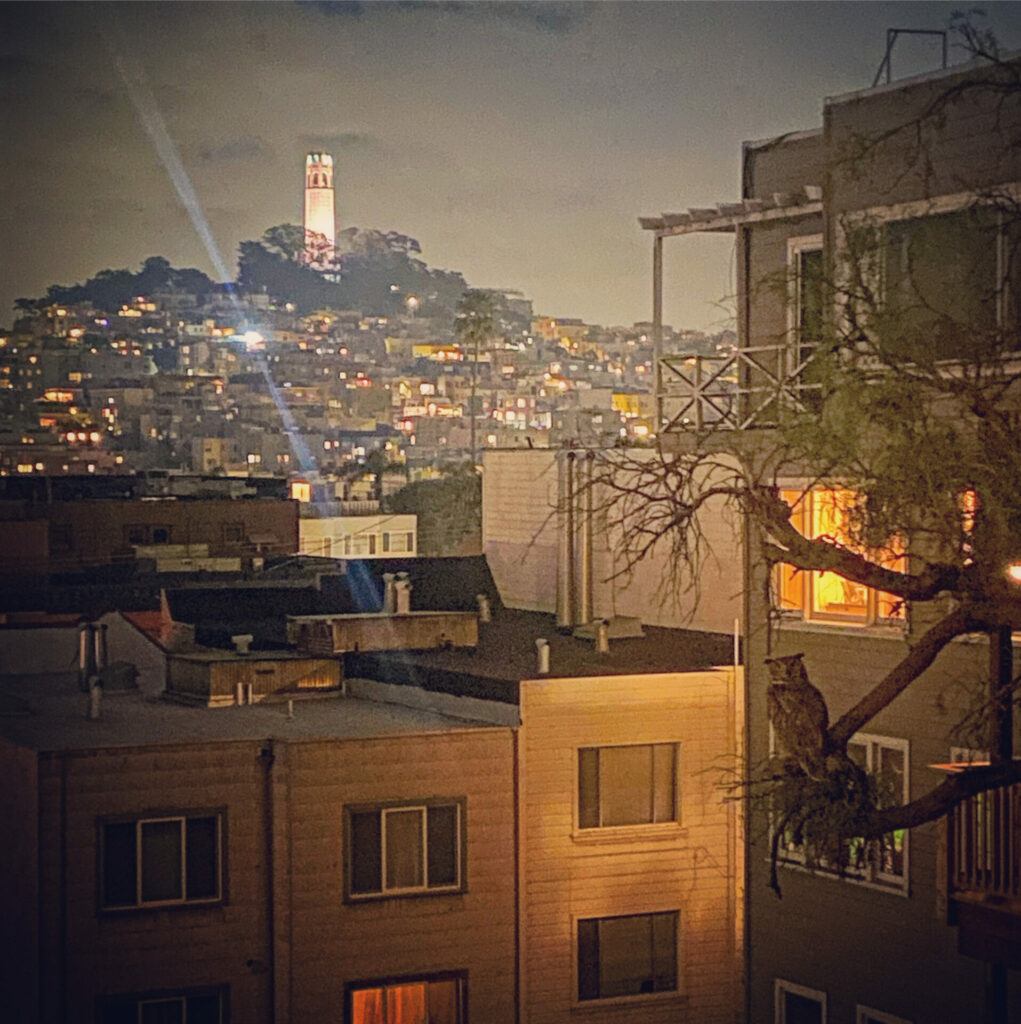
A billion birds migrate over the Bay Area every year as they journey from wintering grounds to breeding grounds, and back. Most bird species migrate at night, using the stars to navigate. Artificial lights from our cities and towns cause birds to collide with buildings, veer off course, and tire out, making them vulnerable to predators, starvation, and exhaustion.
This is a problem we can solve, keep birds on track so they make it home. You can help by turning off, dimming, or redirecting lights at night during migration periods in spring (February through May) and fall (August through October). Reach out to buildings, businesses, and workplaces to ask them to do the same. These easy steps will make a difference:
Learn more about the benefits of turning off lights for birds, wildlife, and humans:
Just under one billion birds are killed by building collisions in the United States each year. Artificial lighting at night has been shown to increase the rate of collision with glass windows. Birds are attracted to the lights, and disoriented, causing them to collide with the illuminated surfaces. Turning off lights will reduce the number of collisions with buildings and glass.
Birds use natural night light sources such as the stars and moon to navigate at night. When dense urban and suburban areas are lit up, the combined effect creates a landscape level illumination called “skyglow.” Skyglow causes birds to change their migratory pathways, curving towards the brightly illuminated areas. This often means birds are traveling further, expending more energy and therefore risking exhaustion and starvation.
Additionally, skyglow has been proven to cause birds to stopover more frequently than they would naturally. Rather than traveling as far as they can go in a single night, they end up stopping early and landing in our cities and towns. When birds stopover in urban areas, they are in danger of the other threats cities pose such as collision with buildings and cars, predation by outdoor cats, pollution, and difficulty finding food. Turning off and dimming lights will reduce the impacts of skyglow, keeping birds on route and out of harm’s way.
96% of all bird species eat insects, primarily moth caterpillars, for some part of their diet. The protein that caterpillars, moths, and other bugs provide is essential for young birds as they are growing fast; even hummingbirds feed their young insects. Protecting moths and other nocturnal insects is critical for protecting birds.
Just like birds, moths are disoriented, exhausted, and trapped by artificial lights at night. And it goes deeper than those direct impacts: artificial light has been shown to impact plants as well, changing the timing and availability of important food sources for these insects. Turning off lights at night will help birds, bugs, and everything up and down the food chain.
Turning off a single 100-watt bulb from dusk until dawn saves an average of 417 kwH of electricity, or $46 a year in bulbs and electricity costs. One participating municipal building in the Toronto Lights Out program reported cost savings of more than $200,000 in 2006. By reducing energy usage, Lights Out programs also help reduce pollutants such as carbon dioxide, and help moderate the impact of climate change.
PGE offers businesses energy efficiency rebates and incentives for products such as motion sensors and light timers. Check out their website to see if your lights out energy savings qualify for additional rebates.
When was the last time you were able to look up at the night sky and see the Milky Way? Remember the sense of wonder and awe you felt at seeing the brilliancy of the natural lights surrounding our earth. Physically seeing our place in the galaxy has inspired scientific discoveries and artistic creations for millenia. Connecting with our ancestors and the globe in modern times, through stargazing is part of a universal dark sky heritage that we risk losing as our world is increasingly lit up.
Additionally, it is important to remember that humans evolved, alongside our bird and wildlife brethren, in a darker world. Artificial light has negative impacts on our human health, and darkening our urban world will have benefits for humans as well.