• Intro to Southern Africa

    Join us on a comfortable birding and wildlife safari in South Africa and at the Victoria Falls.
    This fabulous “introduction to Africa” trip will allow you to get your first taste of Africa (or, if you’ve been before, you’ll surely see some birds and mammals you might have missed the first time around). We begin by experiencing one of the world’s most beautiful cities, Cape Town, and the surrounding Cape Fold Mountains and spectacular Cape coastline with its unique, rich plantlife and accompanying endemic birds such as sugarbirds, sunbirds and Cape Rockjumper.

    We also look for African Penguin, Blue Crane, Cape Mountain Zebra and other charismatic species. We will then fly to the opposite corner of South Africa and spend a few days in Karongwe, a “big five” reserve, meaning here you can see Lion, Leopard, White Rhinoceros, African Elephant, and Cape Buffalo. And with almost 300 species, this beautiful private reserve is a great birding destination. From Karongwe, we drive to South Africa’s greatest game
    park, Kruger National Park. Kruger is not only one of Southern Africa’s richest places for mammals, but also boasts a bird list of over 500 species.

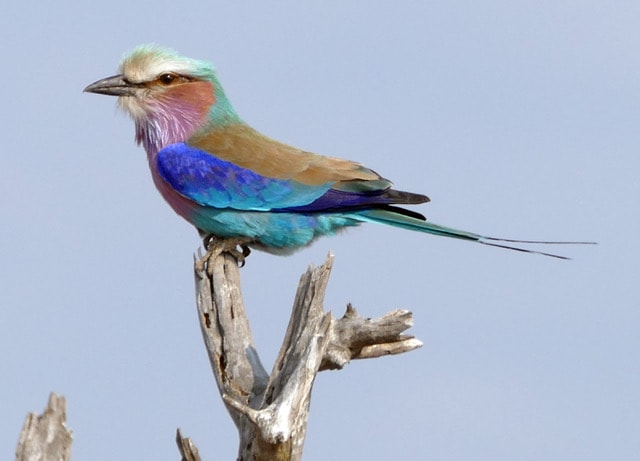
    This massive park covers a vast area and is teaming with Africa’s big (and small). The great thing for birders, though, is that it’s full of easy-to-see, spectacular-looking birds, such as several species each of roller, bee-eater, kingfisher, hornbill, vulture, owl, and stork. The park is teaming with birds of prey, including the spectacular, colorful Bateleur. There’s also a good chance of finding Secretarybird, Kori Bustard (the world’s heaviest flying bird), Southern Ground Hornbill (along many other hornbill species). We end this amazing trip with a flight from the Kruger Park to Victoria Falls, bordering Zambia and Zimbabwe. What locals call “The Smoke that Thunders” is the planet’s largest waterfall (it’s twice the height of Niagara and more than twice its width), where the mighty Zambezi plummets into a deep gorge. The area around the falls is extremely rich with birdlife and is in the heart of wild Africa where megafauna still freely roam.

    Please refer to the itinerary below. For questions or to sign up, contact Eric Schroeder at travelprogram@goldengateaudbon.org. Please do not contact the trip vendor first.

    If you would like to convert the local currency to USD, please click here.

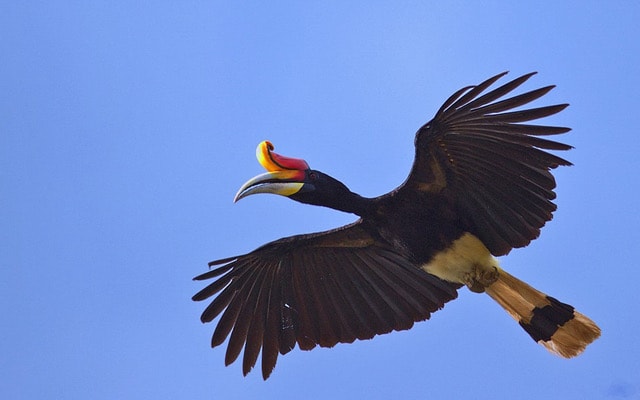
  • Borneo: Special Birds, Unusual Mammals

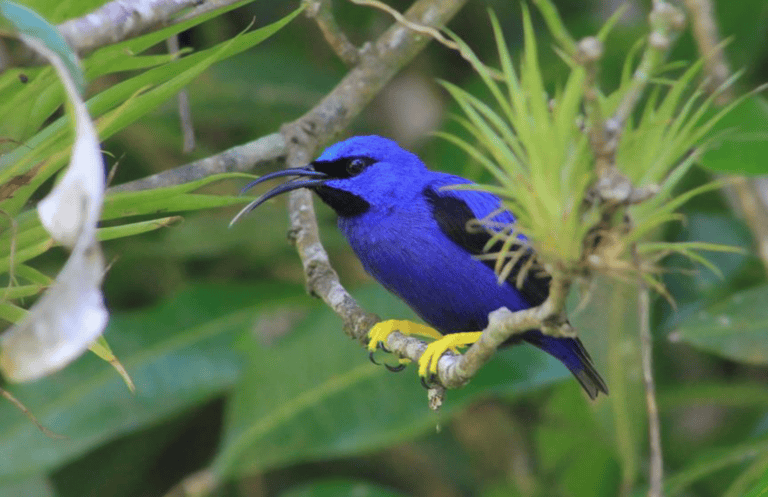
  • TRINIDAD AND TOBAGO

    Trinidad and Tobago are situated just seven miles north of Venezuela, giving them a rich biodiversity comprised of a blend of both Amazonian and West Indies wildlife. Despite their small size, the islands boast a bird list of more than 500 species.

    Our tour starts on Tobago, which has a distinctly Caribbean flavor, featuring lush, forested heights sloping gently into beautiful tropical beaches, surrounded by diverse coral reefs. Here we’ll seek species not found on Trinidad, which include the localized White-tailed Sabrewing. Despite its name, the endemic Trinidad Motmot is much more abundant on Tobago, as is Rufous-tailed Jacamar. We’ll take a glass-bottom boat trip to Little Tobago Island to see some of the spectacular seabirds that nest on the island, such as beautiful Red-billed Tropicbirds. We then bird our way across Tobago, exploring its wetlands and forests for specials such as Blue-backed Manakin and Venezuelan Flycatcher.

    After four nights on Tobago we transfer to Trinidad, famous for its vibrant mix of cultures, excellent tropical weather, and great hospitality. During our time on Trinidad, we stay at the Asa Wright Nature Centre, a world-leading conservation-focused ecolodge. Asa Wright is well known among birdwatchers—its extensive grounds wind through pristine rainforest which boast Bearded Bellbird and the most accessible Oilbird roost in the world. Relaxed birdwatching from the veranda allows close viewing of charismatic and colorful species, such as Blue Dacnis and Tufted Coquette

    We’ll explore Trinidad’s wetlands, savannah, forests, and coastline, using Asa Wright as our comfortable base, while we seek specials such as Black Hawk-Eagle, Masked Cardinal, Lilac-tailed Parrotlet, and Red-bellied Macaw. During a scenic boat cruise, we’ll witness the breath-taking spectacle of thousands of Scarlet Ibis as they return to roost. After five nights at Asa Wright, we will end the tour with two nights in the northeast, where we target Trinidad’s one true endemic, the Trinidad Piping Guan, a once common species now red-listed by the International Union for Conservation of Nature (IUCN) as Critically Endangered.

    This is a relatively easy tour, in which we hope to become accustomed to many neotropical bird families at leisure, with great photographic opportunities for many colorful species. We’ll have time to enjoy the wonderful birds of the islands, while taking advantage of the relaxing Caribbean culture.

    Contact: Please refer to the itinerary below. For questions or to sign up, contact Eric Schroeder at travelprogram@goldengateaudbon.org. …

  • Uganda: Gorillas, Chimpanzees, and LOTS of Birds!

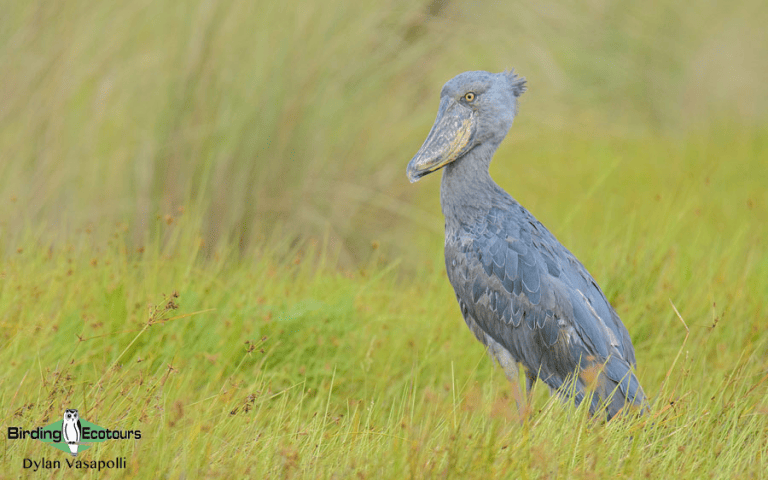
    Uganda has been called the Pearl of Africa and on this trip you’ll see why: we’ll see an amazing array of birds and mammals. We’ll also see spectacular scenery, including Bwindi Impenetrable Forest; Africa’s largest lake, Lake Victoria; and Murchison Falls where the Nile plummets 141 feet through a narrow gap of only 23 feet. We’ll also hike down into the Mubwindi Swamp where we’ll encounter many of the  Albertine Rift endemics. The trip to look for Shoebill at the Mabamba Swamp is in mokoros, small dugout canoes. Other wildlife-viewing boat trips such as on the Nile at Murchison Falls are on larger boats with cabins. The parks we’ll visit include Lake Mburo National Park, Bwindi Impenetrable National Park, Queen Elizabeth National Park, Kibale National Park, Murchison Falls National Park, and the Ziwa Rhino Sanctuary.

    Target bird species for the trip include the iconic Shoebill, Green-breasted Pitta, Great Blue Turaco, Ross’s Turaco, Red-faced Barbet, Nubian Woodpecker, Narina Trogon and the 20+ Albertine Rift endemics, including Regal Sunbird and African Green Broadbill. You can also elect to do either (or both) of two optional treks—one to search for Mountain Gorillas and the other to visit Chimpanzees. (For those who don’t choose to do these options, there will be additional birding options available.) Our other target mammal species will include Leopard, White Rhinoceros, Elephant, African Buffalo, Zebra, Eland, Hippopotamus, and a host of additional  primates, including Uganda Red Colobus, Guereza Black-and-white colobus, Grey-cheeked Mangabey, Olive Baboon, Red-tailed Monkey, and L’Hoest’s Monkey

    Cost: $$9,6o0 per person, double occupancy; $715 single supplement. Limit 6 people.

    Optional:

    • Mountain Gorilla trekking $700
    • Chimpanzee trekking $200

    Complete description and itinerary can be found GGBA Uganda itinerary.

    Email us about availability, or about any other questions, at travelprogram@goldengatebirdalliance.org

    Please do not contact the vendor first.…

  • Birding and Wildlife Brazil and Argentina: Iguazú Falls, the Pantanal and the Cerrado

    On our 16-day tour to Iguazú Falls, the Pantanal and Chapada dos Guimarães we’ll explore three different ecosystems in Brazil: Atlantic forest, highland savannah, and wetlands. Along the way, we’ll see fabulous bird and mammals and visit some incredible natural sites.

    We begin our tour on the Argentine side of Iguazú Falls, which not only provides dramatic scenery, but excellent Atlantic Forest birding. The Iguazu River, where it tumbles over the edge of the Parana Plateau, is often considered the world’s most spectacular waterfall. The falls span over 1.6 miles and are comprised of 275 distinct falls. One of our target birds will be the Great Dusky Swift, which roost on the waterfall cliffs. Our target Atlantic forest birds include Red-rumped Cacique, Toco Toucan, Chestnut-eared Araçari, Blonde-crested Woodpecker, Ochre-collared Piculet, Swallow-tailed Manakin, Southern Antpipit, Eared Pygmy-Tyrant, Chestnut-bellied Euphonia, Green-headed Tanager, Streak-capped Antwren, Surucua Trogon, Rufous-capped Motmot, Greenish Schiffornis, Rufous Gnateater, Dusky-tailed Antbird, and the elusive Black-fronted Piping-Guan.

    Our next stop is the world’s largest wetland, the Pantanal, which provides us with the best opportunity on the planet to see Jaguar as well as other charismatic mammals, and of course it hosts a large suite of birds. Target birds include five kinds of kingfishers (Amazon, Ringed, Green, Green-and-rufous and American Pygmy), Red-billed Scythebill, Bare-faced Curassow, and Great Rufous Woodcreeper, Agami Heron, Jabiru, Golden-collared Macaw, Golden-collared Macaw, Black-collared Hawk, Sungrebe, and Gretter Rhea. The Pantanal is also a great place to see mammals; our targets there include Giant Otter, Giant Anteater, Crab-eating Fox, Marsh Deer, Lowland Tapir, and, of course, Jaguar.

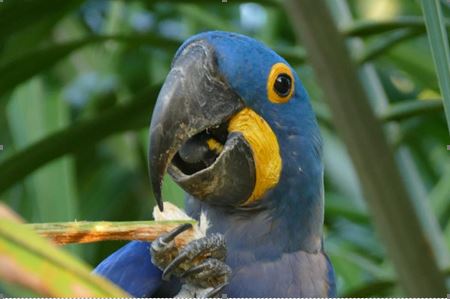
    Although not as famous as our first two stops, Brazil’s Cerrado region is no less important in terms of the bird and mammal species it supports. The Cerrado is a vast upland savanna—the most biodiverse in the world—and it’s home to five percent of the world’s animals and plants. We’ll be visiting its most famous national park—Chapada dos Guimarães. Chapada is a Brazilian word that means a region of steep cliffs, and the place lives up to its name with its rugged escarpments and dramatic waterfalls. Target birds include Blue-winged Macaw, Red-and-green Macaw, Toco Toucan, Peach-fronted Parakeet, Planalto Hermit, Swallow-tailed Hummingbird, Red Pileated Finch, Pale-crested Woodpecker, and Flavescent Warbler. We’ll enjoy looking for nightbirds at our comfortable lodge; targets include Nacunda Nighthawk, Common Potoo, Rufous Nightjar, Scissor-tailed Nightjar, Little Nightjar, Pauraque, and Tropical Screech Owl. And finally, we’ll keep our eyes open to the park’s most famous—and elusive—mammal, the maned wolf, a canid that’s not a wolf but rather resembles a long-legged fox and is the only member of its genus, Chrysocyon.…