
This trip should be called “South Africa’s Greatest Hits.” It starts in Cape Town, one of the most beautiful cities in the world, then moves to the highveld of the Drakensberg Mountains, next the St. Lucia wetlands, and finally to the lowveld, visiting both Kruger National Park and ending with a stay in a private safari camp.
Around Cape Town we’ll visit three very different ecosystems: the Hottentot Holland Mountains, the West Coast, and the ocean off the coast.
by Eric Schroeder
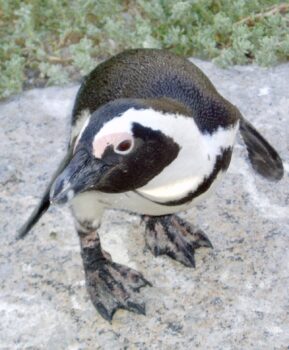
The Hottentots Holland Mountains are home to some special birds, including Ground Woodpecker, Cape Rock Thrush, Victorin’s Warbler, Cape Grassbird, Cape Sugarbird, Verreaux’s Eagle and the day’s primary target, the Cape Rockjumper. Later in the afternoon we’ll visit the nearby Stony Point African Penguin colony.
Next we travel along the west coast, visiting the strandveld vegetation with its unique birds. Along the way, we’ll watch for Blue Crane, Pied Starling, Cape Clapper Lark, Capped Wheatear, Cape Longclaw, and the endemic Cape subspecies of Cloud Cisticola. At West Coast National Park our targets include Cape Penduline Tit, White-backed Mousebird, Bokmakierie, Karoo Scrub Robin, Southern Black Korhaan, and the striking Black Harrier.
On our pelagic trip, we’ll expect to see Shy, Black-browed, Indian Yellow-nosed and Atlantic Yellow-nosed Albatrosses, Northern and Southern Giant Petrels, Cape Petrel, Brown Skua, and Cape Gannet. And, with luck, we could add Great-winged Petrel, Spectacled Petrel, Northern and Southern Royal Albatrosses, and Wandering Albatross.
From Cape Town we’ll fly to Durban, capital of KwaZulu Natal, the birdiest province in South Africa. Our first day in this region, however, features an excursion into the Drakensberg Mountains (known to the locals as the “barrier of spears”) and a visit to the kingdom of Lesotho.
by Eric Schroeder
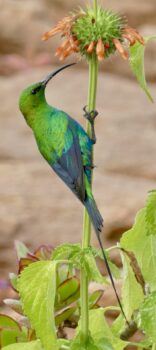
The birdlife changes as altitude increases with Red-necked Spurfowl, Brown-backed Honeybird, Drakensberg Prinia, Bush Blackcap, and Cape Grassbird occurring in the lower thickets. As we ascend, these are replaced by Malachite Sunbird and Gurney’s Sugarbird, with a supporting cast of Cape Rock Thrush, Buff-streaked Chat, Yellow Bishop, and if we’re lucky, the scarce Fan-tailed Grassbird. At the top of the Sani Pass we’ll hope to see Drakensberg Rockjumper, Sentinel Rock Thrush, Mountain and African Rock Pipits and Drakensberg Siskin. We’ll cross into Lesotho and briefly explore the plains, searching for Southern Bald Ibis, Large-billed Lark, Sickle-winged Chat, Layard’s Warbler, Fairy Flycatcher, Karoo Prinia, Karoo Scrub Robin, and, with luck, Bearded Vulture.
Back in KwaZulu Natal we’ll bird the Underberg region, visiting grassland, wetland, and forest sites. Our targets will include the rare Wattled Crane, the Cape Parrot, the secretive and highly sought-after Spotted Ground Thrush and another difficult species, Long-crested Eagle. We’ll spend the next day on forest trails, where we’ll keep an eye out for Green Malkoha, Lemon and Tambourine Doves, Scaly-throated Honeyguide, Grey Cuckooshrike, Square-tailed Drongo, Chorister Robin-Chat, Dark-backed Weaver and the prized Green Twinspot. And we’ll attempt to see two very special species: the African Broadbill and Green Barbet.
Next, we transfer to St Lucia, a wild place, where hippos can still roam the streets at night. This village is surrounded by a World Heritage Site, the Isimangaliso Wetland Park, where we’ll spend two days birding. Targets here include African Fish Eagle, Yellow-billed Stork, Pink-backed Pelican and the impressive Goliath Heron. The reedbeds host colonies of the prized Southern Brown-throated and Eastern Golden Weavers. In the coastal forest we’ll seek Southern Banded Snake Eagle, Livingstone’s Turaco, Narina Trogon, Woodward’s Batis, Rudd’s Apalis, Eastern Nicator, and Gorgeous Bushshrike. The wetlands are also home to Nile Crocodiles and Common Hippopotamuses; we should see plenty of both!
From the wetlands of St. Lucia we move to world-famous Kruger National Park where we’ll be spending three nights at the Lower Sabie Rest Camp, a great place to see both birds and mammals from the open-top safari vehicles we’ll be using.
by Eric Schroeder
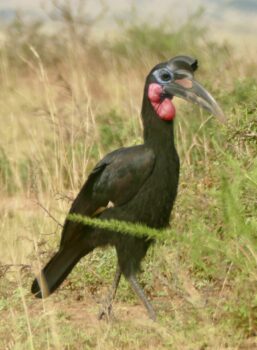
Bushveld target species include Swainson’s Spurfowl, Grey Go-away-bird, Purple-crested Turaco, Red-crested Korhaan, Burchell’s Coucal, Green Wood Hoopoe, Common Scimitarbill, African Grey Hornbill, Lilac-breasted Roller, Brown-hooded Kingfisher, Little and White-fronted Bee-eaters, Crested Barbet, Brown-headed Parrot, Orange-breasted Bushshrike, Brown-crowned Tchagra, Brubru, Magpie Shrike, Burnt-necked Eremomela, Green-winged Pytilia, Arrow-marked Babbler, Red-billed Oxpecker, and Marico Sunbird. Larger birds include Saddle-billed and Marabou Stork, Kori Bustard and Southern Ground Hornbill. The wide range of raptors includes White-backed, Hooded, Lappet-faced and White-headed Vultures; Bateleur; Secretarybird; and various eagles—Martial, Tawny, Brown Snake Eagle, Wahlberg’s Eagle and African Fish Eagle.
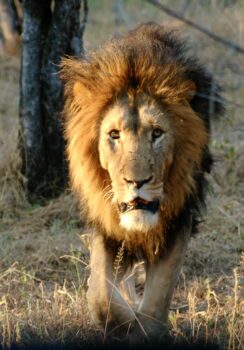
Our final tour stop will be Notten’s Bush Camp where we’ll no doubt see many of the birds that we saw in Kruger as well as mammals we might have also seen thee. But at Notten’s you should get a much closer look at some of these mammals, including the Big Five—African Elephant, Rhinoceros, African Buffalo, Lion, and Leopard. Other mammals we should see include Giraffe, Plains Zebra, Spotted Hyaena, Cheetah, Banded Mongoose, Vervet Monkey, Common Warthog, and a wide variety of antelope species, including Common Wildebeest, Impala, Common Duiker, and Kudu.
Tour Price: R190,990 per person (Approximately $11,500
Single Supplement: R16,350 (Approximately $900)
Questions? Contact Eric at travelprogram@goldengatebirds.org.
Ready to register? Contact Eric first. He will register you and put you in contact with Birding Ecotours.