Bird-Safe Buildings
This nest is still being built. Swoop back soon to view this important conservation issue!
THe Problem
Have you ever heard that “thunk!” – a bird striking a glass window or door?
Bird-glass collisions are a major threat to birds. In fact, more than 1 billion birds die each year after colliding with glass in the U.S. alone., That’s the second highest direct-human cause of bird death, second only to outdoor cats. Many think high-rises are the biggest threat but only 1% of collisions occur at high-rise buildings. The vast majority (99% ) of bird-window collisions occur at private residences (1-3 stories) and low-rise buildings (4-11 stories). All sizes of glass are a threat, from large to small.
Birds can’t “see” glass. Instead, they see reflections of vegetation or sky, think they’re real and fly towards them, often at full speed. Or, birds are misled by glass transparency. They see through the glass and try to reach shelter or vegetation on the other side but strike the glass instead. Light pollution (also called “Artificial Light At Night”, or “ALAN”, for short) exacerbates the problem, drawing birds into developed areas and increasing the reflection and transparency of glass. Even if the bird fly away after a collision, the majority sustain internal injuries and succumb days later. Although bird-glass collisions occur year-round, they are especially common during spring and fall migration season.
Take the #Lights Out for Birds pledge today!
The SOlution
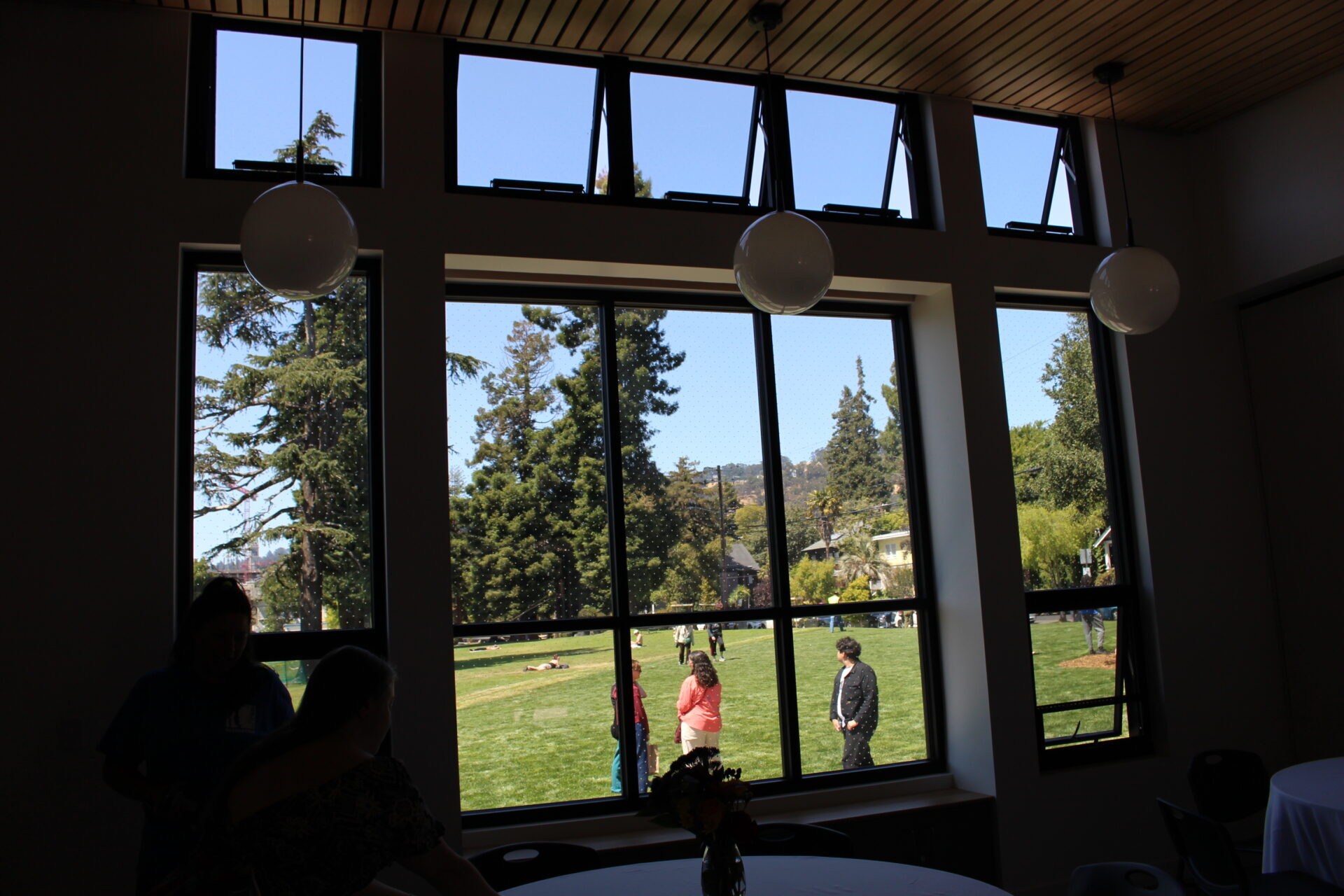
Add patterns to the outside surface of the glass, to break up the reflection and create a visual barrier birds can see.
To be effective solutions must meet the following criteria:
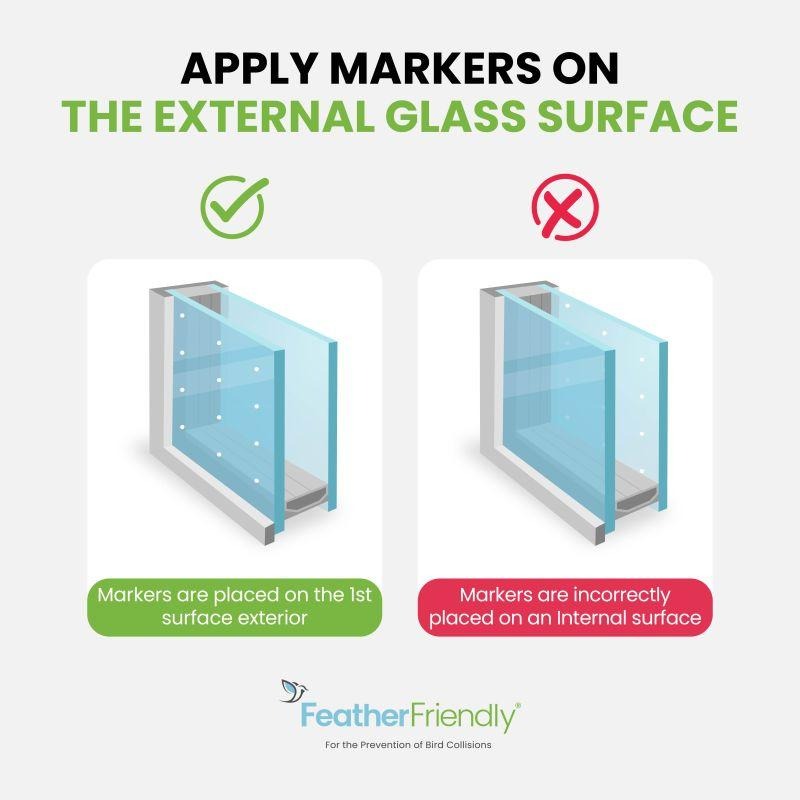
- Exterior Surface. Markers must be applied to the outside-facing surface of the glass (or, “Surface 1”). Placing them on the outside, or exterior, side breaks up reflections.
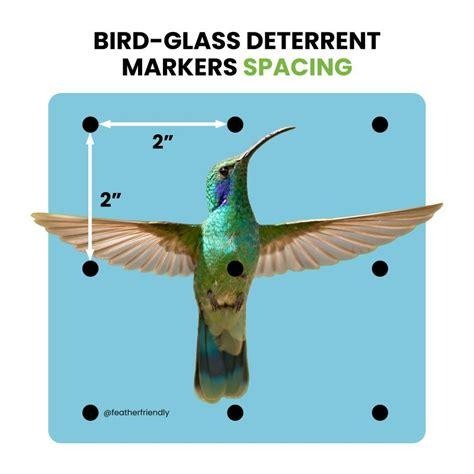
- Close spacing: 2- or 4-inches. Markers applied on the glass must be spaced no further than 2-inches apart, called the “2 by 2 rule”. Hanging treatments hung in front of the glass (like Acopian blinds), can use a slightly wider spacing of 3- to 4- inches. The close spacing tells birds there isn’t enough space to fly through.
- Large enough for birds to see. Dots or other shapes should be at least one-quarter inch in diameter. Stripes, or cording, should be at least one-eighth inch wide.
Additional guidelines:
- Full Coverage. Markers and patterns should cover the entire glass surface.
- Contrasting Color. Markers should be in a contrasting color. For markers on the glass, white is often the best (though black is for “fly-through” situations). For cording in front of the glass, olive green or black is recommended (though other colors will probably be equally effective). Bigger is better.
- Start with the most hazardous windows. Prioritize glass where collisions have already happened. Also, look at your windows at different times of day, from different angles. Glass that reflects vegetation or has a clear view of habitat inside (like potted plants) tends to be the most dangerous.
See the FAQs below for more information about specific treatment.
A note about ultraviolet (UV) treatments. While they may be readily available, they generally aren’t recommended because not all birds can see them (raptors, owls, doves, pigeons) and the effectiveness changes depending on time of day and amount of sun.
BIRD-FRIENDLY GLASS FAQs
Learn more about how to protect birds from glass collisions.
A wide range of products are available to make glass bird-friendly.
DIY Solutions
- Drawing on glass
- Paracording
Drawing on glass – with tempera paint, soap or paint pens (a great activity for kids!)
DIY Solutions
- Drawing on glass – with tempera paint, soap or paint pens (a great activity for kids!)
- Paracording “Acopian BirdSavers” – DIY instructions
DIY Solutions
- Drawing on glass – with tempera paint, soap or paint pens (a great activity for kids!)
- Paracording “Acopian BirdSavers” – DIY instructions
Most collisions occur on homes and the first four stories of buildings. In addition to turning off lights, you can ensure your windows are bird safe and prevent collisions with window treatments, tested by the American Bird Conservancy.
Birds use natural night light sources such as the stars and moon to navigate at night. When dense urban and suburban areas are lit up, the combined effect creates a landscape level illumination called “skyglow.” Skyglow causes birds to change their migratory pathways, curving towards the brightly illuminated areas. This often means birds are traveling further, expending more energy and therefore risking exhaustion and starvation.
Additionally, skyglow has been proven to cause birds to stopover more frequently than they would naturally. Rather than traveling as far as they can go in a single night, they end up stopping early and landing in our cities and towns. When birds stopover in urban areas, they are in danger of the other threats cities pose such as collision with buildings and cars, predation by outdoor cats, pollution, and difficulty finding food. Turning off and dimming lights will reduce the impacts of skyglow, keeping birds on route and out of harm’s way.
96% of all bird species eat insects, primarily moth caterpillars, for some part of their diet. The protein that caterpillars, moths, and other bugs provide is essential for young birds as they are growing fast; even hummingbirds feed their young insects. Protecting moths and other nocturnal insects is critical for protecting birds.
Just like birds, moths are disoriented, exhausted, and trapped by artificial lights at night. And it goes deeper than those direct impacts: artificial light has been shown to impact plants as well, changing the timing and availability of important food sources for these insects. Turning off lights at night will help birds, bugs, and everything up and down the food chain.
Turning off a single 100-watt bulb from dusk until dawn saves an average of 417 kwH of electricity, or $46 a year in bulbs and electricity costs. One participating municipal building in the Toronto Lights Out program reported cost savings of more than $200,000 in 2006. By reducing energy usage, Lights Out programs also help reduce pollutants such as carbon dioxide, and help moderate the impact of climate change.
PGE offers businesses energy efficiency rebates and incentives for products such as motion sensors and light timers. Check out their website to see if your lights out energy savings qualify for additional rebates.
When was the last time you were able to look up at the night sky and see the Milky Way? Remember the sense of wonder and awe you felt at seeing the brilliancy of the natural lights surrounding our earth. Physically seeing our place in the galaxy has inspired scientific discoveries and artistic creations for millenia. Connecting with our ancestors and the globe in modern times, through stargazing is part of a universal dark sky heritage that we risk losing as our world is increasingly lit up.
Additionally, it is important to remember that humans evolved, alongside our bird and wildlife brethren, in a darker world. Artificial light has negative impacts on our human health, and darkening our urban world will have benefits for humans as well.
When was the last time you were able to look up at the night sky and see the Milky Way? Remember the sense of wonder and awe you felt at seeing the brilliancy of the natural lights surrounding our earth. Physically seeing our place in the galaxy has inspired scientific discoveries and artistic creations for millenia. Connecting with our ancestors and the globe in modern times, through stargazing is part of a universal dark sky heritage that we risk losing as our world is increasingly lit up.
Additionally, it is important to remember that humans evolved, alongside our bird and wildlife brethren, in a darker world. Artificial light has negative impacts on our human health, and darkening our urban world will have benefits for humans as well.
When was the last time you were able to look up at the night sky and see the Milky Way? Remember the sense of wonder and awe you felt at seeing the brilliancy of the natural lights surrounding our earth. Physically seeing our place in the galaxy has inspired scientific discoveries and artistic creations for millenia. Connecting with our ancestors and the globe in modern times, through stargazing is part of a universal dark sky heritage that we risk losing as our world is increasingly lit up.
Additionally, it is important to remember that humans evolved, alongside our bird and wildlife brethren, in a darker world. Artificial light has negative impacts on our human health, and darkening our urban world will have benefits for humans as well.
When was the last time you were able to look up at the night sky and see the Milky Way? Remember the sense of wonder and awe you felt at seeing the brilliancy of the natural lights surrounding our earth. Physically seeing our place in the galaxy has inspired scientific discoveries and artistic creations for millenia. Connecting with our ancestors and the globe in modern times, through stargazing is part of a universal dark sky heritage that we risk losing as our world is increasingly lit up.
Additionally, it is important to remember that humans evolved, alongside our bird and wildlife brethren, in a darker world. Artificial light has negative impacts on our human health, and darkening our urban world will have benefits for humans as well.
When was the last time you were able to look up at the night sky and see the Milky Way? Remember the sense of wonder and awe you felt at seeing the brilliancy of the natural lights surrounding our earth. Physically seeing our place in the galaxy has inspired scientific discoveries and artistic creations for millenia. Connecting with our ancestors and the globe in modern times, through stargazing is part of a universal dark sky heritage that we risk losing as our world is increasingly lit up.
Additionally, it is important to remember that humans evolved, alongside our bird and wildlife brethren, in a darker world. Artificial light has negative impacts on our human health, and darkening our urban world will have benefits for humans as well.
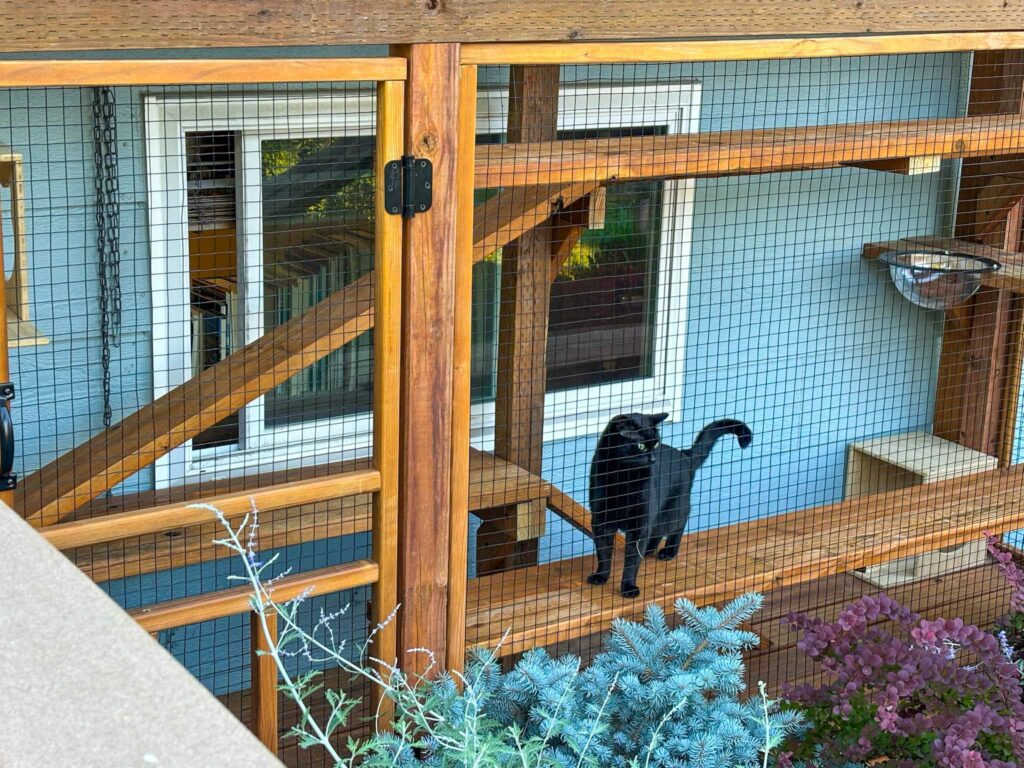
How to Create a Bird-Safe Backyard
Posted onby Matthew Hildebrandt As spring rolls in, bird migration ramps up, and birds begin flying north…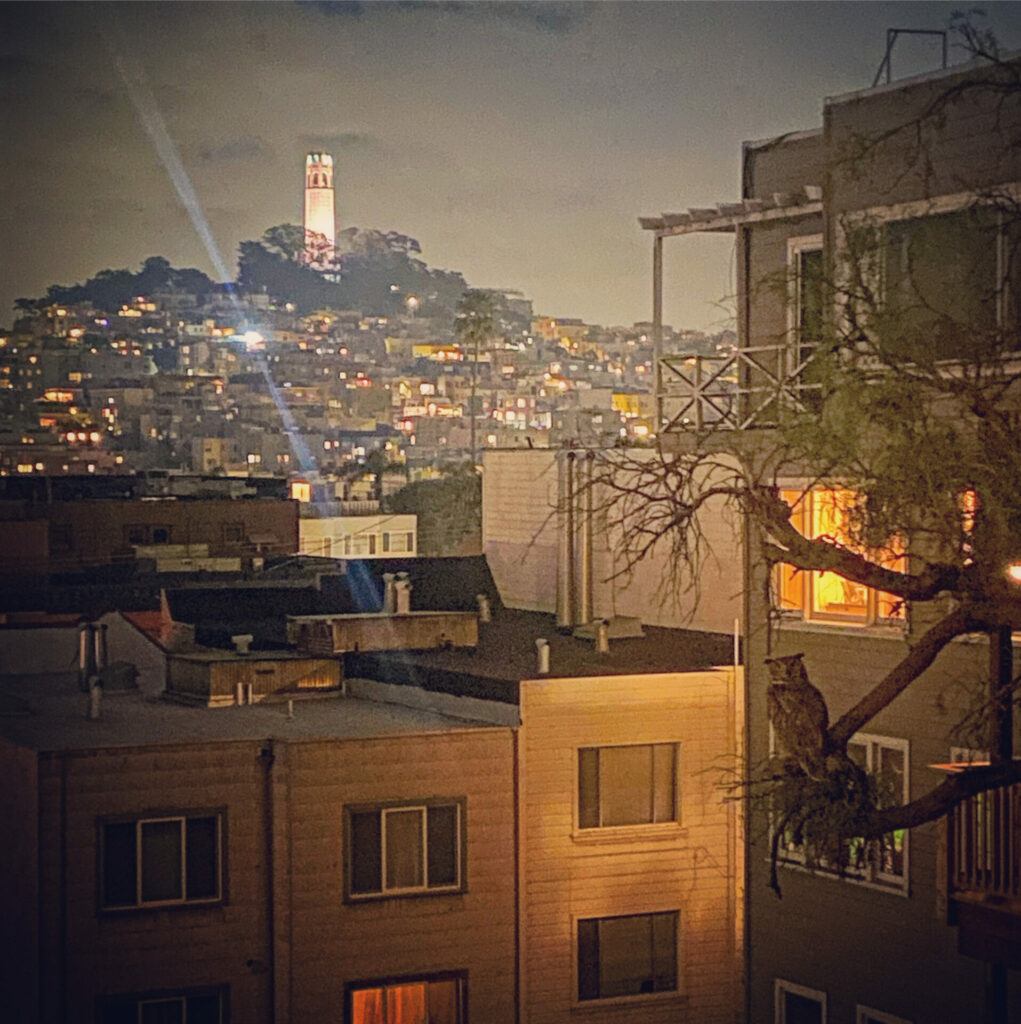
That Night Feeling
Posted onBy Whitney Grover It’s dark but only just dark, maybe a street light or a bright…
Light Pollution on Bird Migration Behavior
Posted onBy Lydia Bruno As urban dwellers, we are only too familiar with the effects of light…
Lights out for Larry: The Burden of Brightness on Birds
Posted onTwo weeks ago, a common blue bird disappeared from the city of San Francisco. You know…
Thank you to these businesses and buildings for committing to Lights Out!
- 101 California Street, San Francisco
- Allsteel Inc., San Francisco
- Barker Pacific Group, Inc. San Francisco
- San Francisco Municipal Buildings and Agencies including:
- City Hall
- Dept.of the Environment, 1455 Market Street
- Dept.of Public Works 25 and 30 Van Ness and 1680 Mission Street
- Municipal Transportation Agency, One South Van Ness
- San Francisco Planning Dept., 1650 and 1680 Mission Street
- Public Defender, 555 7th Street
- Tishman Speyer, San Francisco
- Post Montgomery Associates, 1 Montgomery St. Ste. 2350