• Brazil & Argentina

    This trip was so popular in 2025 (we ran two trips–both full) that we’re bringing it back in 2026. On our 12-day tour to the Pantanal and Iguazú Falls, we’ll explore two very different ecosystems; in Brazil we’ll visit a huge wetlands system while in Argentina we’ll visit the Atlantic forest. This is a version of a trip we ran in 2022—on that trip we recorded 325 bird species and 14 mammal species (for a complete list, see the trip report). October is the end of the dry season and the perfect time to explore both of these fascinating places.

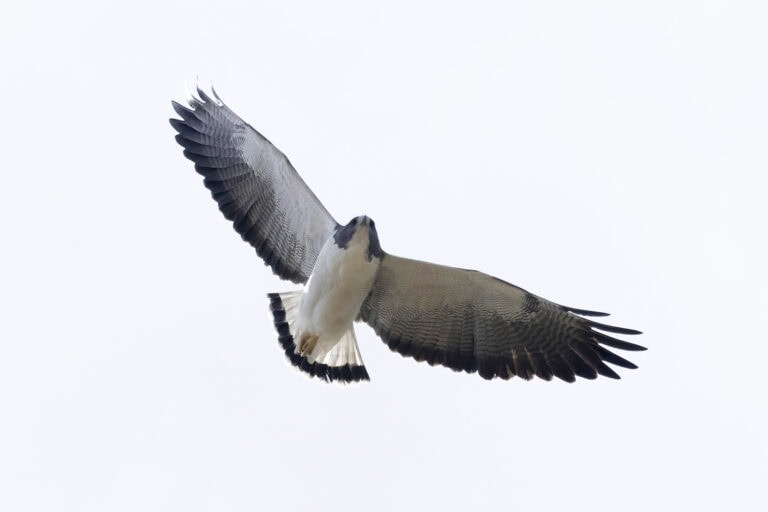
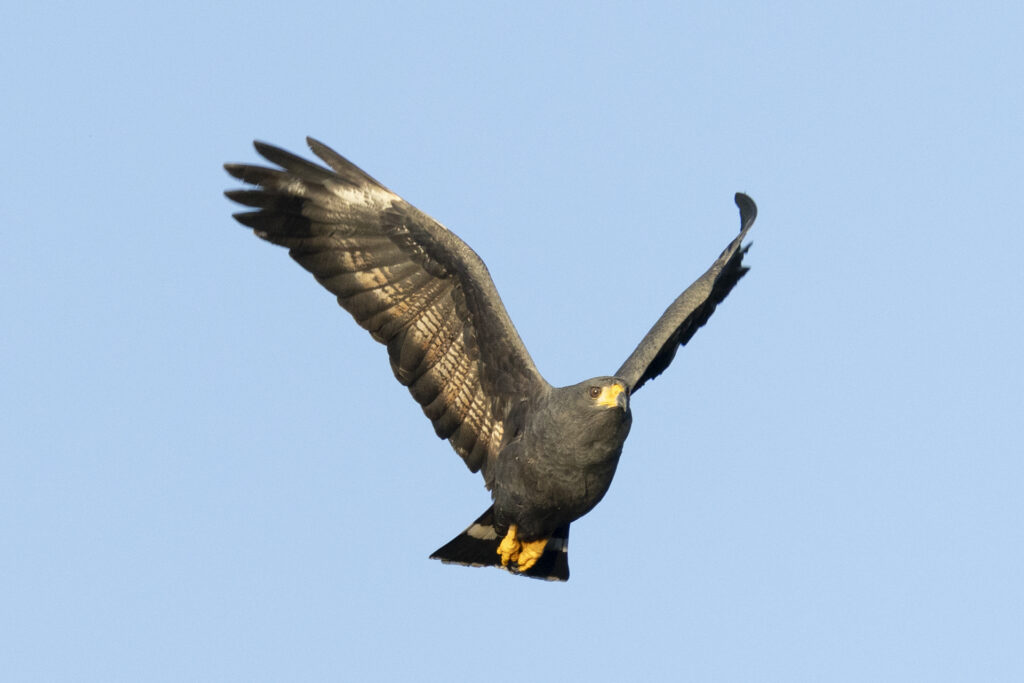
    We begin this trip with a visit to the world’s largest wetland, the Pantanal, which provides us with the best opportunity on the planet to see Jaguar, and of course it hosts a large suite of birds. Target birds include five kinds of kingfishers (Amazon, Ringed, Green, Green-and-rufous and American Pygmy), Red-billed Scythebill, Bare-faced Curassow, Great Rufous Woodcreeper, Agami Heron, Jabiru, Golden-collared Macaw, Golden-collared Macaw, Black-collared Hawk, Sungrebe, and Gretter Rhea. In addition to the Jaguar, other charismatic mammal targets include Giant Otter, Giant Anteater, Crab-eating Fox, Marsh Deer, and Lowland Tapir.

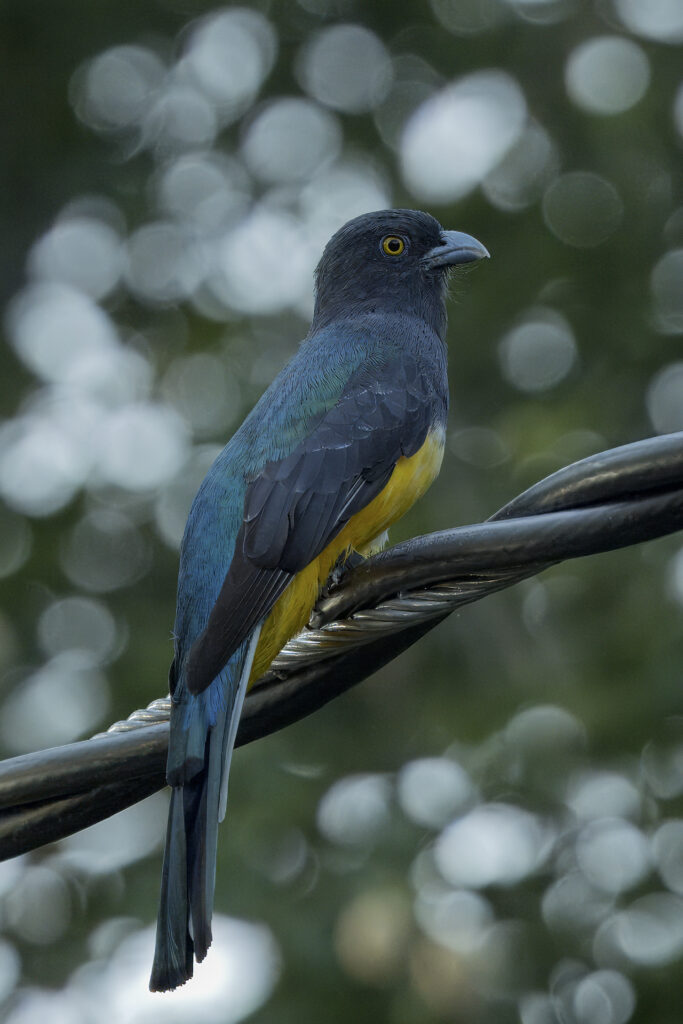
    Our visit to the Atlantic Forest starts on the Argentine side of Iguazú Falls, which not only provides dramatic scenery, but excellent birding. The Iguazu River, where it tumbles over the edge of the Parana Plateau, is by many people considered the world’s most spectacular waterfall. The falls span over 1.6 miles and are comprised of 275 distinct falls. But the birds are spectacular, too. One of our target birds occurs at the fall, the Great Dusky Swift, which roost on the waterfall cliffs. Our target Atlantic forest birds include Red-rumped Cacique, Toco Toucan, Chestnut-eared Araçari, Blonde-crested Woodpecker, Ochre-collared Piculet, Swallow-tailed Manakin, Southern Antpipit, Eared Pygmy-Tyrant, Chestnut-bellied Euphonia, Green-headed Tanager, Streak-capped Antwren, Surucua Trogon, Rufous-capped Motmot, Greenish Schiffornis, Rufous Gnateater, Dusky-tailed Antbird, and the elusive Black-fronted Piping-Guan.

    For questions or to sign up, contact Eric Schroeder at travelprogram@goldengateaudbon.org.  

    Price: $8870 per person, based on double occupancy
    Single Supplement: $940
    Price includes internal transportation (e.g., domestic flights worth $500).

  • Brazil & Argentina

    Second trip added for 2026!

    This trip was so popular in 2025 (we ran two trips–both full) that we’re bringing it back in 2026 and we’ve now once again added another second trip.  On our 13-day tour of the Pantanal and Iguazú Falls, we’ll explore two very different ecosystems; in Brazil we’ll visit a huge wetlands system while in Argentina we’ll visit the Atlantic forest. This is a version of a trip we ran in 2022—on that trip we recorded 325 bird species and 14 mammal species (for a complete list, see the trip report). October is the end of the dry season and the perfect time to explore both of these fascinating places.

    We begin this trip with a visit to the world’s largest wetland, the Pantanal, which provides us with the best opportunity on the planet to see Jaguar, and of course it hosts a large suite of birds. Target birds include five kinds of kingfishers (Amazon, Ringed, Green, Green-and-rufous and American Pygmy), Red-billed Scythebill, Bare-faced Curassow, Great Rufous Woodcreeper, Agami Heron, Jabiru, Golden-collared Macaw, Golden-collared Macaw, Black-collared Hawk, Sungrebe, and Gretter Rhea. In addition to the Jaguar, other charismatic mammal targets include Giant Otter, Giant Anteater, Crab-eating Fox, Marsh Deer, and Lowland Tapir.

    Our visit to the Atlantic Forest starts on the Argentine side of Iguazú Falls, which not only provides dramatic scenery, but also excellent birding. The Iguazu River  where it tumbles over the edge of the Parana Plateau is considered by many people to be the world’s most spectacular waterfall. The falls span over 1.6 miles and are comprised of 275 distinct waterfalls. And the birds are spectacular, too. One of our target birds occurs at the falls, the Great Dusky Swift, which roost on the waterfall cliffs. Our target Atlantic forest birds include Red-rumped Cacique, Toco Toucan, Chestnut-eared Araçari, Blonde-crested Woodpecker, Ochre-collared Piculet, Swallow-tailed Manakin, Southern Antpipit, Eared Pygmy-Tyrant, Chestnut-bellied Euphonia, Green-headed Tanager, Streak-capped Antwren, Surucua Trogon, Rufous-capped Motmot, Greenish Schiffornis, Rufous Gnateater, Dusky-tailed Antbird, and the elusive Black-fronted Piping-Guan.

    Contact: Please refer to the itinerary below. For questions or to sign up, contact Eric Schroeder at travelprogram@goldengateaudbon.org.  

    Price: $8870 per person sharing, which includes internal transportation (e.g., domestic flights worth $500)

    Single Supplement: $940

  • Namibia, Botswana, and Zimbabwe

    .kb-row-layout-id68053_9882a1-af .kt-row-column-wrap{align-content:start;}:where(.kb-row-layout-id68053_9882a1-af .kt-row-column-wrap) .wp-block-kadence-column{justify-content:start;}.kb-row-layout-id68053_9882a1-af .kt-row-column-wrap{column-gap:var(--global-kb-gap-md, 2rem);row-gap:var(--global-kb-gap-md, 2rem);padding-top:var(--global-kb-spacing-sm, 1.5rem);padding-bottom:var(--global-kb-spacing-sm, 1.5rem);grid-template-columns:repeat(2, minmax(0, 1fr));}.kb-row-layout-id68053_9882a1-af .kt-row-layout-overlay{opacity:0.30;}@media all and (max-width: 1024px){.kb-row-layout-id68053_9882a1-af .kt-row-column-wrap{grid-template-columns:repeat(2, minmax(0, 1fr));}}@media all and (max-width: 767px){.kb-row-layout-id68053_9882a1-af .kt-row-column-wrap{grid-template-columns:minmax(0, 1fr);}}
    .kadence-column68053_bb2d90-23 .kt-inside-inner-col,.kadence-column68053_bb2d90-23 .kt-inside-inner-col:before{border-top-left-radius:0px;border-top-right-radius:0px;border-bottom-right-radius:0px;border-bottom-left-radius:0px;}.kadence-column68053_bb2d90-23 .kt-inside-inner-col{column-gap:var(--global-kb-gap-sm, 1rem);}.kadence-column68053_bb2d90-23 .kt-inside-inner-col{flex-direction:column;}.kadence-column68053_bb2d90-23 .kt-inside-inner-col .aligncenter{width:100%;}.kadence-column68053_bb2d90-23 .kt-inside-inner-col:before{opacity:0.3;}.kadence-column68053_bb2d90-23{position:relative;}@media all and (max-width: 1024px){.kadence-column68053_bb2d90-23 .kt-inside-inner-col{flex-direction:column;justify-content:center;}}@media all and (max-width: 767px){.kadence-column68053_bb2d90-23 .kt-inside-inner-col{flex-direction:column;justify-content:center;}}

    This exceptional 18-day birding adventure resembles a very successful trip we’ve run three times previously—twice in 2019 and once in 2022. The difference is that this one adds a visit to Zimbabwe and Victoria Falls. It takes us through three different countries, offering a rich tapestry of breathtaking and varied landscapes. Our journey begins in the coastal Namib Desert at Walvis Bay, where towering dune fields (home to sought-after, localized near-endemics) meet rich lagoons teeming with flamingos, pelicans, shorebirds, and regional specials like Damara Tern and Chestnut-banded Plover.

    .kadence-column68053_a80584-a4 .kt-inside-inner-col,.kadence-column68053_a80584-a4 .kt-inside-inner-col:before{border-top-left-radius:0px;border-top-right-radius:0px;border-bottom-right-radius:0px;border-bottom-left-radius:0px;}.kadence-column68053_a80584-a4 .kt-inside-inner-col{column-gap:var(--global-kb-gap-sm, 1rem);}.kadence-column68053_a80584-a4 .kt-inside-inner-col{flex-direction:column;}.kadence-column68053_a80584-a4 .kt-inside-inner-col .aligncenter{width:100%;}.kadence-column68053_a80584-a4 .kt-inside-inner-col:before{opacity:0.3;}.kadence-column68053_a80584-a4{position:relative;}@media all and (max-width: 1024px){.kadence-column68053_a80584-a4 .kt-inside-inner-col{flex-direction:column;justify-content:center;}}@media all and (max-width: 767px){.kadence-column68053_a80584-a4 .kt-inside-inner-col{flex-direction:column;justify-content:center;}}
    .kb-image68053_f688c3-1e .kb-image-has-overlay:after{opacity:0.3;} Racket-tailed Roller by Dylan Vasapolli

    The Erongo Mountains of the beautiful Namib Escarpment are next on our itinerary, and here we search for Rosy-faced Lovebird, Herero Chat, Rockrunner, Monteiro’s Hornbill, Damara Red-billed Hornbill, the batis-like, although largely terrestrial, White-tailed Shrike, and other charismatic species of northern Namibia.

    Eventually we leave the desert and enter the grassland, savanna, and woodland of one of Africa’s greatest game parks, Etosha National Park. This is one of the world’s best places to see Black Rhinoceros and big cats, along with a good assortment of other African megafauna. It is also excellent for a fine range of very special birds, such as Namibia’s dazzling national bird, Crimson-breasted Shrike, the world’s heaviest flying bird, Kori Bustard, the diminutive Pygmy Falcon, and many more.

    After Etosha, we head into an incredibly bird-diverse tropical corner of Namibia, the Kavango East and Zambezi Regions (formerly the Caprivi Strip), and the adjacent panhandle of the Okavango Delta, which falls just within the borders of Botswana. The magnificent wetlands, riparian forests, and woodlands in these parts support Pel’s Fishing Owl (this is the world’s most reliable area for this iconic species), Rock Pratincole, White-backed Night Heron, African Finfoot, Slaty Egret, Southern Carmine Bee-eater, and literally hundreds of other spectacular species. Finally, we bird around the impressive Victoria Falls for yet another rich assemblage of birds. We typically record close to 400 bird species on this tour of varied habitats – and we also get one of the highest mammal lists of any of our tours on this transect.…

  • Tasmania Endemics

    We’ll be traveling with Inala Tours, a Tasmanian-based tour company, to see the highlights of this unique island. These include twelve endemic bird species (you’ll have an excellent chance to see them all) as well as all four robin species and raptors such as the Tasmanian subspecies of the mighty Wedge-tailed Eagle and the ghostly white morph Grey Goshawk. Mammals we’ll be seeking include Eastern quoll, wombat and platypus, echidna, and—with some luck—the Tasmanian devil, endemic to Tasmania. 

    Tasmanian Devil / Eric Schroeder

    The trip will begin with a visit to Maria Island off the east coast that will give us a chance to see Cape Barren Geese, Flame Robin and Swift Parrot. It’s also home to eleven of the twelve Tasmanian endemics, including one of the rarest, the Forty-spotted Pardalote. Mammals we should see include Forester Kangaroos, Bennett’s Wallaby, and Common Wombats.

    Next we’ll do a pelagic trip on the Southern Ocean; Tasmania is famous for its pelagic birding and our targets include a wide variety of shearwaters, petrels, storm petrels, albatrosses, and the Fairy Prion

    We head back south where we’ll visit another endemic-rich island, Bruny, where we’ll be staying at “Inala” a 1,500-acre wildlife sanctuary where our tour company is headquartered; all twelve of the endemics can be found on the grounds here. We’ll visit a variety of habitats on Bruny and look for shorebirds, raptors, and endemics, of course, including four honeyeater species and the Green Rosella. We’ll have a chance to see the Tasmanian sub-species of Short-beaked Echidna, one of Australia’s two egg-laying mammal (monotreme) species. On an evening walk we’ll look for nocturnal mammals (including the Eastern Quoll, the Tasmanian Pademelon, and, with luck, the Long-nosed Potoroo) and birds (Tawney Frogmouth and Tasmanian Boobook.) 

    Heading north, we’ll visit the Mt. Field area where our target will include Tasmanian Native Hen, Black Currawong and Yellow Wattlebird (all Tasmanian endemics). We’ll have our first chance to look for the bizarre Platypus (when members of London’s Royal Academy saw their first dead specimen, they thought it the greatest fake they’d even seen because they couldn’t find the stitches that held its disparate parts together). 

    We end our trip in the Cradle Mountain area, another fabulous place to see endemic birds and mammals. In addition to great birding, we’ll view endemic Tasmanian rainforest flora with ancient Gondwanan connections such as Pencil and King Billy Pines, Myrtle and the famous Tanglefoot Beech which is Tasmania’s only deciduous tree.…

  • Bhutan – Birds, Mammals and Monasteries

    We recently added this trip to Bhutan since the demand for our spring 2026 trip was overwhelming. There’s a nice wrinkle to this one, though—a visit to Bhutan’s annual Crane Festival, a cultural Bhutanese highlight, that takes place annually on November 11. Otherwise, the itinerary is very similar to the one we run each spring. For a complete list of the 340 species seen by last spring’s tour group, check out their trip report.

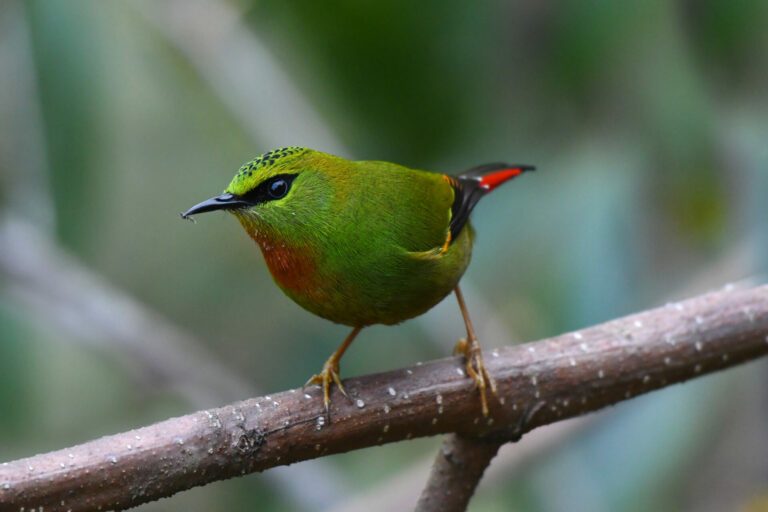
    It’s no wonder that it’s possible to see so many birds in a trip that’s less than three weeks long. Bhutan, a country roughly the size of Maryland, has almost 600 species of birds. Over 70% of its land is forested with 25% protected by National Parks. You’ll visit a range of ecosystems varying from sub-tropical at 150m to alpine at over 4,500m. On this 19-day trip, some of the major targets you’ll be looking for include the big three pheasants—Himalayan Monal, Satyr Tragopan, and Blood Pheasant—as well as some unusual birds like the Ibisbill, some beautiful birds like the Fire-tailed Myzornis, Ward’s Trogon and the aptly named Beautiful Nuthatch, and some critically endangered birds like the Rufous-necked Hornbill, the White-bellied Heron, and, on this particular tour, the Black-necked Crane. You can also expect to see 10-15 species of mammals (the group last year was fortunate enough to see Red Panda). Our Bhutanese guide from Langur Eco Travels will not only introduce you to the fauna but also the flora of Bhutan (famous for its rhododendrons) and its culture (our trip includes visits to several famous sites, including the Tiger’s Nest Monastery).
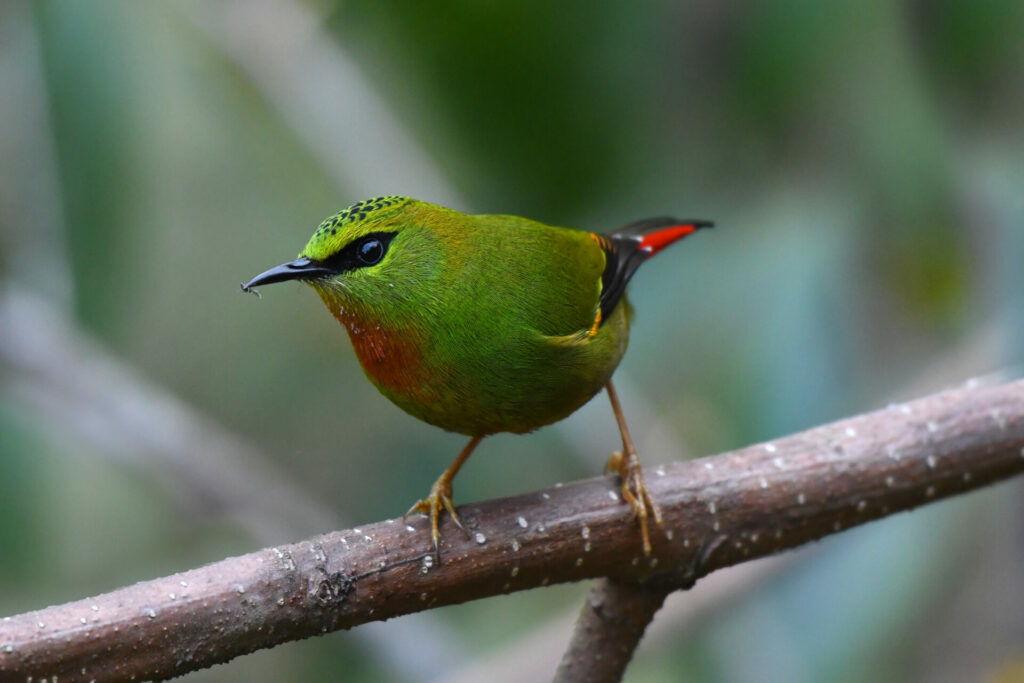
    Fire-tailed Myzornis / Chubzang Tangbi

    60 Minutes has a fascinating segment on Bhutan. Click here to watch it.

    TOUR COST
    Group Size: 3 – 8 guests
    Total: US$4,985 per person, double occupancy
    Total: US$5385 per person, single occupancy

    FLIGHTS
    Druk Air/Bhutan Airlines
    Bangkok to Paro and Guwahati to Bangkok + US$935 per person
    Note: Flight costs are current prices and are subject to change.

    For more information, or to sign up for this trip, contact Eric Schroeder at travelprogram@goldengatebirds.org. Please do not contact the vendor first.

    Langur Eco Travels is still working to complete the Itinerary for this trip. To see the Itinerary for a probably close-to-identical trip, see our Nov 7, 2025 trip.…