
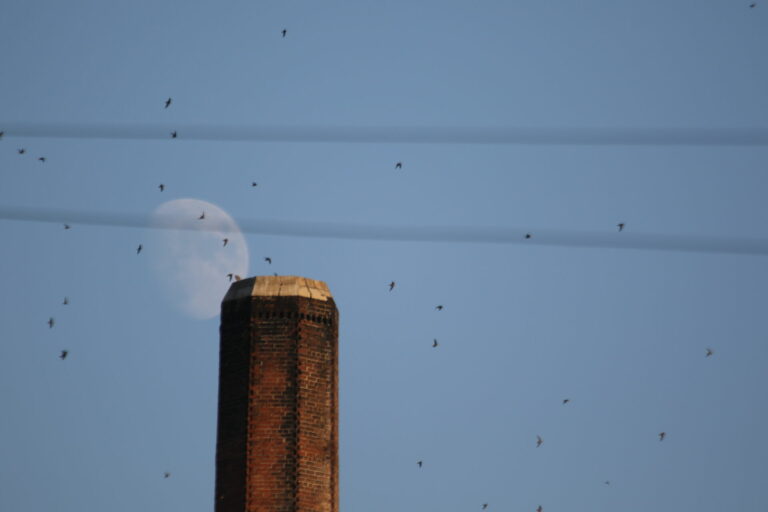
Chaetura Swifts: From trees to chimneys
By Rusty Scalf
Even a passing acquaintance with the natural world reveals that species exist on a continuum from Specialist to Generalist—from species that require a very particular habitat to those that can survive in a variety of places. Both have their strengths but the vulnerabilities of the specialist are easily seen. What happens to the specialist when their special habitat is impacted? Obviously, it becomes “adapt or perish.”
Vaux’s Swifts (Chaetura vauxi) and Chimney Swifts (Chaetura pelagica)—both of which evolved to rely on hollow trees for nesting and roosting—are a case in point. What happens when humans destroy old growth forests and remove hollow trees and snags? These swifts have adapted to a different vertical, tubular structure, the chimney: residential chimneys for nesting, and large, pre-World War II industrial chimneys for migratory roosting. Why pre-World War II? Because the older chimneys are often made of concrete or brick with rough inner walls where birds can grasp and hang, while modern industrial chimneys are either metal or ceramic lined. So the chimneys used by swifts are antique, with all the scarcity and fragility this implies.
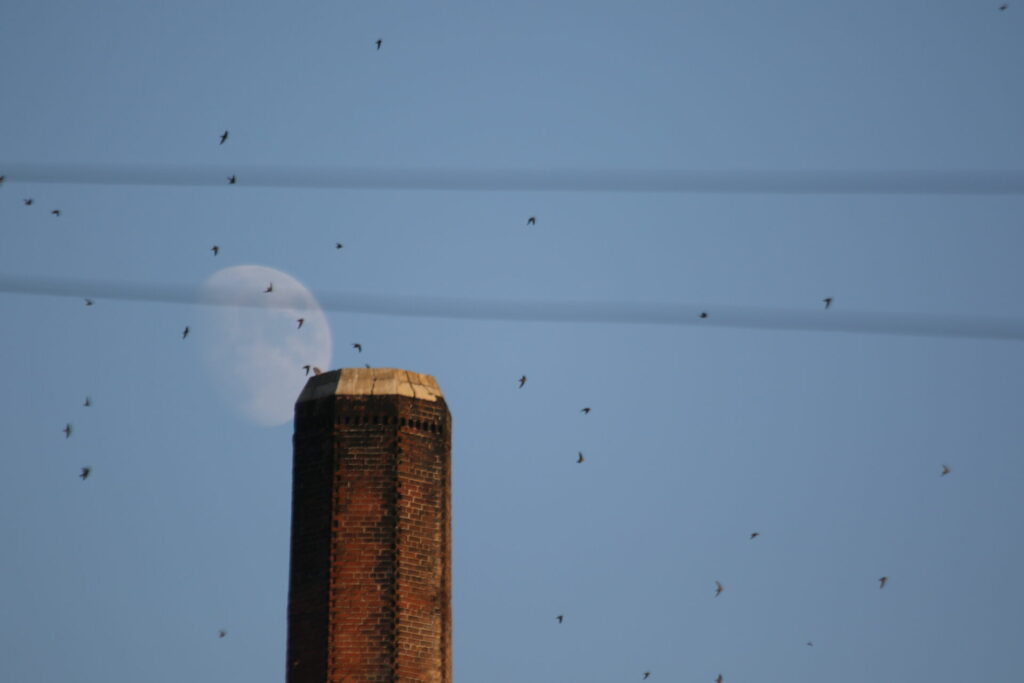 Swifts at McNear Brickyard in September by Michael Helm
Here in the Bay Area, Vaux’s Swifts have been using the tall chimneys at McNear Brickyard in San Rafael as a staging site during fall migration for many years; possibly since these were decommissioned in 1962. Conversion from trees to human structures happened in a dramatic and complete way for the eastern Chimney Swift well more than a century ago. Now the western Vaux’s Swift is undergoing that same process.
The switch seems complete for migratory roost sites—so complete that the birds appear to be imprinted* on these big chimneys for migratory staging. Meanwhile, the conversion is well under way for nesting as well. Pacific Northwest towns commonly see Vaux’s Swifts nesting in chimneys. Here, at the extreme southern end of their breeding range, residential chimney nesting is happening in places like Sebastopol, Santa Rosa, and Napa Valley.
Chimney entry during mid-September peak migration is a sight difficult to describe. It’s just incredible to see thousands of birds pouring into a 100-foot-tall chimney, sometimes at rates of 10 to 15 per second. It’s equally amazing to witness their extensive aerial displays, or murmurations, prior to going in. These displays can last half an hour near sunset. They end when some unknown trigger causes birds to begin pouring into the chimney, often after several apparent “feints” or false starts.…
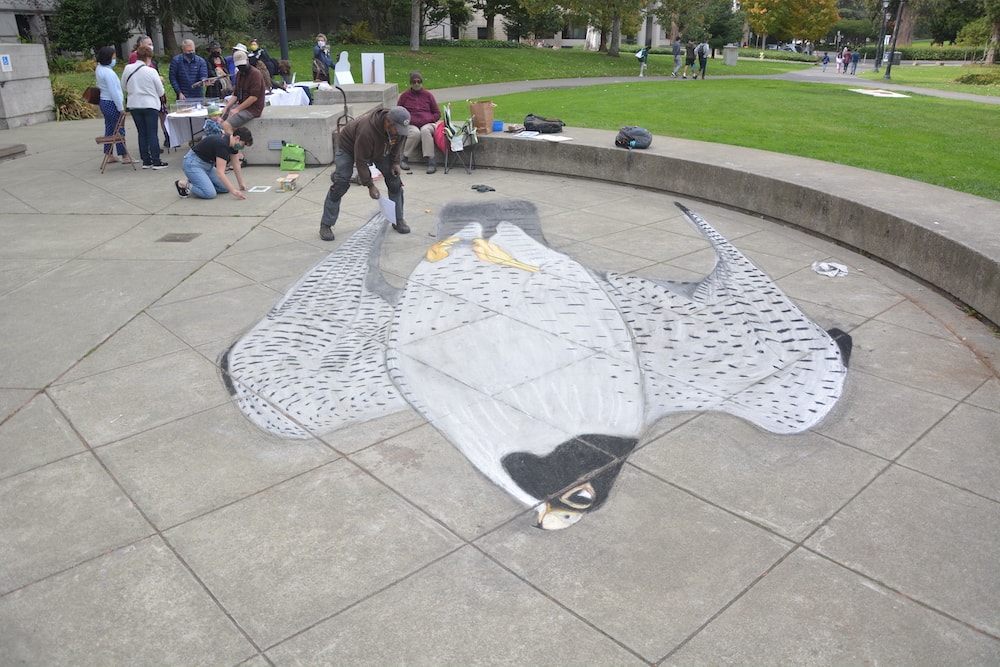 Eco-Ed Director Clay Anderson finishes his Peregrine Falcon chalk art at the Berkeley Bird Festival
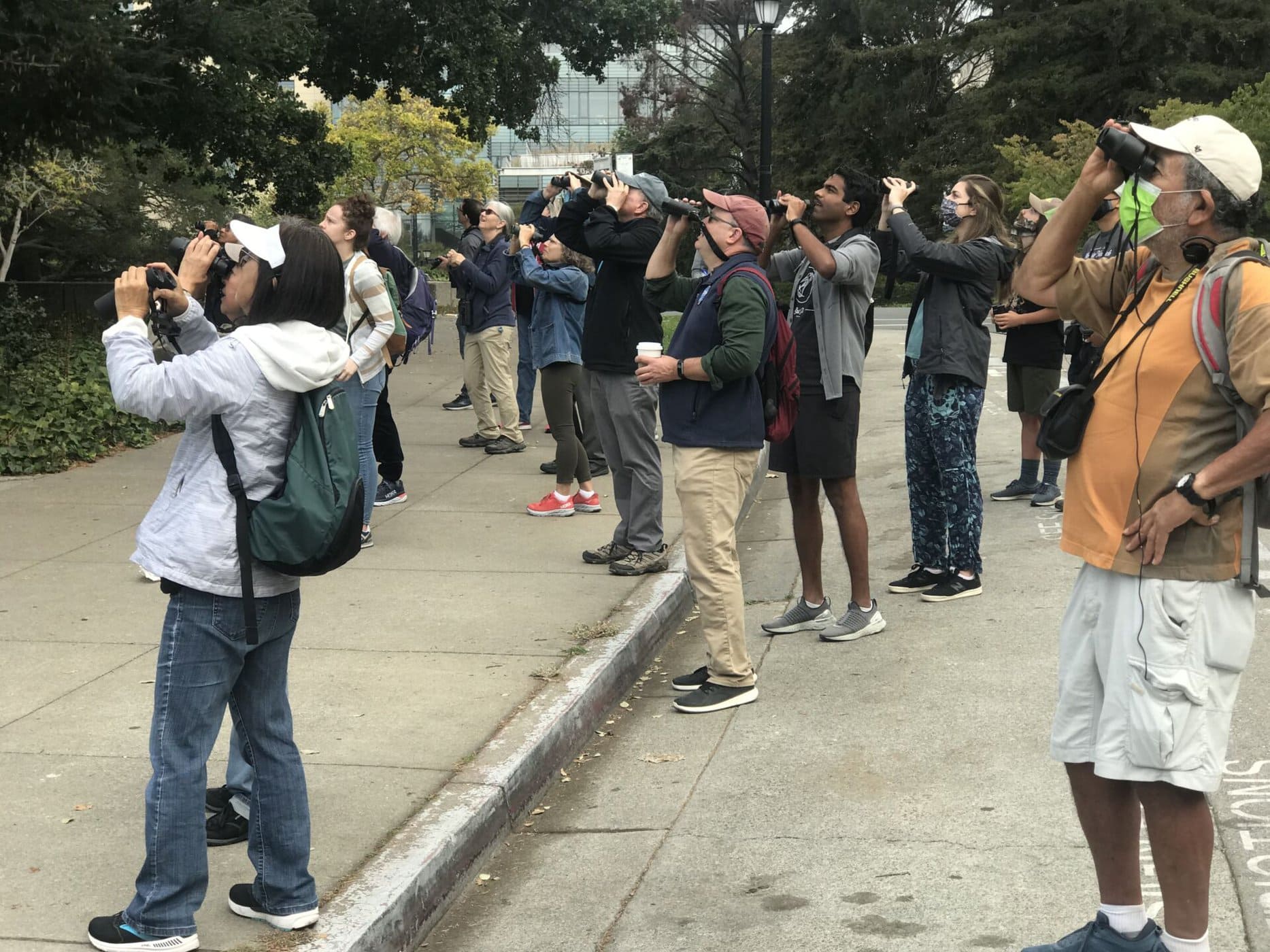 U.C. Campus Birding Field Trip during the Berkeley Bird Festival by Dan Harris
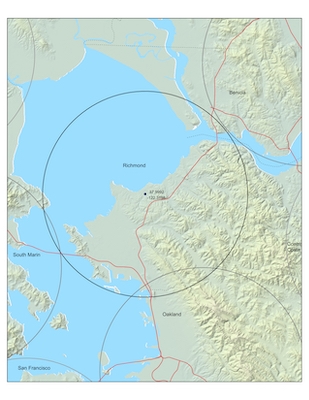
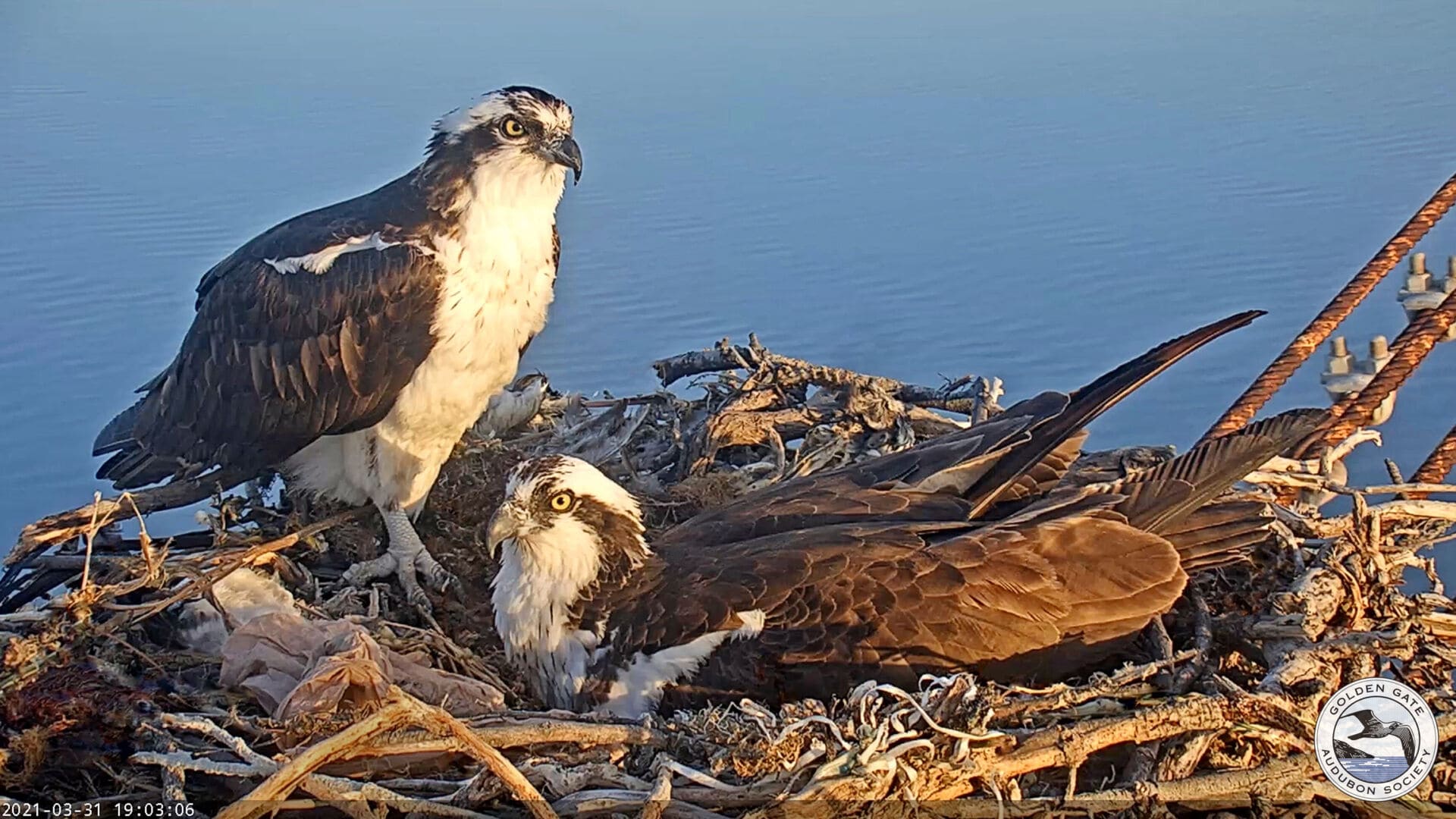 Ospreys, Rosie and Richmond spotted by the Golden Gate Bird Alliance Nest Cam on the Richmond shoreline.
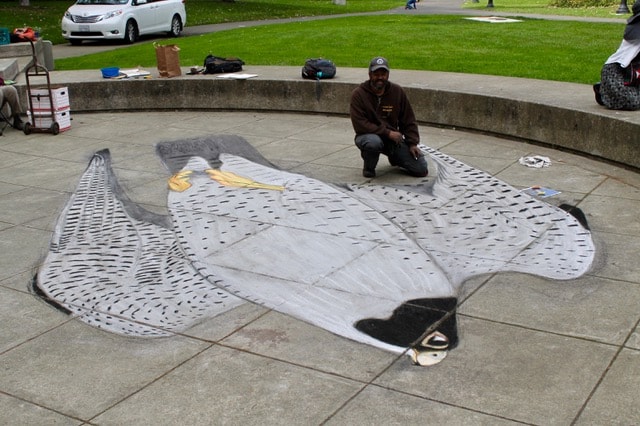 GGBA’s own Clay Anderson kicked the chalk art program off with a magnificent Peregrine Falcon, inspired by the falcon pair that nest on the UC Campanile.
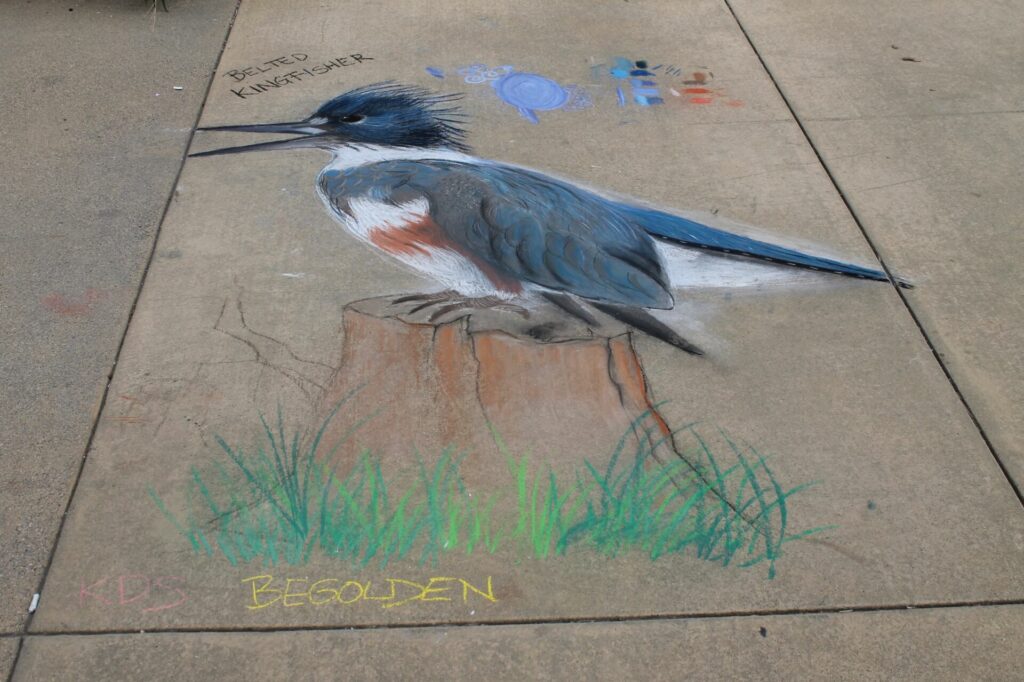
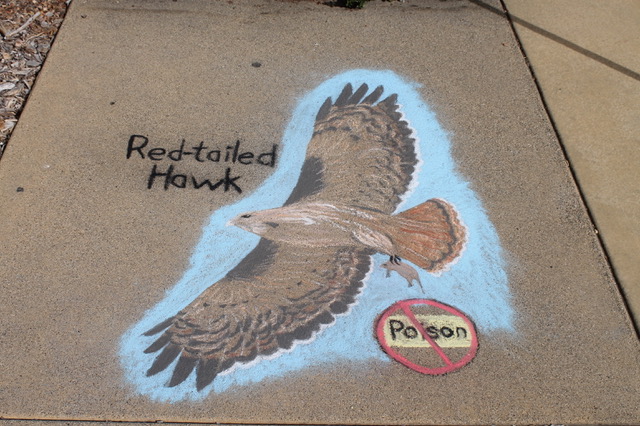 Red-tailed Hawk with a message: Don’t use rodenticides!
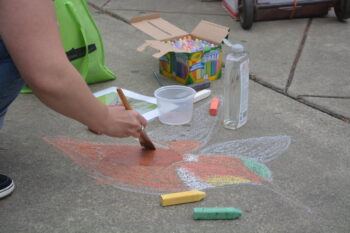
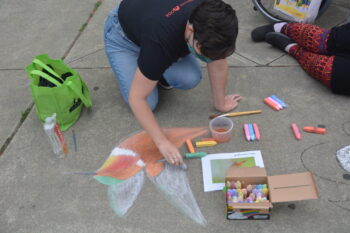
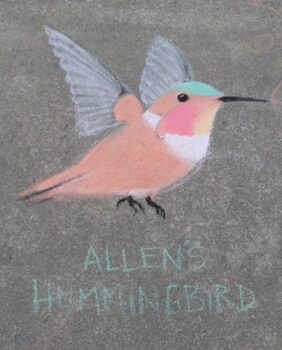
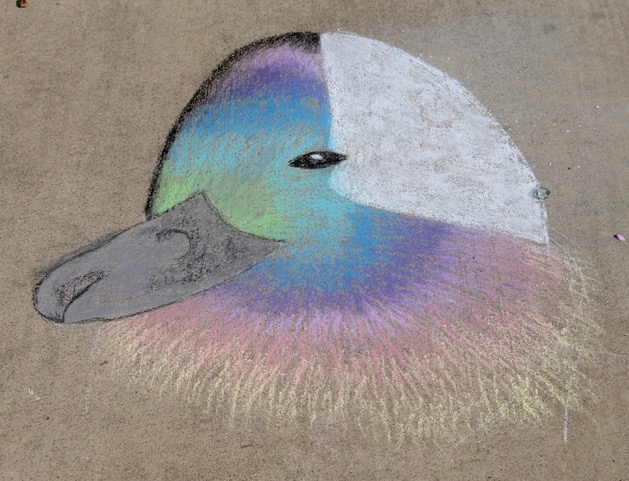 Bufflehead by GGBA board member Amy Chong. She managed to capture its iridescence!
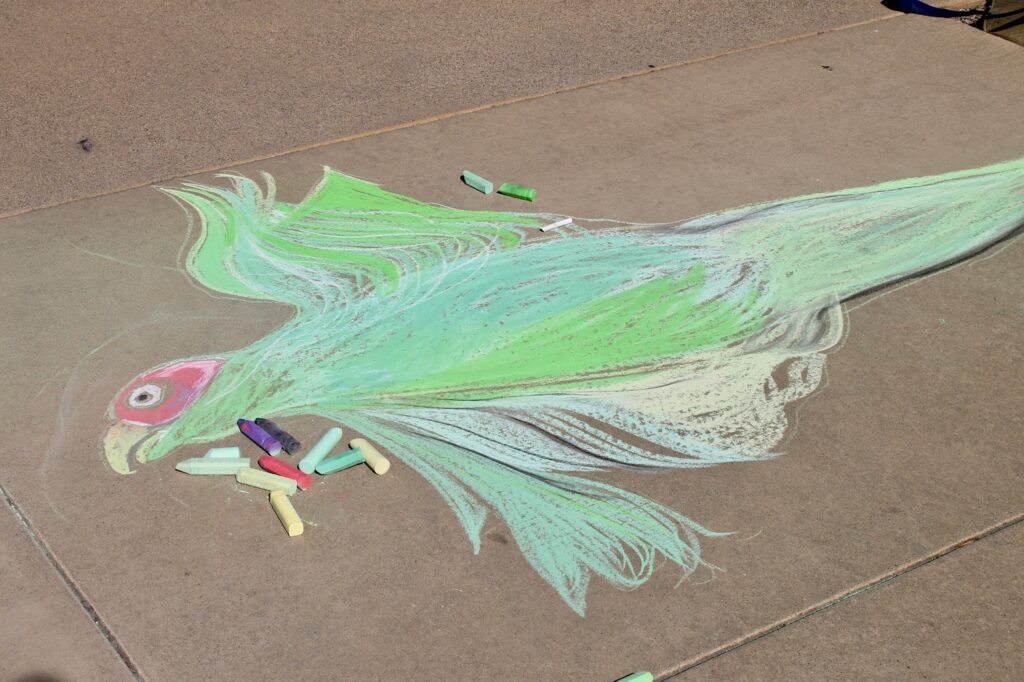 A “wild parrot of Telegraph Hill”
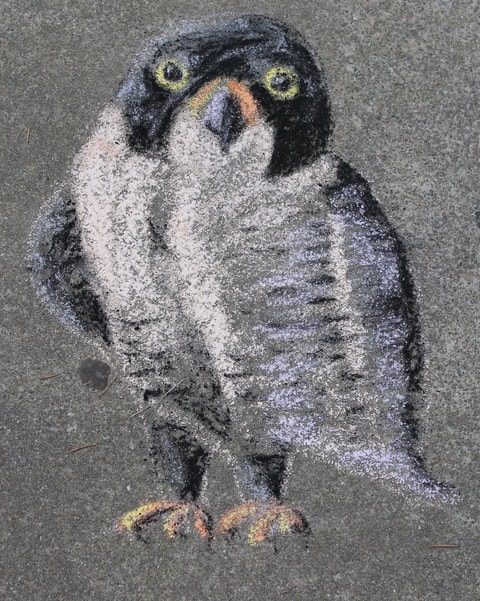 Peregrine Falcons were a popular subject!
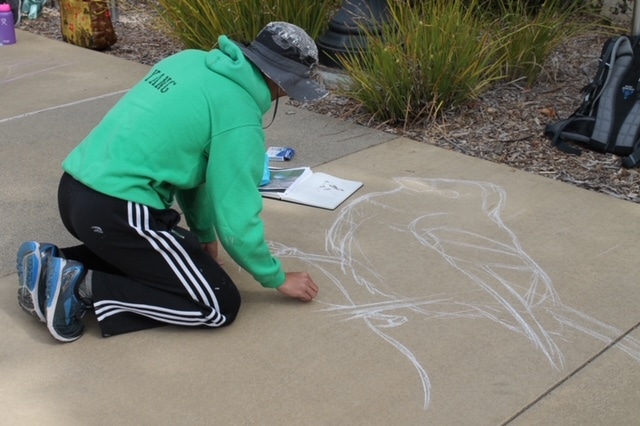
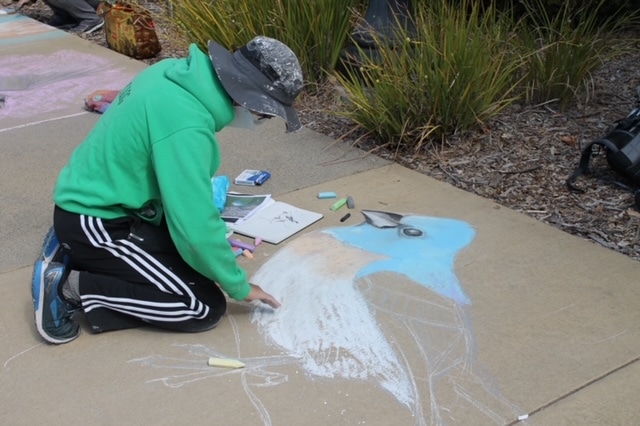
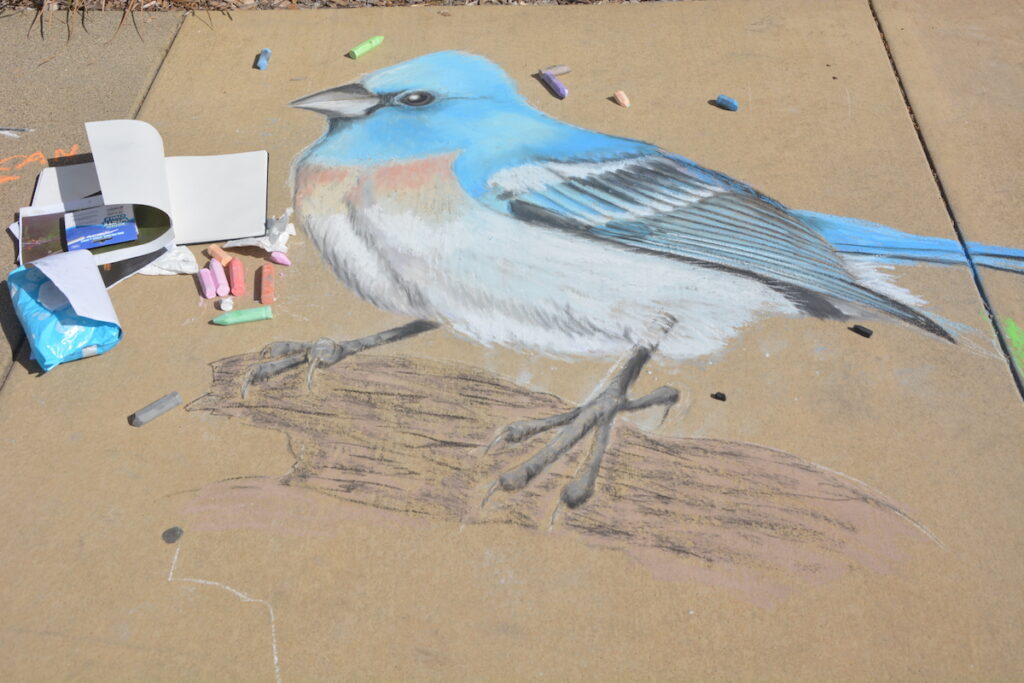 Grant Yang’s finished Lazuli Bunting
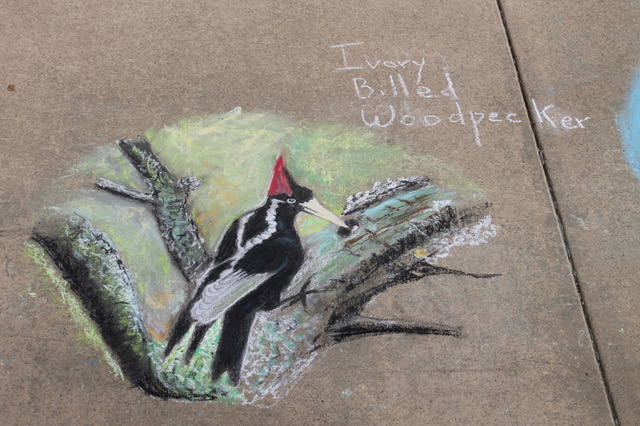 An Ivory-billed Woodpecker -— extinct in nature but alive on the UC sidewalk — by Brenda Helm
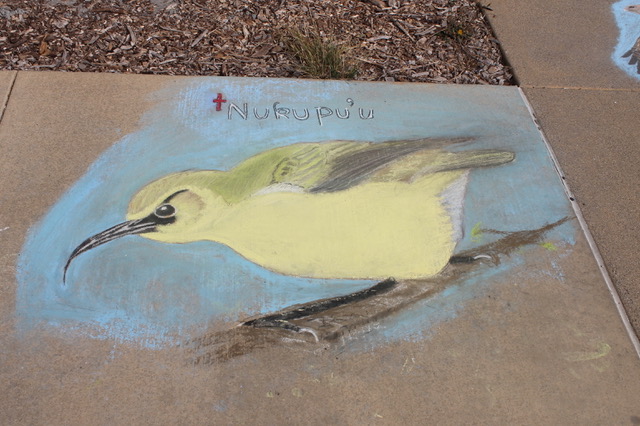 Nukupu’u, a Hawaiian honeycreeper that is most likely extinct, by Michael Helm
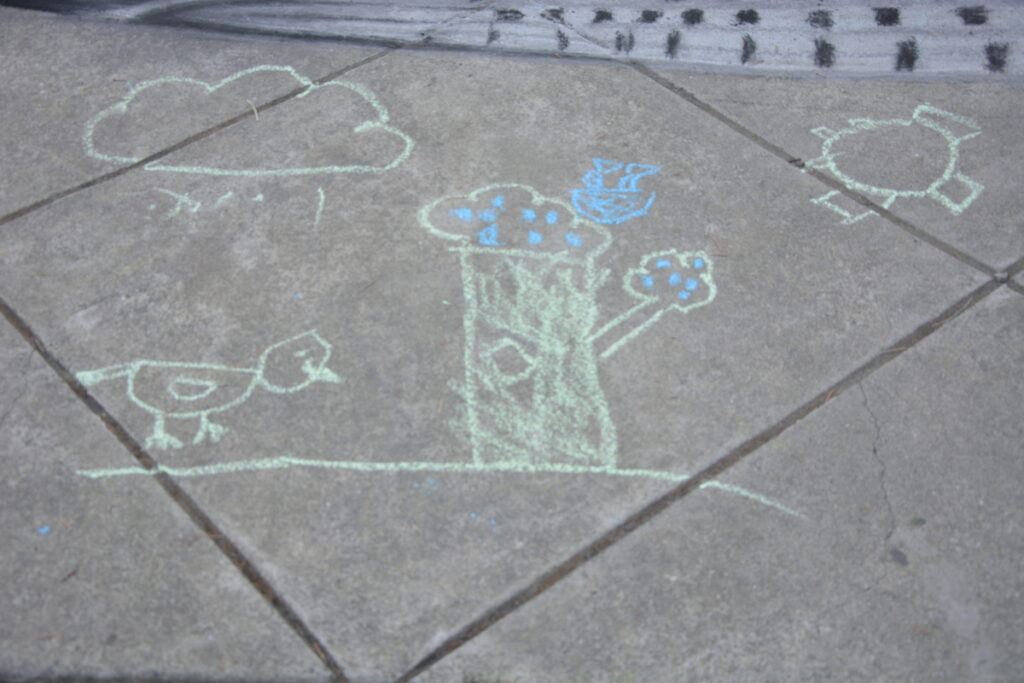 This young artist drew habitat as well as a bird
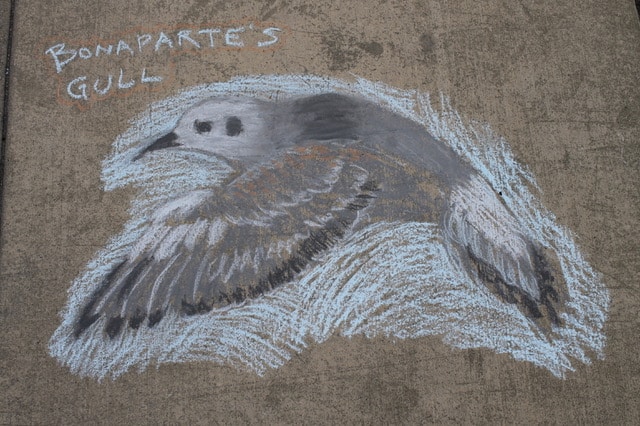 Bonaparte’s Gull chalk art
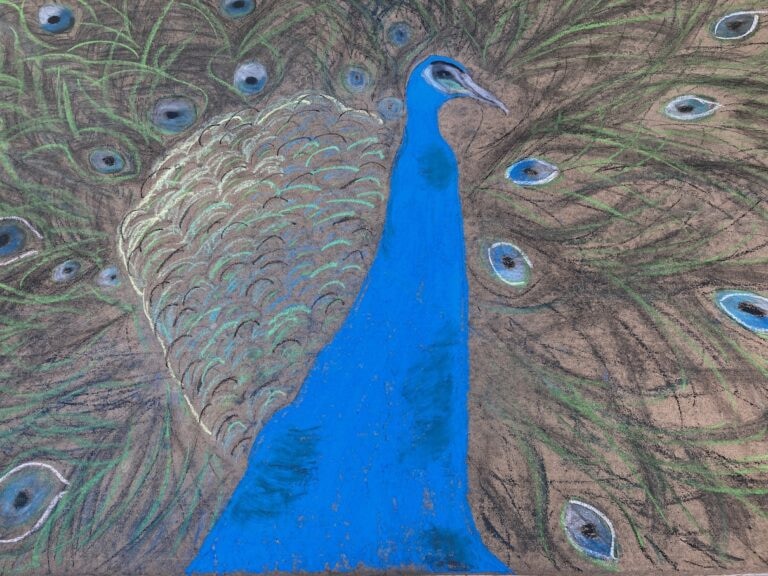
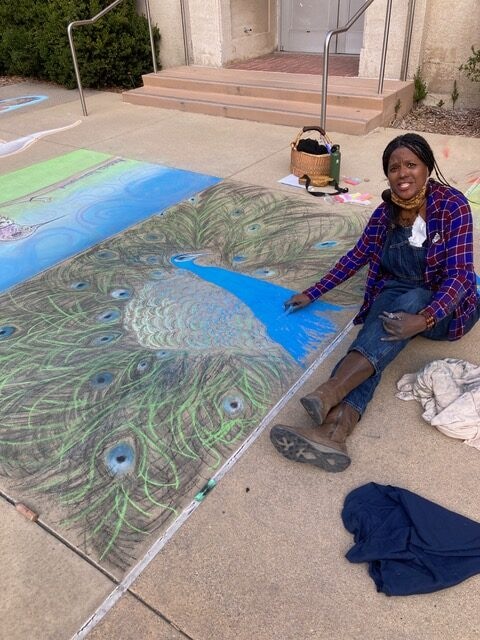
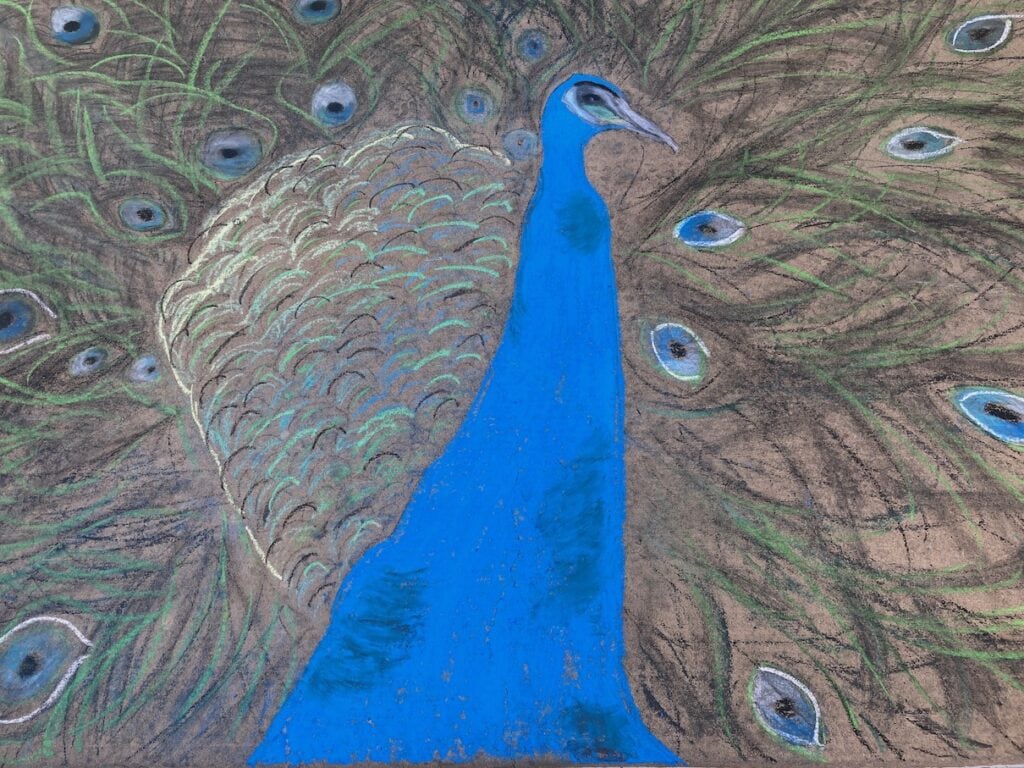 Peacock!
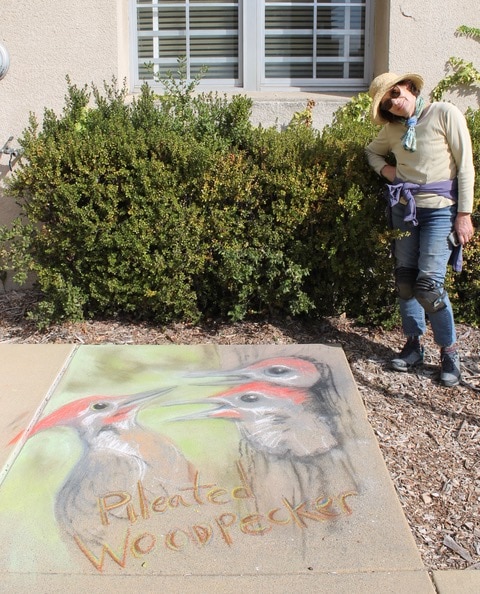 Pileated Woodpecker and chicks
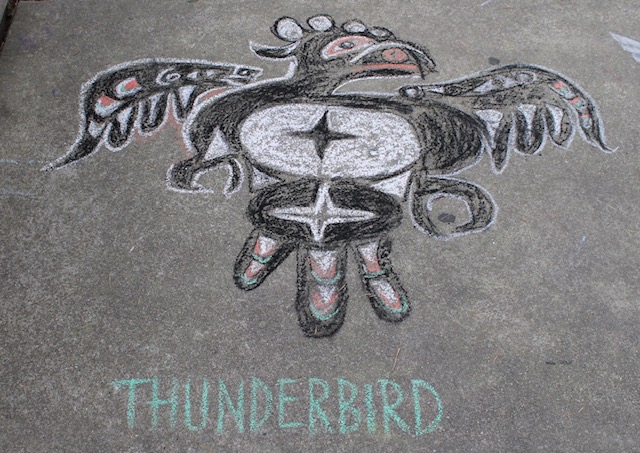 Native American-style Thunderbird
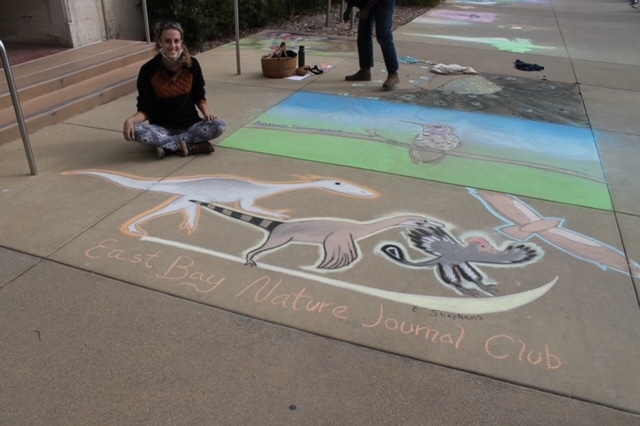 This artist depicted the evolution of birds from other dinosaurs
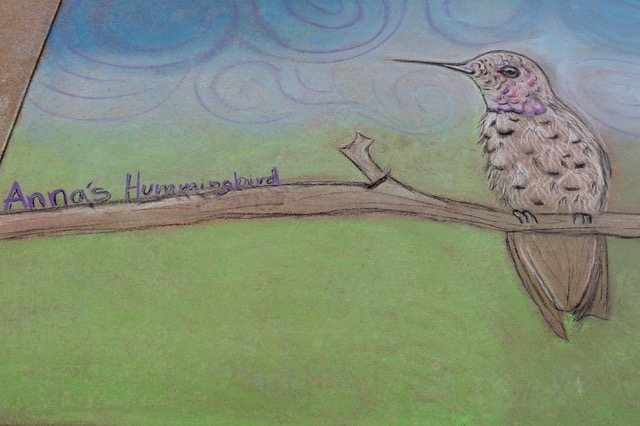 A much larger-than-life hummingbird
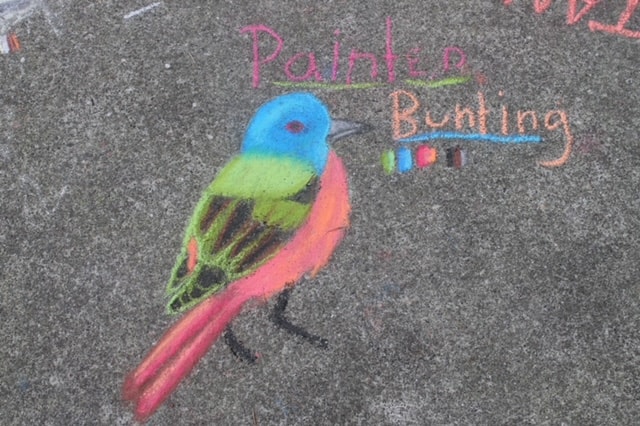 Painted Bunting
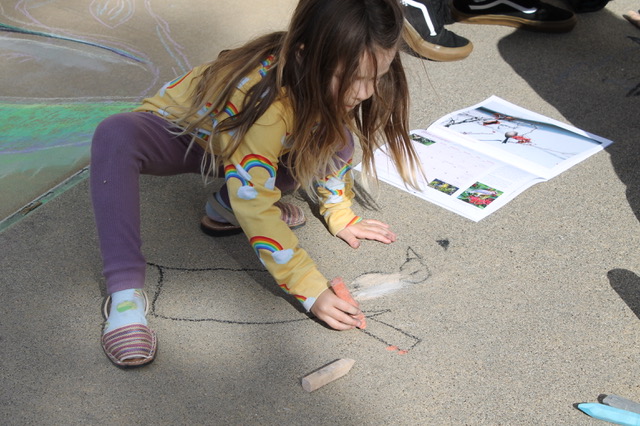
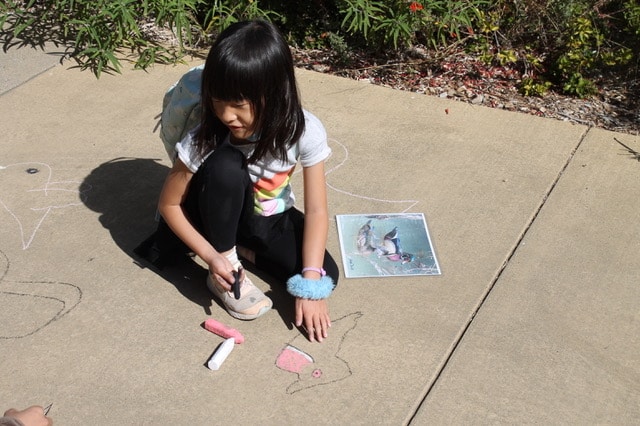
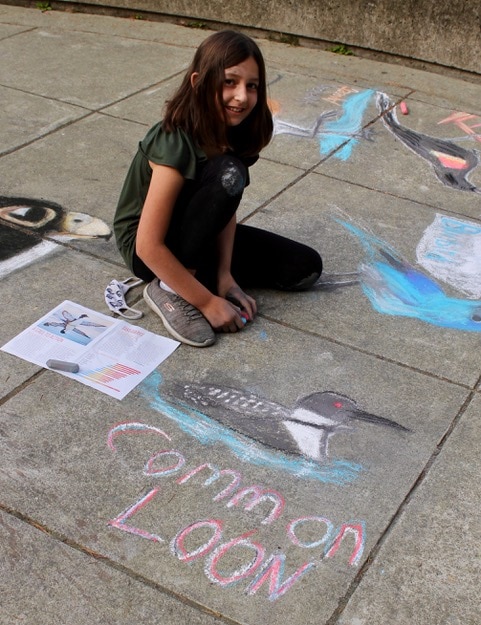
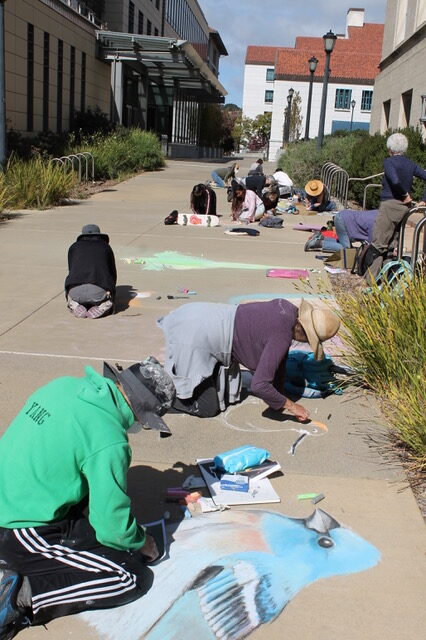 Artists spread out, making the whole walkway their canvas
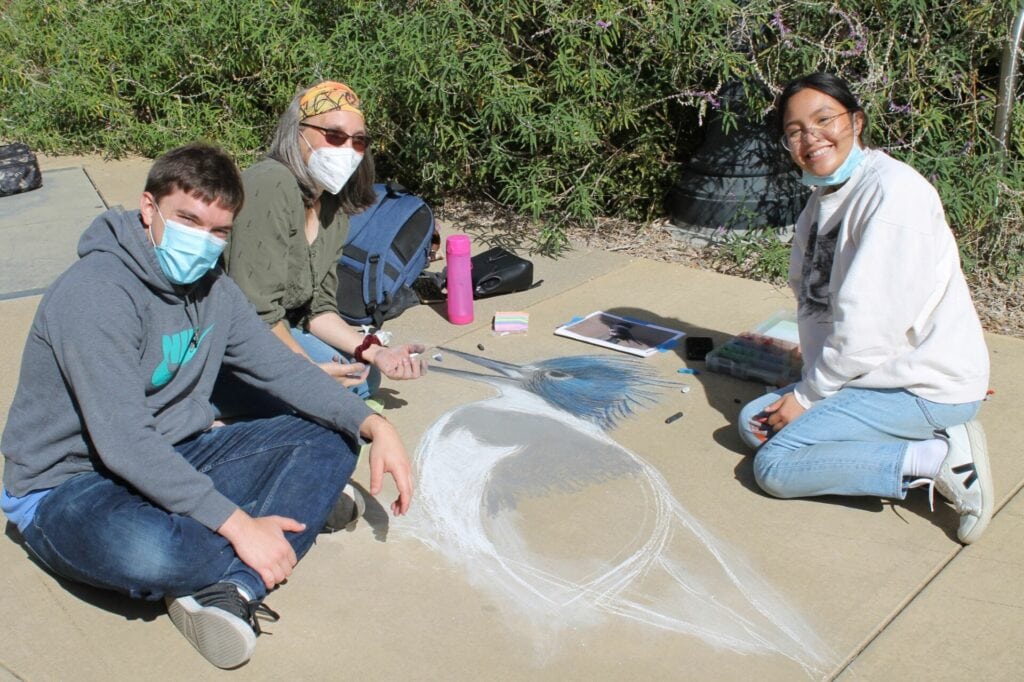
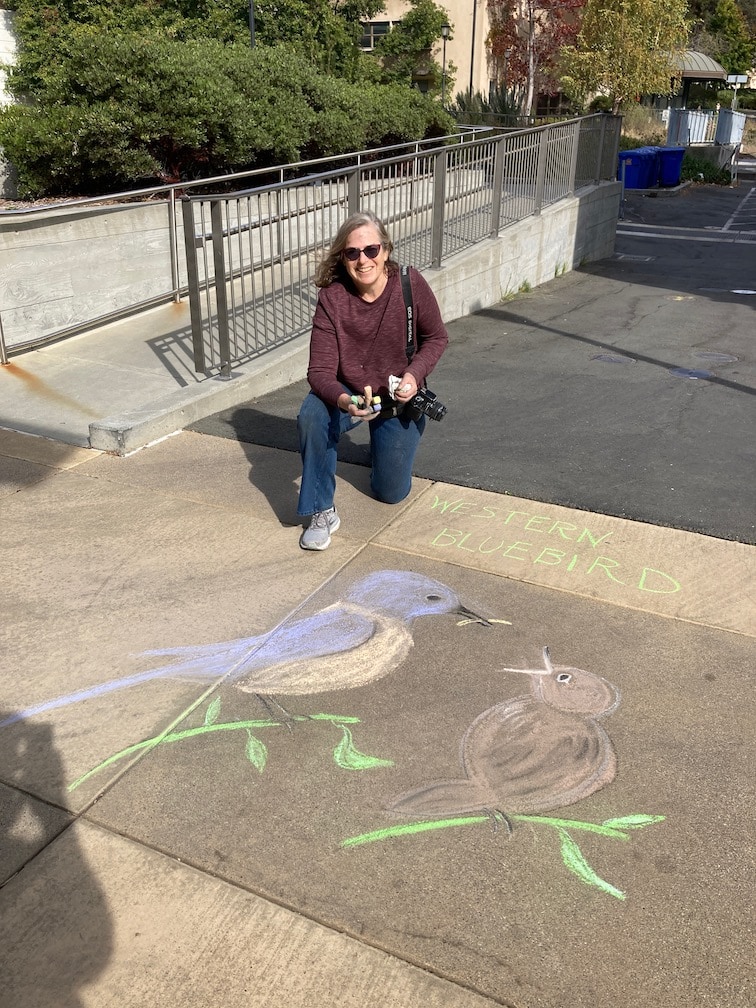 The author, one of those “me? I can’t draw” people, with her Western Bluebirds
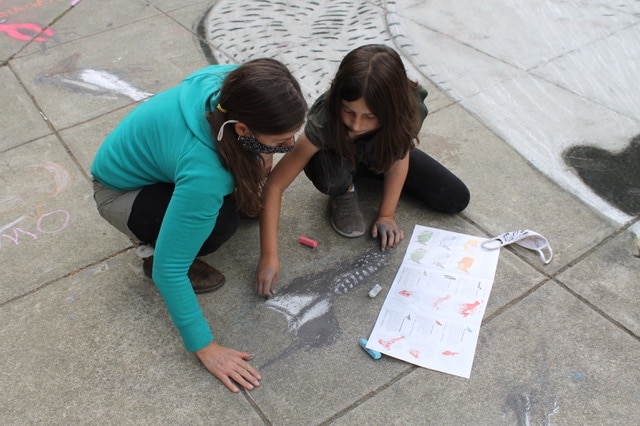
 At the end of the day, time to clean up. Thank you, Clay and all the participants! There were many more beautiful chalk birds than we could fit in this blog post.
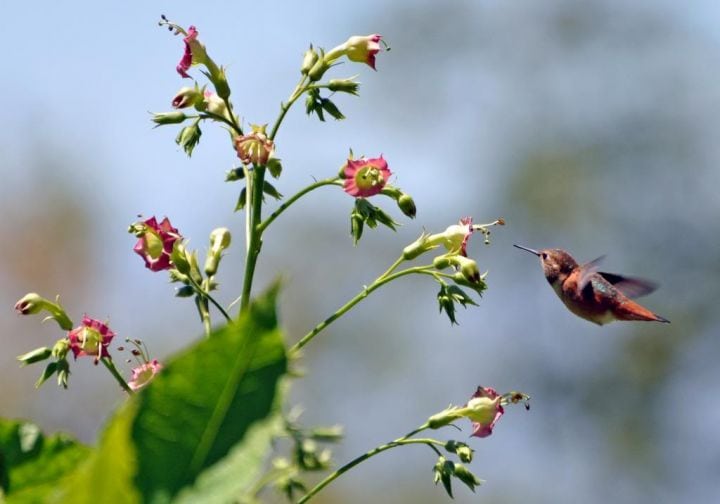 Allen’s Hummingbird feeding on Nicotiana sp. in the South American Area at UCBG by Melanie Hofmann