• Artists Reflect on GGBA’s Auction

    Editor’s Note: Our first ever online bird art auction was a major success thanks to your support and thanks to the hard work of our featured artists! In this blog, some of our featured artists reflect on their experiences in our online auction, and elaborate on why they chose to collaborate with GGBA.


    Scott Partridge

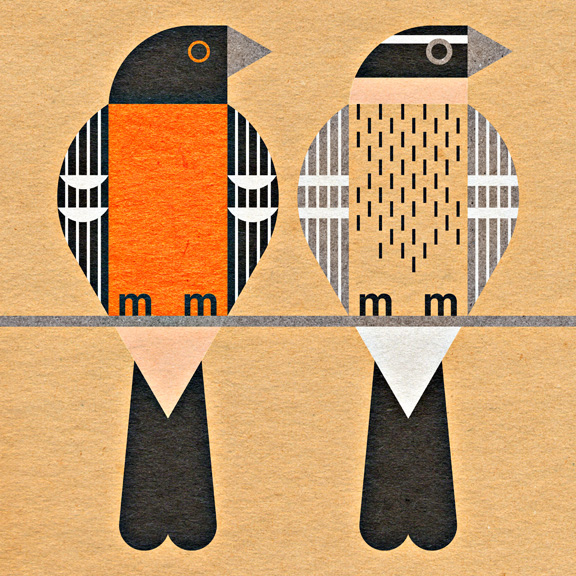
    Black-headed Grosbeaks by Scott.

    Daryl Goldman reached out to me about participating in the auction. I welcomed the opportunity to share my work with bird enthusiasts in the San Francisco area. I live and work on the other coast, in Charlotte, NC. The auction worked out well for me. I make affordable art prints that I can produce at home as needed, so we could offer multiple prints of the designs we made available through the auction.

    If you’d like to see Scott’s online store, click here. His Instagram can be found here.


    Sandra Whipple

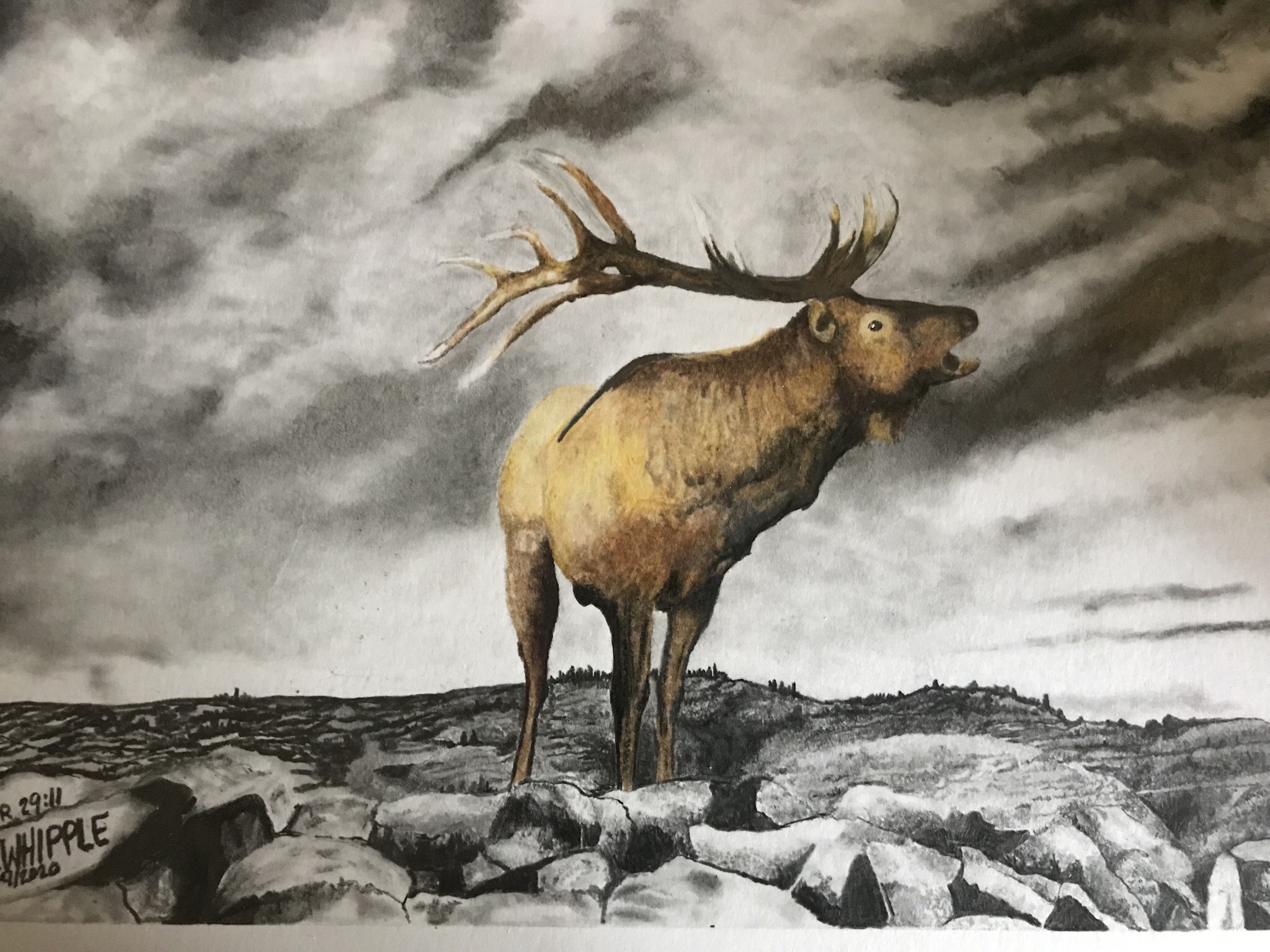
    I learned about the auction through my art group, Salinas Valley Art Association. I received an invitation and was very happy to participate. The auction was well organized, easy to access and I was very happy with the outcome. I look forward to participating in future events with the Golden Gate Bird Alliance.

    If you’d like to contact Sandra directly about her work, please email her at artisticrider13@gmail.com.


    Molly Hashimoto

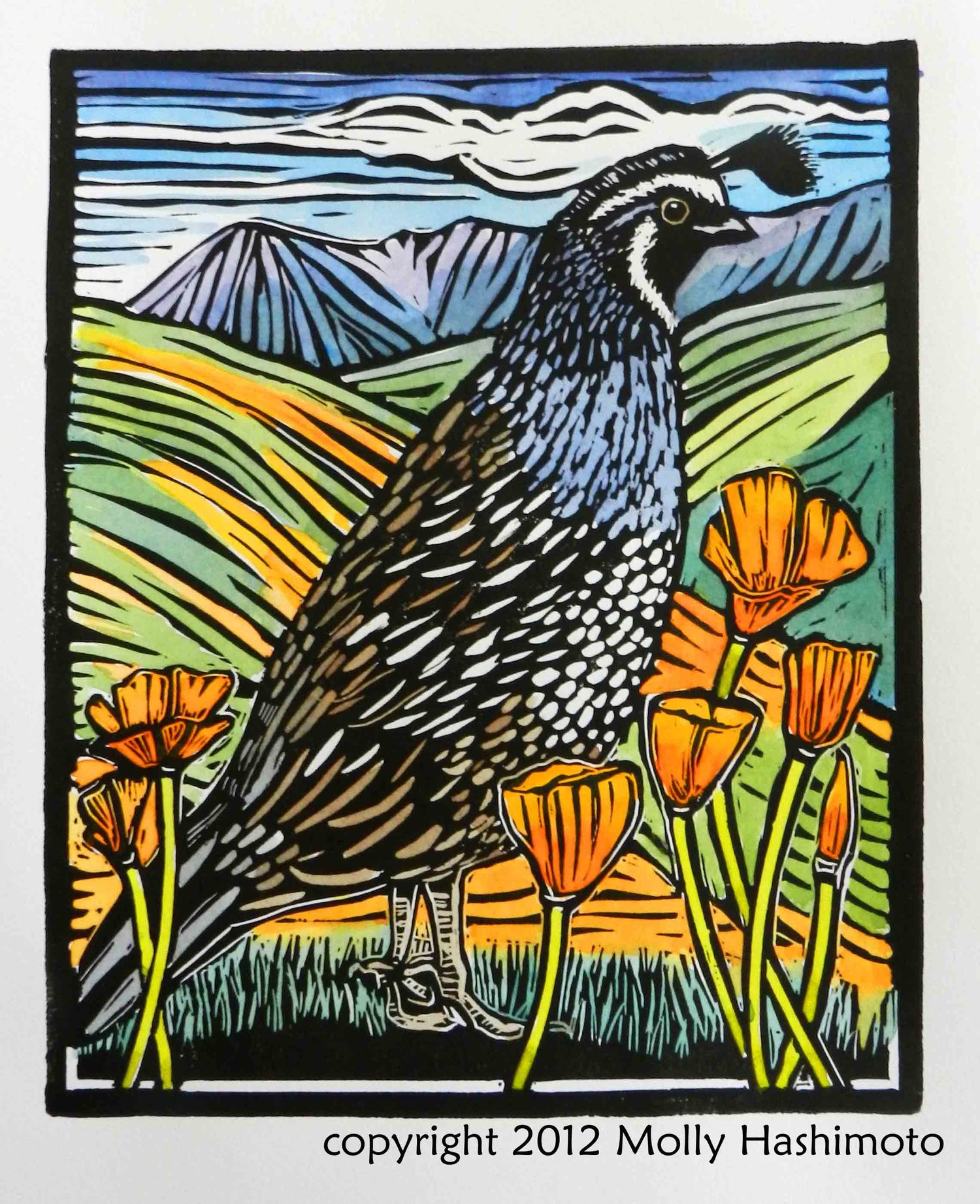
    California Quail and Poppies by Molly
    I heard about the auction from Daryl. She invited me via email, as she’d seen the bird cards and calendars that Pomegranate publishes. I decided to participate because I am a Seattle Audubon member and I wanted to help a sister organization. I was also very grateful that Golden Gate was considerate of artists and offered a generous portion of the sales.

    My work is inspired by the natural world. I enjoy watching birds in my back yard and in parks and wilderness areas. When I see something especially beautiful or interesting I usually write about it and make art about it. My books Colors of the West: An Artist’s Guide to Nature’s Palette and Birds of the West: An Artist’s Guide, help me to reach a wider audience where I share ideas about art techniques and inspirations. The children’s books I have illustrated:  Birds: Season by Season and Trees, and Molly Hashimoto’s Art & Nature Activity Book, each written by Zoe Burke of Pomegranate Communications, further widen the audience; I love the idea of getting children involved with nature at a young age.…

  • Famous Osprey Recovering at WildCare

    By Alison Hermance


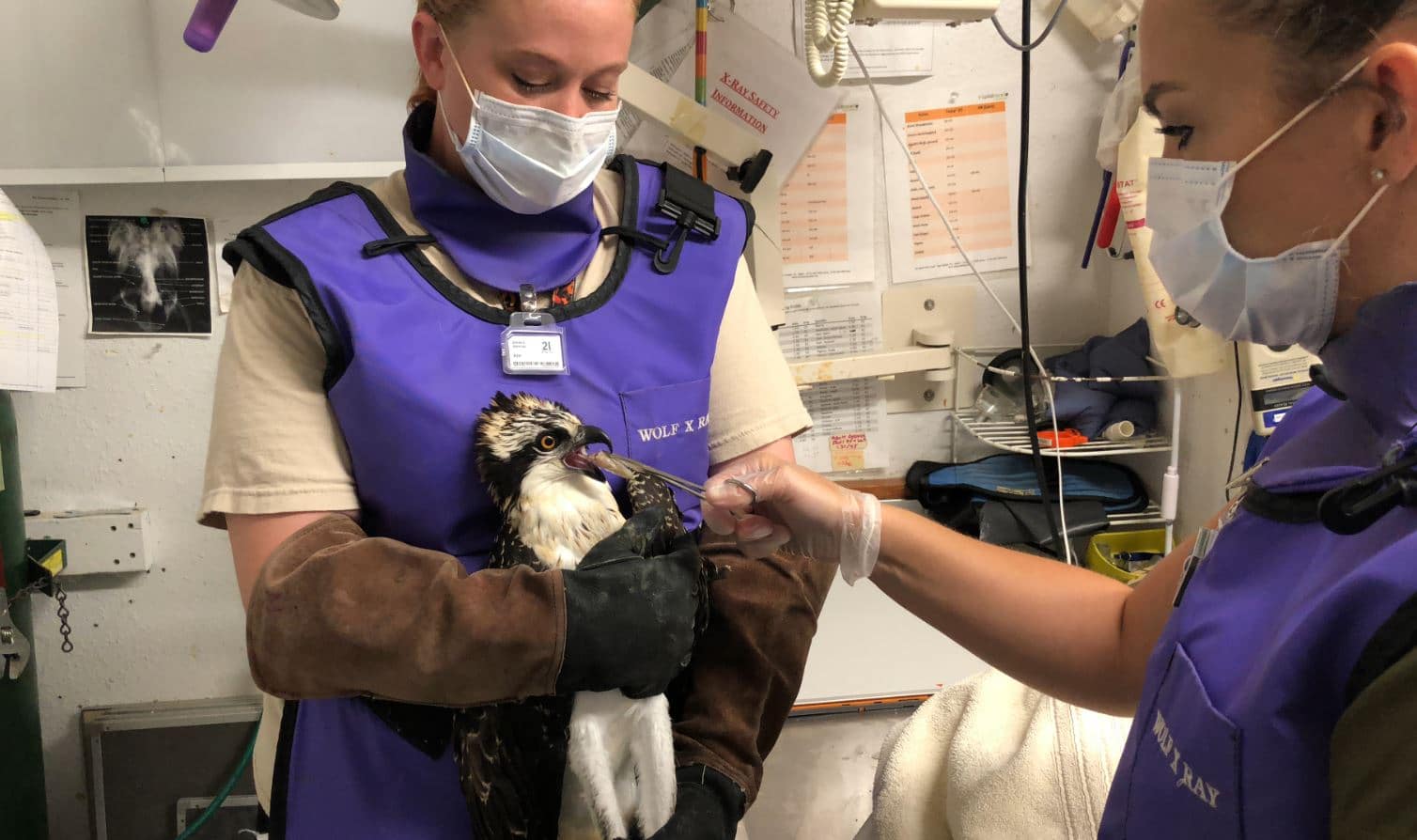
    As you probably know, WildCare doesn’t name our Wildlife Hospital patients (not least because we admit over 3,500 of them a year!) but this fledgling Osprey arrived already came with a name. He’s known as Tam, one of three fledglings in the much-watched Golden Gate Bird Alliance Osprey webcam nest on the Whirly Crane in Alameda. Tam grew up in his crane-top nest under the care of his parents, known as Richmond and Rosie. The Osprey pair has successfully raised numerous broods of chicks, including Tam and his siblings, dubbed Shasta and Lassen, by their fans.

    Osprey chicks begin flying when they are about 60 days old. On July 5, 2020, cam-viewers watched the fledgling Tam make his precarious way up the crane to try out his wings, losing his balance but regaining it many times. Fledgling birds are a lot like teenagers; they don’t have all the control they need over their gangly limbs. Tam’s clumsy adventure was typical of young Osprey his age. The video feed captured Tam eventually tumbling to the ground, where he was rescued by one of the trained observers monitoring the nest, and was brought to WildCare.

    Tam had always been the smallest and least active of the three chicks. He arrived at WildCare alert but quiet, and demonstrating the symptoms of head trauma.

    A full exam and x-rays found no injuries, but our team was concerned that he hadn’t been able to get himself back up onto the crane after his aborted test flight. A fully healthy fledgling Osprey should be able to hop-fly back to his nest, but Tam had not been able to do so.

    However, with Tam’s head trauma symptoms resolved after several days in care, our team made the decision to give him a test flight in a large aviary. As long as the test flight went well, we planned to return him to his parents’ care that day. Osprey are incredibly difficult patients to have in captive care, so returning him to the nest would give him the best chance of success.

    It turns out we were right to be concerned about Tam’s overall health.

    Very unexpectedly Tam fractured his leg in the aviary that morning. It was a shock to all, as there is no discernible reason for the injury. The bird’s original x-rays gave no clue that his leg might be an area of concern, and he did not have a hard impact landing.…

  • Bird Art Auction Madness: Reflections and Recaps

    By Marjorie Powell


    Many years ago, when my husband and I were first living together, we went to a country auction and came home with seven items that we frankly did not need, all because we could not resist bidding. After that fiasco, I established a firm rule. No auctions! It’s true that the double wrench set we got that day was very useful when we owned our own homes. And yes, we used a waffle iron we bid on until it wore out. But the other items were never used and eventually disappeared. I made an exception to my rule this year. The GGBA bird art auction was “different.”

    After all, both GGBA and this art auction was my life-line to the birds as we all sheltered in place.

    Birdathon fundraising activities were canceled because of Covid. I was involved in some of the discussions about whether (and how) GGBA might recoup vital revenue needed for programs like habitat restoration and Eco-Ed. We decided to have an online auction just of art related to birds. I was on a mission to help any way I could. I reached out to a few artists whose bird art I have. One of those artists passed the information on to another artist who agreed to participate, splitting the final sale price of her painting 50/50 with GGBA. 

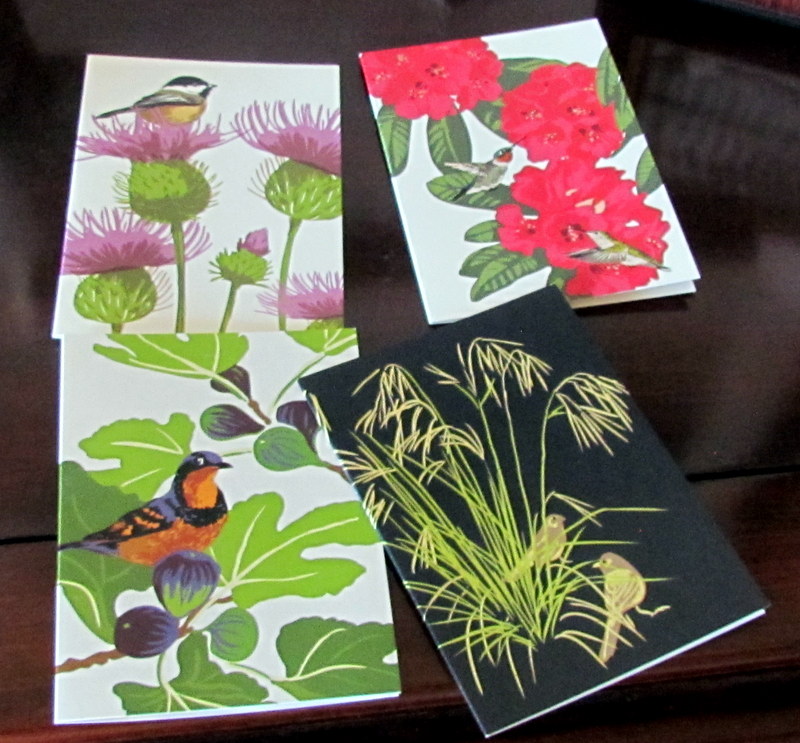
    After much work by GGBA volunteers and staff, the auction site went live! I looked at all the art, thinking about which pieces I liked. Then I glanced sheepishly at my walls, covered in art of various sorts, much of it with specific memories that made those art pieces special, some of it art of birds. Then I looked at the website again, and decided that I should buy one of the “Buy It Now” items as a holiday gift. And, of course, a packet of bird greeting cards for myself. 

    One of the “Buy-it-now” selections Marjorie made. Rigel Stuhmiller’s notecards.
    And perhaps another item after that. You can see why I established my “No Auctions” rule a long time ago.

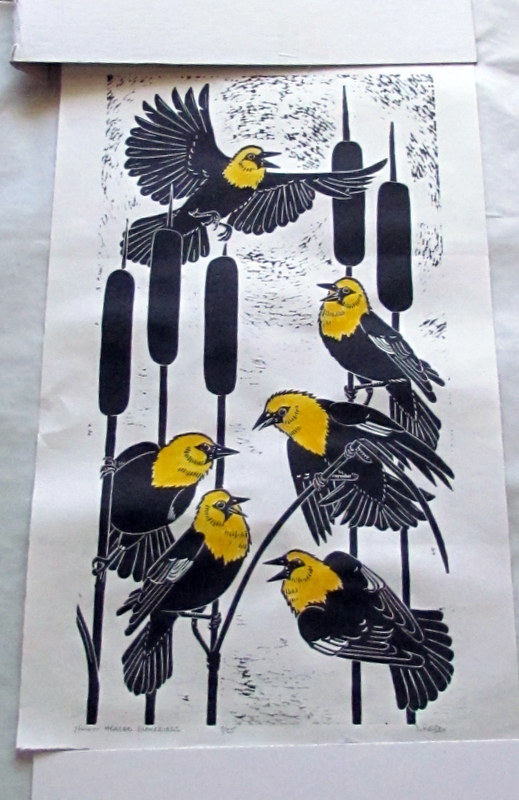
    Over the next days, I kept checking the auction website, deciding which pieces I might actually bid on. Dona Reed’s Yellow-headed Blackbirds were fun.


    Dona Reed’s piece.


    I remember where I first saw Yellow-headed Blackbirds in person at Washoe Lake north of Carson City, Nevada, one summer when my husband and I were staying at Lake Tahoe.

  • Our Successful Bird Art Auction!

    By Ilana DeBare


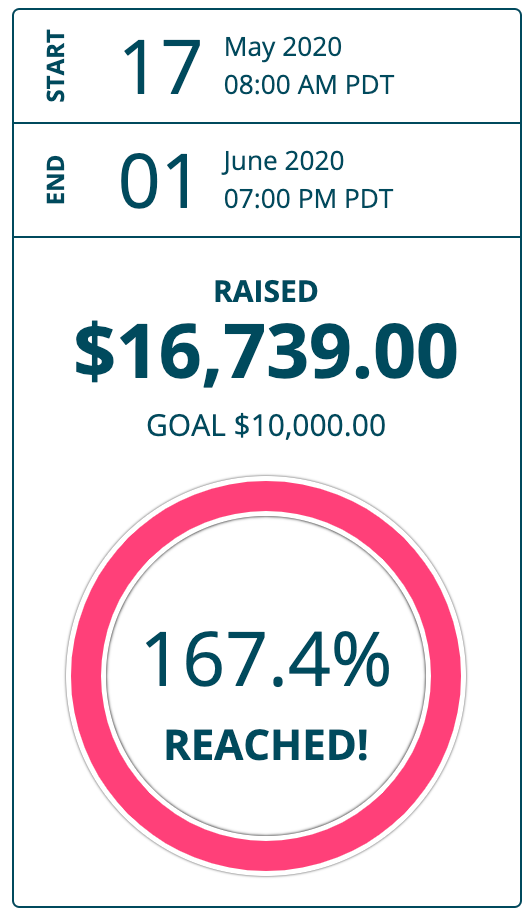
    Golden Gate Bird Alliance held its first Online Bird Art Auction last month—and it was a smashing success. The auction generated sales of just over $20,000, about half of which went to the 22 participating artists. Generous fans of birds and art bought 176 items, ranging from notecards to paintings. Some buyers even made additional donations—above the cost of their item—to support Golden Gate Bird Alliance.

    The auction idea had its genesis this spring, when Covid-19 shelter-in-place rules forced Golden Gate Bird Alliance to cancel all the in-person events associated with Birdathon, which is usually our main fundraiser of the year.

    Former board member Alan Harper suggested an art auction with shared revenues as a way to support both GGBA and local artists, whose income from sales, shows, and teaching has been slashed by the pandemic. Current board member Alex Smolyanskya had already been setting up a Birdathon auction web site for more traditional prizes, such as vacations and catered dinners. She pivoted on a dime and shifted the site into an online art gallery.

    Then volunteers Daryl Goldman, Marjorie Powell, and I set about identifying bird artists and inviting them to take part. They were delighted by the idea!

    Organizing the auction was a wonderful experience.

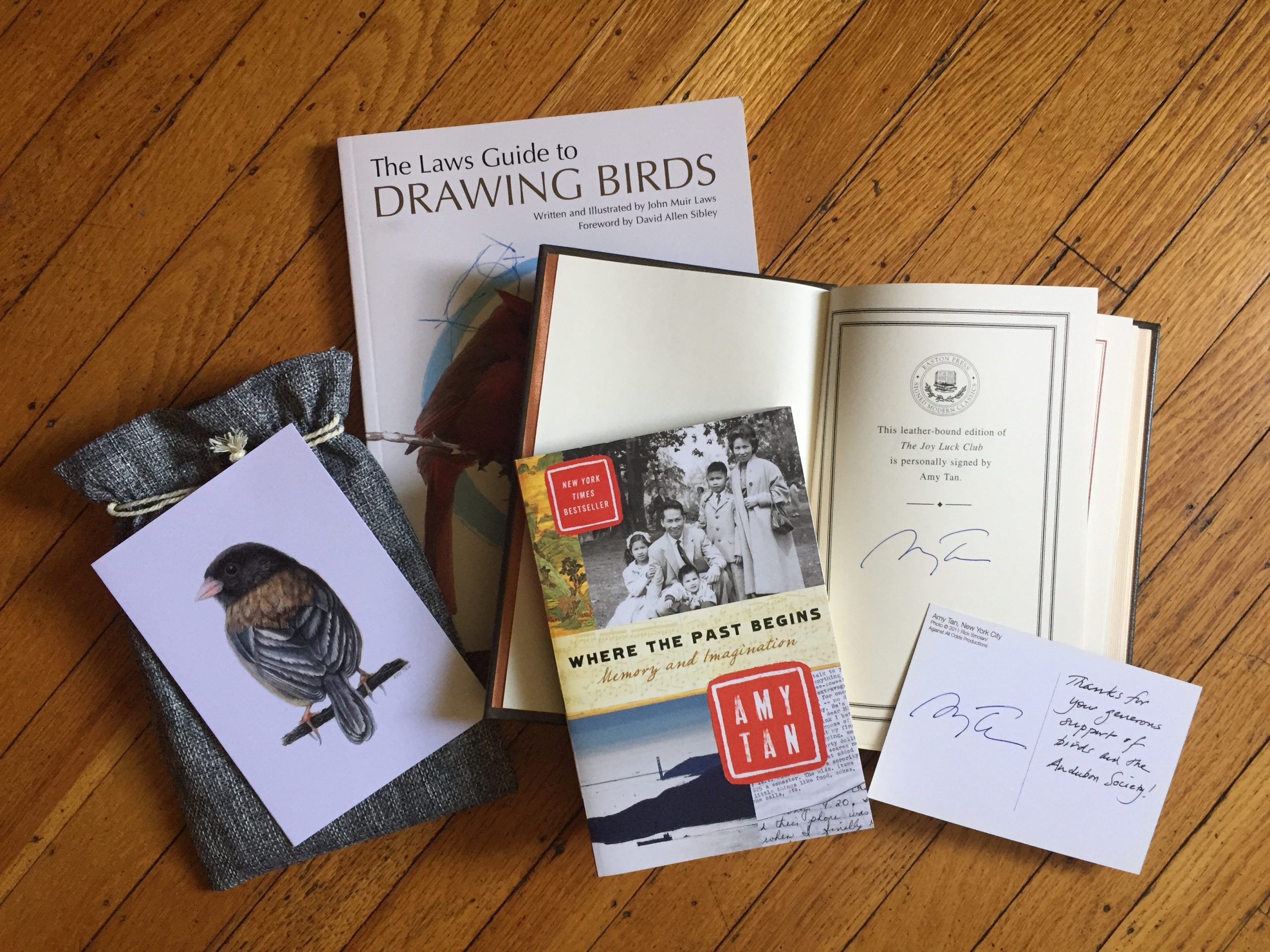
    Amy Tan’s collected works for bid. Photo by Ilana DeBare.
    At a time when the pandemic seemed to bring life to a halt, here was an opportunity to create something new and beautiful that would help both Audubon and artists. The works were colorful, varied, and exciting. The artists were responsive and enthusiastic. Our group of volunteers worked smoothly and super-efficiently.

    And we grossed $20,000, well over our initial goal of $10,000! We cannot thank you all enough for your participation.

    We hit 167.4% of our goal thanks to you!
    Those funds won’t make up for the cancellation of Birdathon, which typically brings in about $60,000 in donations. But it’s a start, and a step forward at a time when many other non-profit organizations are standing still or slipping backwards financially.

    An added bonus: The auction brought GGBA to the attention of new audiences. It was written up not just in Bay Area media like the San Francisco Chronicle, Berkeleyside, and Bay Nature magazine, but also in Birdwatching Daily, a national web site.

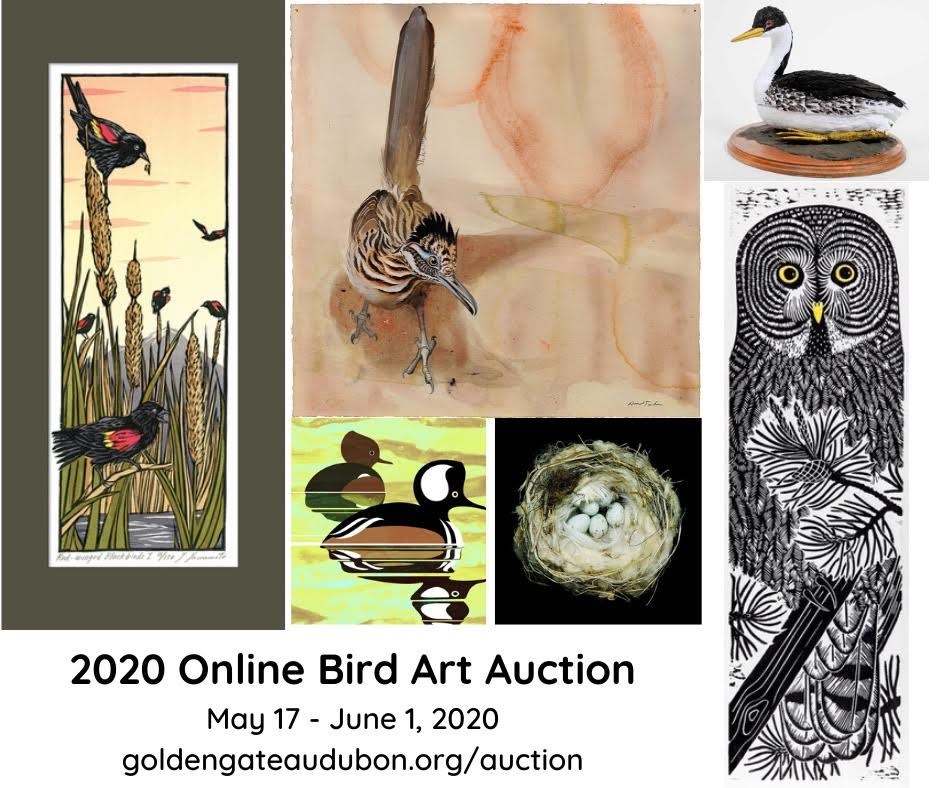
    Our art auction poster, featuring various artists and some of auction piece.

    So what’s next?…

  • Photographing on the Median and at Home

    By Gerry Traucht


    Editor’s Note: Gerry offers us glimpses of what he sees at home. This unique collection embodies the qualities of the beloved Japanese poetic form, Zuihitsu. Zuihitsu is genre of Japanese literature (since adapted by many Western writers) consisting of loosely connected personal essays and fragmented ideas that typically respond to the author’s surroundings. Photos taken by Gerry. 


    A Ruby-crowned Kinglet lived in a gigantic juniper tree in the front yard.


    Ruby-crowned Kinglet


    One morning, he discovered the sideview mirror on the car in the driveway next to the tree. After that, he came by every morning.


    Fanned.


    He hangs from the top edge of the mirror by one or two feet, fluttering, pecking, kissing at his reflection. He flies to the driver’s side mirror and starts it all over again before flying back to the passenger side where he gets even more excited.
    When he catches glimpses of himself in the darkened window beside the mirror he completely loses it. He flies back and forth the length of the driveway like a toy jet airplane at his top speed, wings making a loud whir.

    Objects in the mirror may appear larger than they seem.
    When he occasionally stops for two seconds, he reveals a dapper little puff of a bird in changing soft greens, yellows, blues, a white stripe on each wing, white circles around his eyes and that vivid ruby crown that he can show or hide.
    Ruby-crowned Kinglet.
    Wow, that was a while ago. What a surprise from my front yard.
    Now I look closely at home to see what else is here…
    The California Towhee Visit 
    Usually towhees hop around the backyard. One towhee visits the deck outside the kitchen door.
    California Towhee perched on computer.
    Later he makes it to the living room and perches on top of the computer screen.

    Gerry Traucht is a Bay Area photographer and blogger. You can check out his website here. Be sure to catch him on Instagram @gerrytraucht