
The Prelinger library
By Chris Tarr
An unusual field trip offered in this year’s Birdathon is a visit to the Prelinger Library. Do not miss the chance to see this amazing local hidden gem!
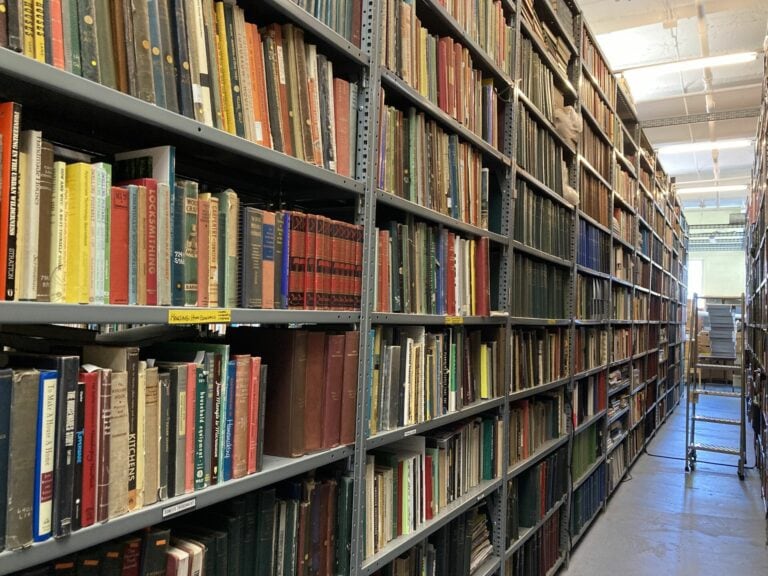
I first learned about the Prelinger Library when I was in the Master Birder program with Megan Prelinger. I’m a retired librarian myself, and the first thing I marveled at was the organization of the material. The library does not follow Dewey Decimal or the Library of Congress classification system, but instead is organized in a way that suited the needs of its first users, Megan and Rick. It uses a “landscape-based, geospatial arrangement system” starting in San Francisco and ending in outer space. It moves from landscape and nature through artiface (art, media, and culture), abstraction (society and philosophy) to space exploration.” Here is an overview of the arrangement, or read Megan’s explanation of the arrangement here. If you have a home library, it’s like what would happen if you had the time and space to arrange all of your materials in the way that made the most sense to you. In browsing a library collection, it’s often the materials next to the thing you are looking for that prove to be the most interesting. The arrangement itself, of course, is as revelatory as anything written with the materials contained.
The second amazing thing about the collection is the materials. In an SF Chronicle article written in 2015, Rick says, “We were not so interested in ordinary books that you would see at a public library. We were interested in books that were evidence in a lot of ways, books that had illustrations, books that had underrepresented or suppressed narratives in them.” “Books,” Megan says, “that expressed moments in history rather than told stories about moments in history.” Included in the library are materials they’ve used for research projects of their own, deaccessioned library materials found on cross country collecting trips including a complete run of the Auk, a collection of New York State forestry documents which include lithographs of every lake in the Adirondacks, all kinds of ephemera. If the idea of the arrangement is serendipity, it’s the depth and uniqueness of the collection that makes that possible. Check out this Stack Explorer to see a few examples of what’s on the shelves.
The library was started in 2004, when Rick and Megan pooled their books and records and realized that renting a space for a library would be cheaper than renting storage space.…
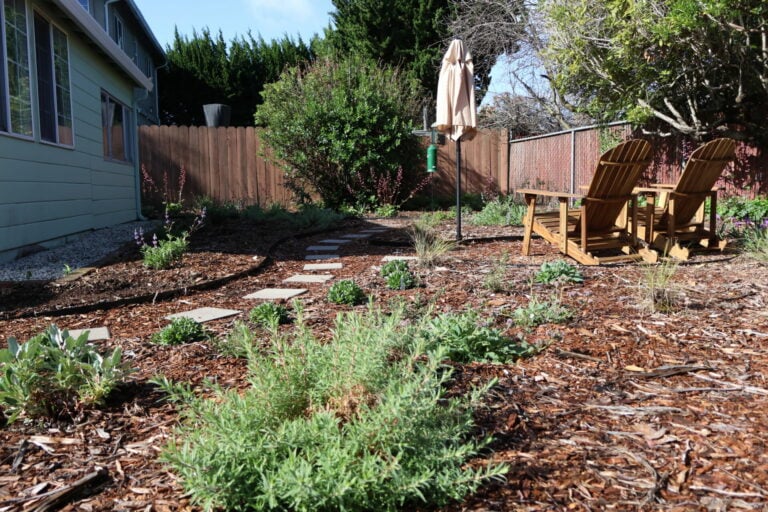
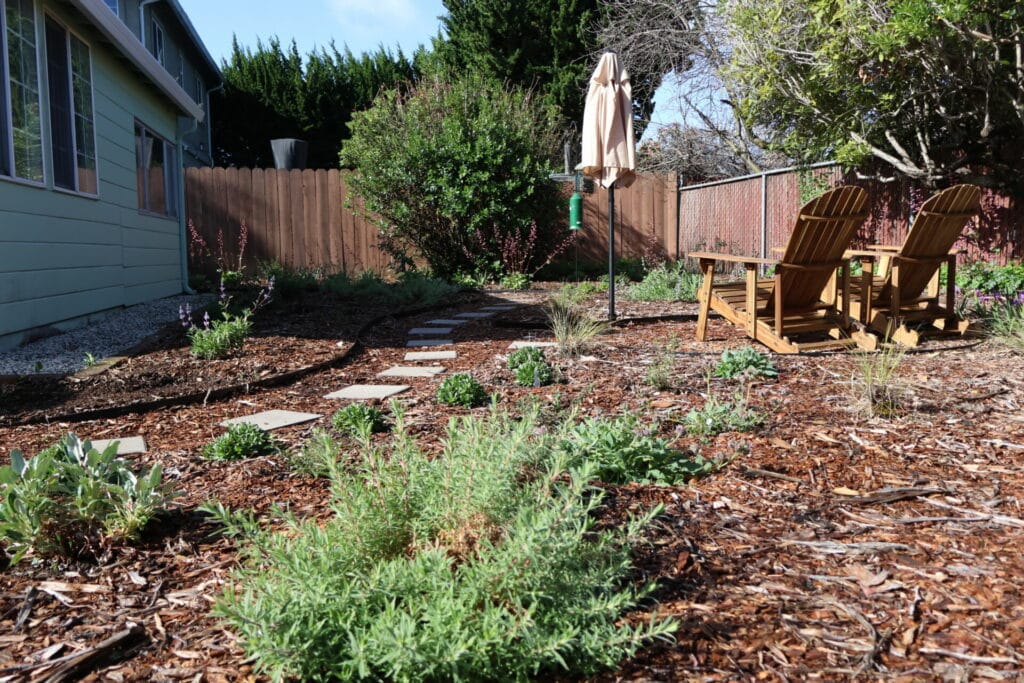 A native plant garden designed to attract birds and pollinators in the East Bay. Photo was taken three months after planting, leaving enough space for each to grow. Photo by Brandon Morgan.
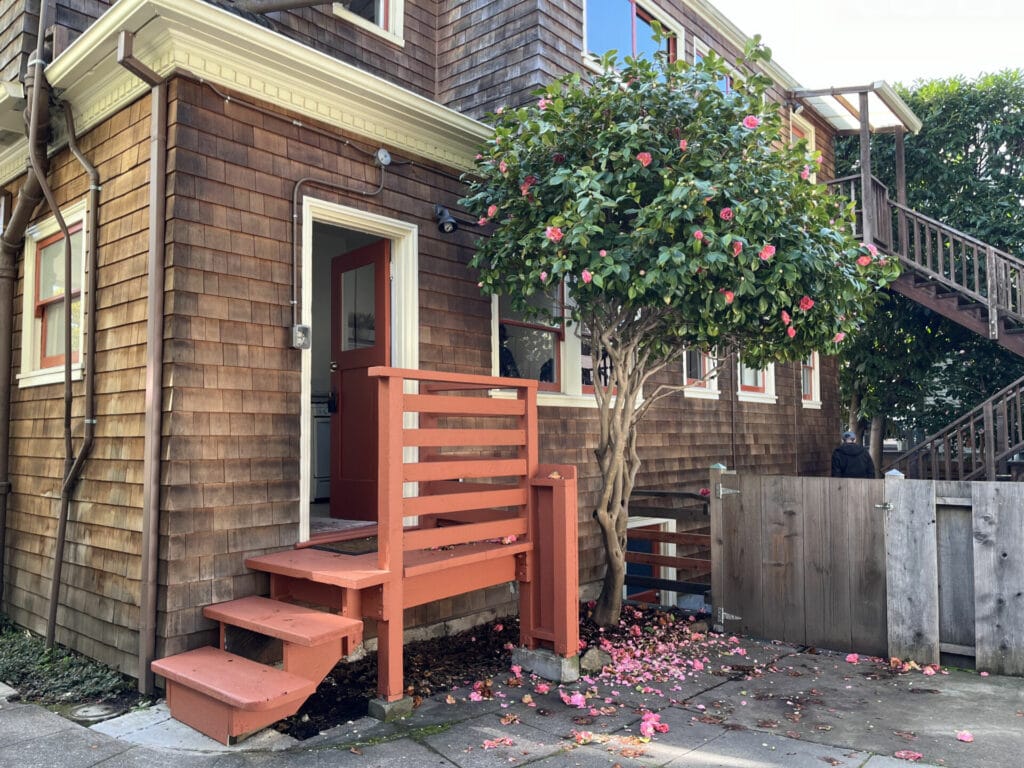 This large shrub (a non-native camellia) was planted right next to the house and will need to be pruned regularly. Large plant roots can impact foundations. Photo by Amy Chong.
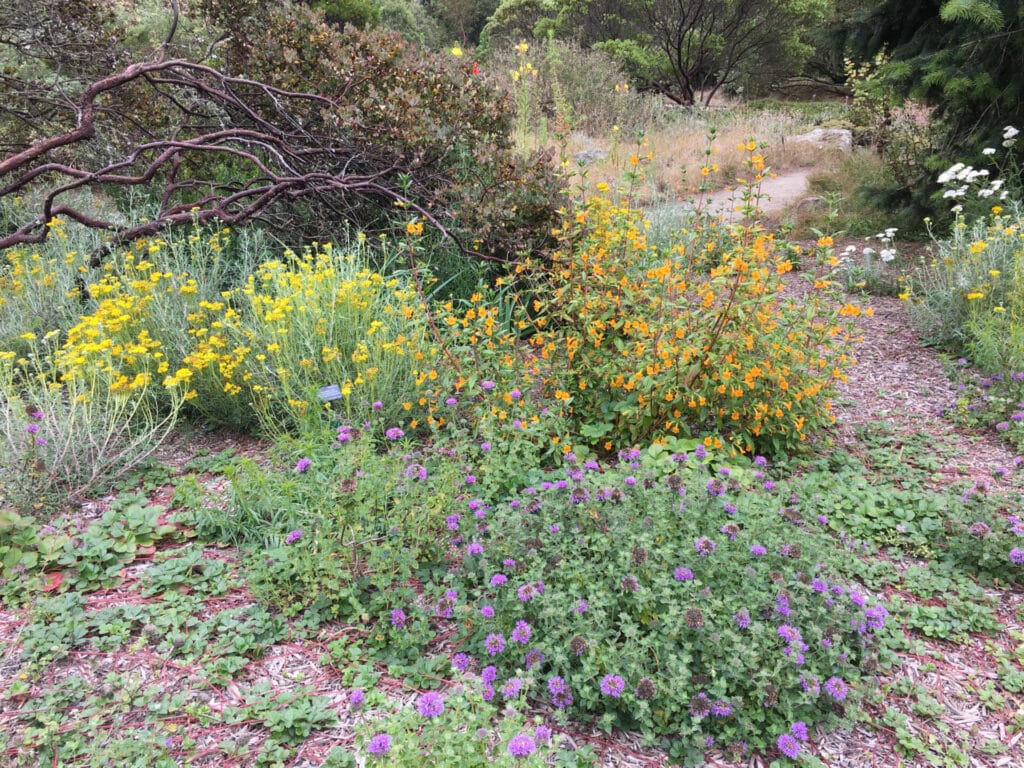 These native plants are spaced well, with strawberry as ground cover, different small flowering perennials, and a small tree—manzanita—arching over in the back. Photo by Amy Chong.

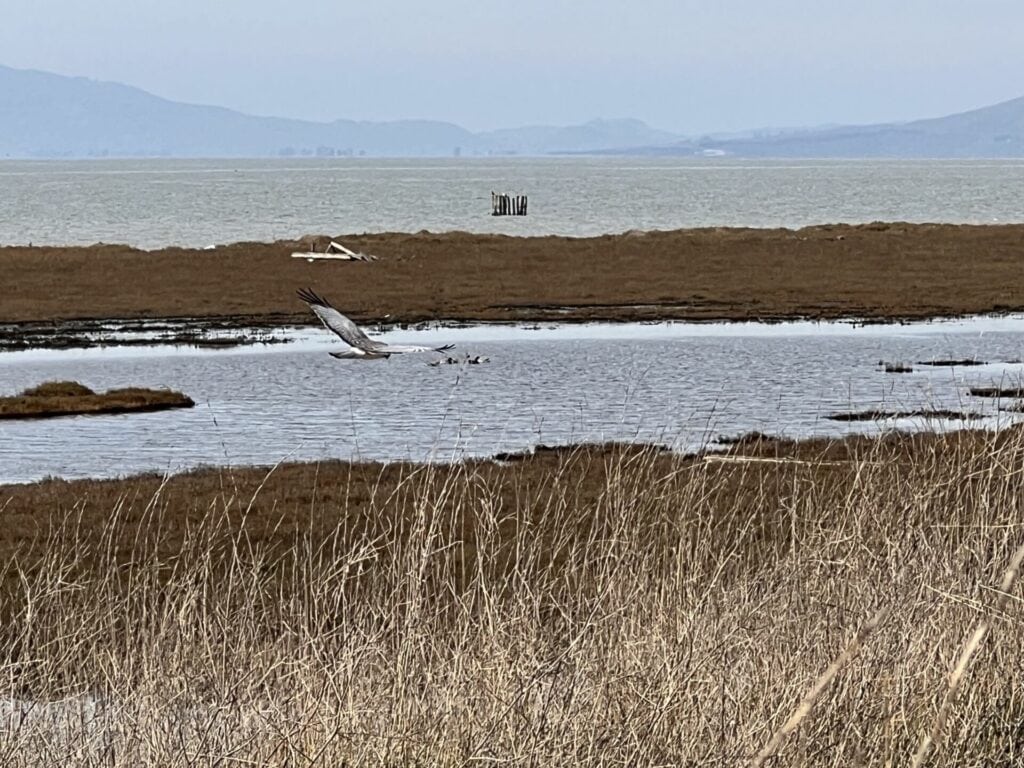 Northern Harriers displayed mating behavior and hunted over the grassland habitat, Helen Doyle
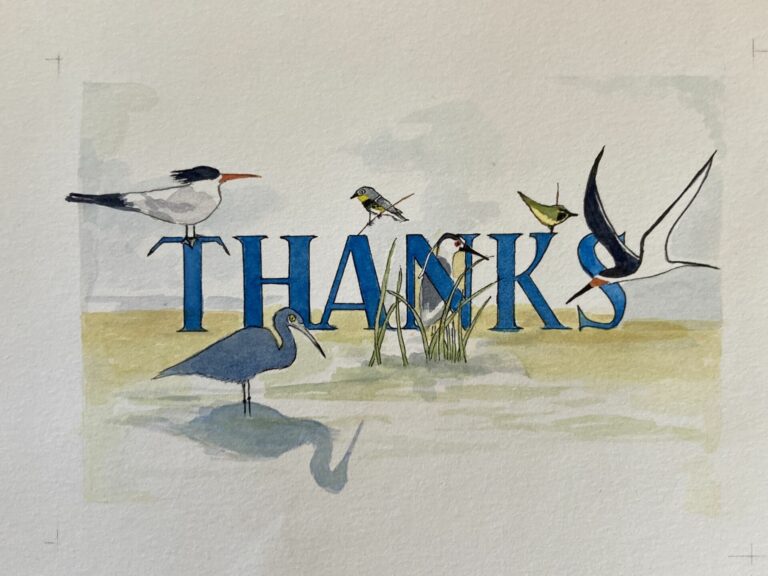
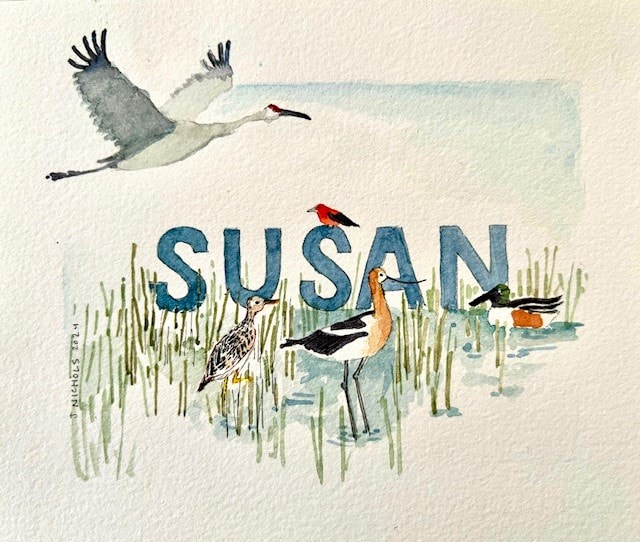 Customized name painting by Jeanette Nichols, with each letter represented by a bird.
 Greeting card designs by Jeanette Nichols.
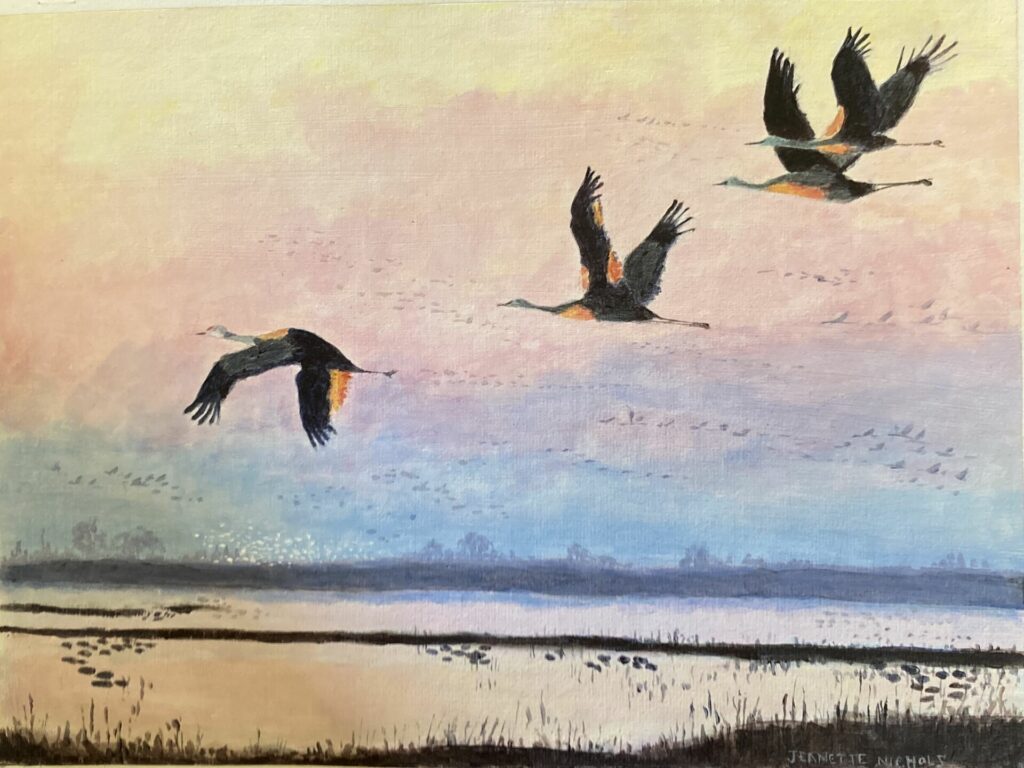 Watercolor of Sandhill Cranes at dusk by Jeanette Nichols.
 Daryl Goldman and Jeanette Nichols with the ketubah that Jeanette created. Photo by Ilana DeBare.
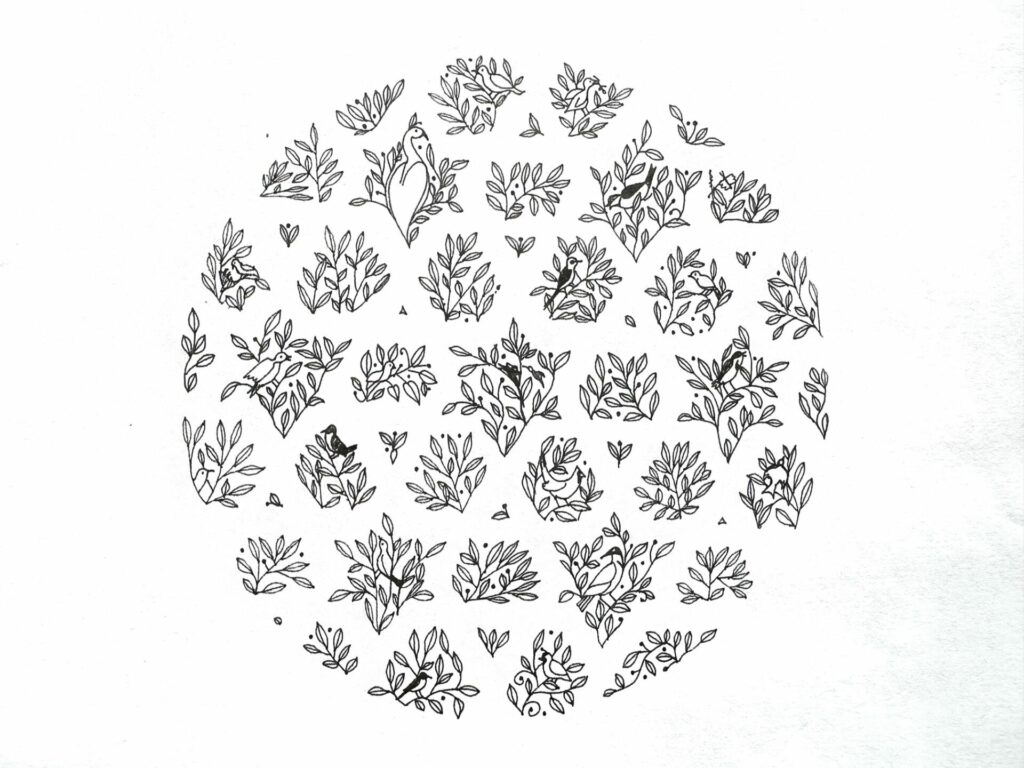 One of the images by Jeanette Nichols in the Sha’ar Zahav prayerbook. Notice the Jewish star-shaped foliage and the birds perched in the branches!
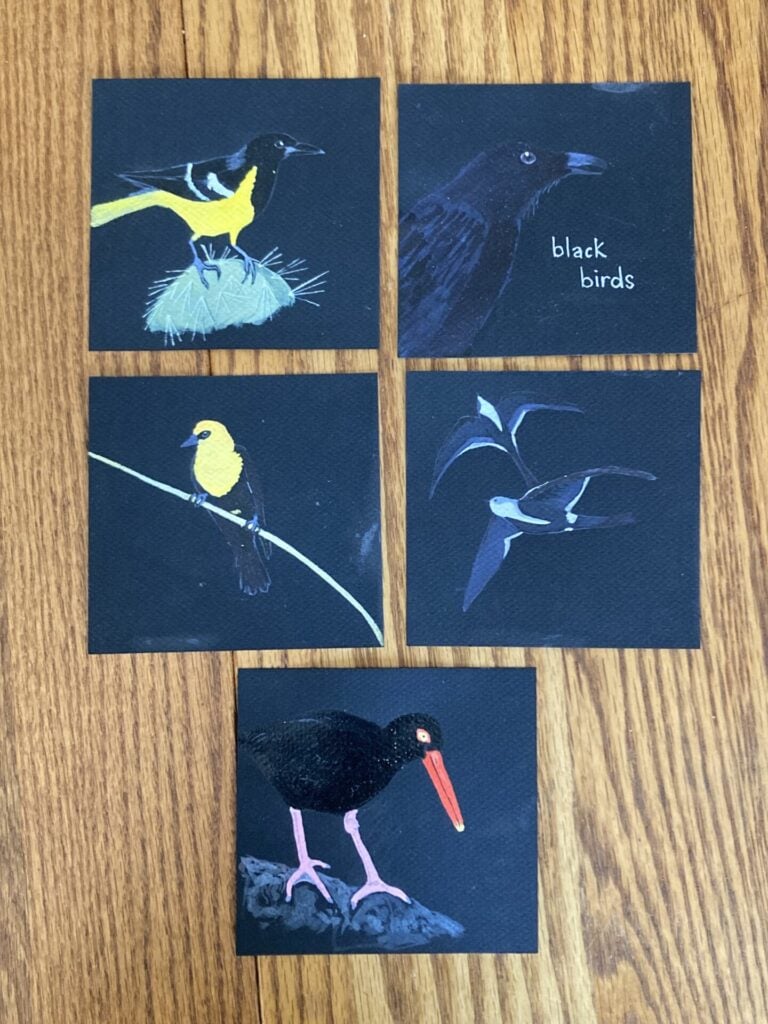 Project portraying black birds on black backgrounds by Jeanette Nichols
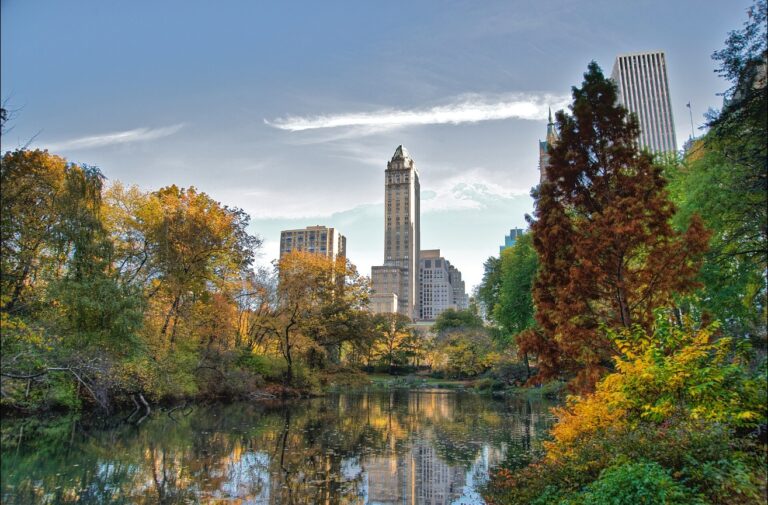
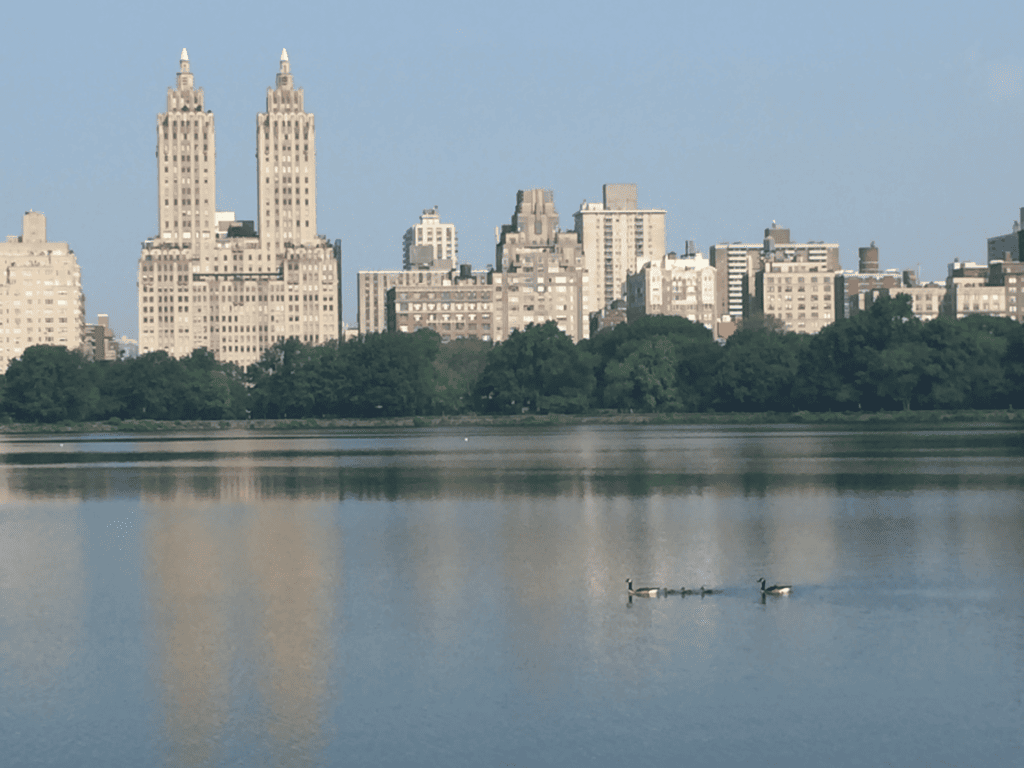 Waterfowl on the Jacqueline Kennedy Onassis Reservoir, with Central Park West in the background. Photo by Ilana DeBare
 Chestnut-side Warbler. Provided by RHODODENDRITES
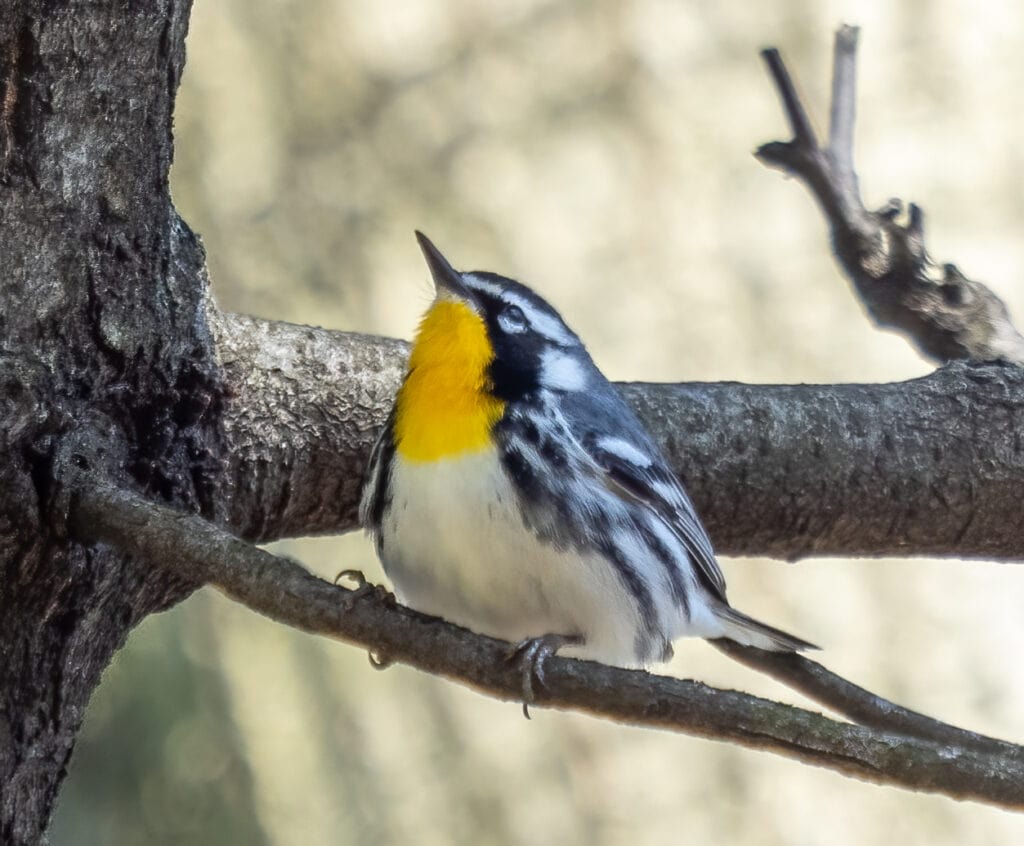 Yellow-throated Warbler. Provided by RHODODENDRITES
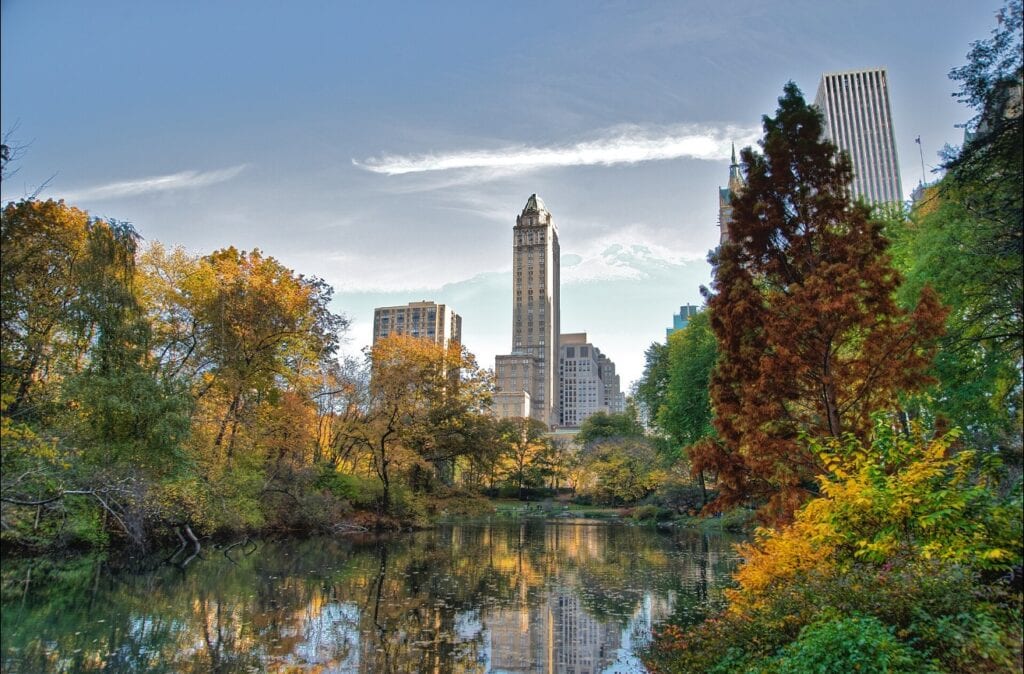 Central Park is an island of green in the middle of the city. Photo by Ed Yourdon